Electric Vehicles Aren’t the Answer

Tesla Model 3

I’ve been doing a lot of research on electric cars, now being pushed by the government to mitigate carbon discharge. As I see it, it’s a technology not ready for prime time.

Initially, you pay several thousand dollars extra to own one, pay higher car insurance, and face a limited mileage range.

Charge stations? If you can find one, a long wait, not only to recharge, but maybe just to access.

As for the environment, I think EV’s make things worse: Let me count the ways:

Ok, EV’s don’t emit carbon when they’re moving. But not so in their manufacture. It takes a lot of fossil fuel to make them and even when you’re charging them, there’s the fossil fuel powering that electric grid.

I’ll be more specific: Before you even drive off the lot, your EV has emitted 10-20 tons of carbon in its manufacture.

How ironic! A technology hyped as a breakthrough in reducing climate change acceleration actually contributes to its continuance.

Your EV battery was likely mined in a third world country, exploiting laborers paid a minuscule wage, using heavy machinery powered by fossil fuels. Then comes the shipping of materials—trucks, ships, planes. Still more trucks on arrival to get to the manufacturing plant!

Battery plants are sprouting up in GA, KS, KY, NC, OH and TN. But these plants consume acreage, much of it forest and farmland, impacting biodiversity loss or causing degradation. Inevitably, more housing development for an influx of new workers, more roads, more traffic, more strip malls and, yes, more CO2 emission.

Mind you, this isn’t happening just in the USA. American entrepreneur Elon Musk’s new gigafactory in Germany is now open for business, designed to produce Teslas and batteries in mind-boggling numbers. Presently employing 3,000 workers, that number will swell to 12,000 workers at full production. Built in the heart of a dense forest, it comes at an enormous cost to the environment, particularly for wildlife with 365 acres/160 hectares already cleared and a water conservation area confronted by potential industrial waste contamination.

This epitomizes the slip-shod attention state and local governments often give to environment impact studies, fast-tracking as in the German scenario what salivates public approval and political longevity.

But there’s a sweet spot in all of this with the incipient promise of transportation powered by hydrogen. It’s decades away for full implementation, but it’s already begun with Toyota’s 2023 Mirai that generates power by combining hydrogen with oxygen from the outside air.

You never have to charge the car. That means you don’t have to fret about accessing a charging station in that long distance trip and time lost in lengthy recharging.

It takes five minutes to fill your tank at a local gas station offering hydrogen.

They also have better driving ranges, generally around 300-400 miles to a tank of hydrogen.

Hydrogen cars are lighter and faster.

If I were an investor, I’d place my bet on hydrogen powered transportation as a viable solution to the carbon discharging menace that EV technology cannot resolve.

For sure, it’s currently prohibitively expensive, with 98% of hydrogen produced through steam methane reforming technology with its obvious carbon dioxide consequence.

But scientists are working on cutting costs and achieving versatility, not just cars, but trains and planes. As I write, news comes of the first hydrogen train in North America—Canada’s French Alstom train running from Montmorency Falls in Quebec City to Baie-Saint-Paul. Experimental, it features two railcars, carrying up to 120 passengers and uses 50 kilograms of hydrogen daily, replacing 500 liters of diesel fuel that would have otherwise been used for the two-hour route.

Imagine a train that emits only water vapor!


And hats off to Toyota again for resisting the EV wave. Its hydrogen fueled Mirai XL gets 71 mpg and sells at a starting $49,500 (within the average price ballpark for a new car). Fully fueled with hydrogen, it has a 402 mile driving range.

But like EV vehicles, it’s not ready for prime time either, a fill-up costing you $80.00 for your 5.5 kg tank.

Unfortunately, US government involvement hasn’t been there, unlike Canada and Europe.

As for ourselves, our RAV lease is up in another year and we intend to purchase it, since it’s been so reliable and has low miles. If we were opting for a new car purchase, we’d choose a hybrid plug-in as the most sensible option until the non-polluting hydrogen car becomes more cost efficient.

Long term, I’m optimistic.

–rj

Tim Flannery: Voice in the Wilderness

Australian explorer and ecologist Tim Flannery is a remarkable man. Nearly twenty years ago have passed since I read his initial book on climate change, The Weather Makers: The History & Future Impact of Climate Change (2005).

It was my first extended read on the climate crisis impacting all of us, spelling out its corollary fallout for Australia—rising seas, changes in weather patterns, and species extinction. I remember its clarity, abundant research, and earnest plea for changing our destructive exploitation of nature in the name of progress and prosperity. The book made me a believer and I’ve never looked back.

Translated into twenty-three languages, it received international acclaim. The following year, Al Gore’s An Inconvenient Truth appeared. Both books gave landmark impetus to climate change awareness and promoting efforts to mitigate its worst effects. Flannery has now written 27 books along with publishing more than 140 peer-reviewed papers.

He helped found the Copenhagen Climate Council in 2007 and presently serves as head of Australia’s Climate Change Commission. In 2007, he was selected as Australia’s Man of the Year, a notable award, given Australia’s history of collusion with fossil fuel interests.

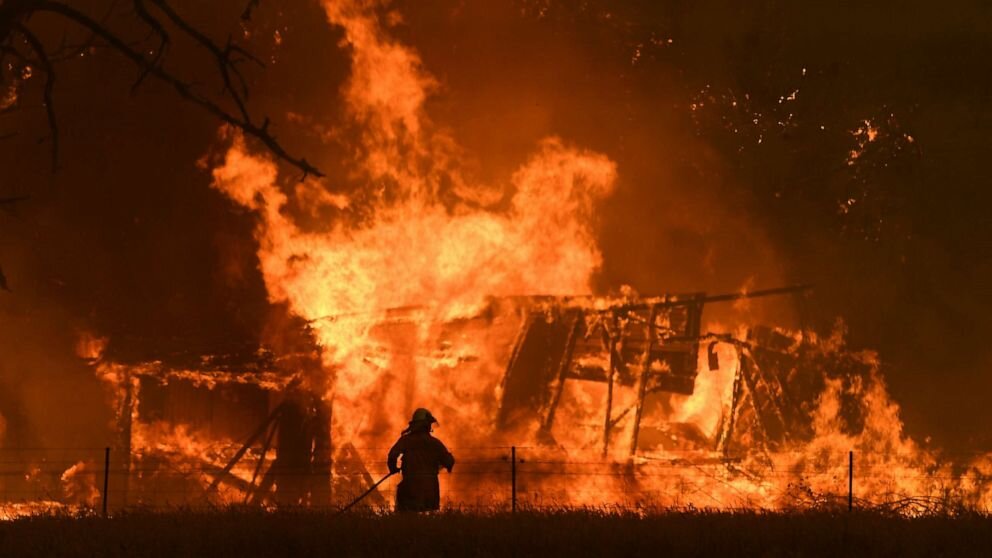
For years, Flannery has been a voice crying out in the wilderness, urging government interests to adopt measures to lessen the outbreak of bushfires Flannery’s Climate Council had filed 12 reports of looming danger. Then, on a continent where bushfires have historically ravaged Australia’s landscape, there occurred the bushfires of 2019-2020, with an estimated loss of 33 humans and 3 billion animals. Precipitated by two years of withering drought and searing temperatures, Sydney saw temperatures rise to 120 F.

Meanwhile, then prime minister, Scott Morrison, was on undisclosed vacation with his family at the height of the conflagration.

Earlier, in 2013, the incoming government of Tony Abbott ordered that the Climate Council, headed by Flannery, be shut down. The following year, the tax on carbon emissions was abolished.

Australia, based on head count,  is the world’s leading polluter. Currently, it ranks among the largest exporters of natural gas and second as an exporter of coal. “Were greenhouse gases at pre-industrial levels,” says Flannery, “natural factors alone would produce a year as hot as 2019 just once every 360 years. But add the effect of human-emitted greenhouse gases and the probability drops to one year in eight—a forty-five-fold increase in probability” (New York Review of Books, January 16, 2020).

Flannery’s love of nature is rooted in his boyhood, growing up in the Melbourne suburb of Sandringham, with remnants of its ancient woodlands not yet victim to Melbourne’s spilling over its boundaries:   

Our house lay just a few hundred metres from the most majestic part of its shoreline – the Red Bluff Cliffs. Sculpted from five-million-year-old sandstone, they stood as a great fluted rampart rising 80 metres above
the waves and running for half a kilometre or so along the foreshore before petering out into ti-tree covered slopes.

While the waters were safe from wholesale alteration, ‘progress’, unfortunately, could not let even this jewel of a place alone. Around half of the cliff had become a municipal garbage dump, and old cars, refrigerators and other rubbish cascaded down its slope to leak oil into the water below.

But this could not blight the life of the sea. If you searched among the rusting rubbish you might find a ribbed murex shell, or the white beauty of an angel’s wing clam. This place was my playground.” (Satish Kumar, ed., Small World, Big Ideas: Eco-Activists for Change).

Flannery did his undergraduate degree in English and history at La Trobe University before switching to an M.A. in geology at Monash University, followed by his Ph. D. at the University of South Wales.

For nearly twenty years, Flannery conducted extensive explorations of islands of the South Pacific, discovering and naming forty previously unknown species of mammals: 

It was during this work that I first encountered evidence of climate change: everywhere the tree line in New Guinea was rising, and the precious alpine habitats were shrinking. By 1999, I knew what I had to do: give up a life of adventure and become an activist for addressing the threat of climate change. I began researching a book, and in 2005 published The Weather Makers  (Kumar).

I like the way Flannery writes, a scientist conveying nature’s plight in layman’s idiom, articulate and convincing, insistent that we change our ways: “The brutal destruction of the natural environment I witnessed as a child, for example, has left me with an enduring belief that Nature is precious and vulnerable, and that humans can destroy beautiful things in an almost malicious manner” (Kumar).

Dr. Flannery continues, not only to be a strong voice for Australia’s environment, but for preserving what remains of vestigial rain forest and biodiversity in Micronesia. As for Flannery’s Climate Council, it continues to survive through public funding.

Sir David Attenborough deems Flannery as “in the league of the all-time great explorers like Dr David Livingstone” for documenting much of Australia’s earliest wildlife.

An articulator of nature’s gifts and of human assault, climaxing in the climate crisis that confronts us, none tells it better than Tim Flannery.

–rj


John Muir: Nature’s Gifted Scribe

Sierra Club founder John Muir was extraordinary, not only for his devotion to preserving nature’s wilderness, but for his eloquence in articulating its grandeur. An example:

Wonderful how completely everything in wild nature fits into us, as if truly part and parent of us. The sun shines not on us but in us. The rivers flow not past, but through us, thrilling, tingling, vibrating every fiber and cell of the substance of our bodies, making them glide and sing. The trees wave and the flowers bloom in our bodies as well as our souls, and every bird song, wind song, and tremendous storm song of the rocks in the heart of the mountains is our song, our very own, and sings our love. The Song of God, sounding on forever (from John of the Mountains: The Unpublished Journals of John Muir).

All told, he would publish 300 articles and 10 major books, not bad for someone who nearly lost his sight in a work accident.

One of his closest friends was President Theodore Roosevelt. In 1903, they would hike wilderness terrain together for two months. Inspired by Muir, Roosevelt designated 230 million acres of public land, including Yosemite and four other national parks and 18 national monuments, for preservation.

Earlier, in 1867, at age 29, Muir walked 1000 miles from Indiana to Florida, taking along only sugar and bread, buttressed by wild berries. (Muir never weighed more than 148 pounds. ) You can read an account of his journey: A Thousand Mile Walk to the Gulf (1916). Excerpt:

Though alligators and snakes naturally repel us, they are no mysterious evils. They dwell happily in these flowery wilds, are part of God’s family, unfallen, un-depraved and cared for with the same species of tenderness and love as is bestowed on angels in heaven or saints on earth.

John Muir was one of those rare people that cross our pathway in life’s journey, keenly sentient of life’s best values and eager to share. Of all the nature writers I’ve imbibed, I’ve not found his equal for rendering nature’s transcendent allure with lyrical cadence that informs, moves, and underscores its mystery and  moods, culminating in an elixir for healing both body and soul.

All good nature writing may well begin with Muir.

—rj


Under Threat: Kentucky’s Bernheim Forest

I’m saddened to learn this morning that Kentucky’s privately owned and managed Bernheim Arboretum and Research Forest is under threat from the Louisville Power Gas and Electric utility (LPGE) and Kentucky Utilities (KU), which want to route a gas pipeline through its largely intact woodland of 16,137 acres/6530 hectares. They argue their need to meet the growing energy demands of Bullitt County residents and are claiming eminent domain.

Like many self-interested utilities across the national landscape, they haven’t gotten the message. We don’t need more fossil fuel extraction and pipelines. What we do urgently need are renewable fuels. Unfortunately, Kentucky’s a red state, where environmentalists might as well come from Mars.

Home to 2100 species, some found nowhere else, the impact on the Bernheim Forest would menace habitat, migration routes, and streams that have enjoyed protection from its inception, bequeathed as a gift in 1929 by grateful German immigrant Isaac W. Bernheim.

The pipeline would transverse a corridor purchased in 2018 from funds provided by the Kentucky Heritage Land Conservation Fund and the US Fish and 
Wildlife Service’s Imperiled Bat Conservation Fund, with the stipulation it be preserved in perpetuity.

Located about sixty miles from our house, I’ve visited it several times in my younger years, relishing several of its more than forty miles of hiking and biking trails. I remember well its designated groves of native Kentucky flora.

Stop off at the friendly Visitor Center for maps or download them from its site: bernheim.org. I recommend the 1.5 miles as Arboretum Loop as your introduction to Bernheim, a place you can visit repeatedly, yet find something new.

For experienced hikers up to the challenge, there’s the 13.75 Millennium Trail that will you take you 6-7 hours to navigate. It’s rough, true wilderness terrain.
I had lost touch with the paradisiacal landscape, moving to New Mexico. Now I’m back, and I’ve joined its several hundred mentors in preserving its legacy.


Each day, it seems I learn of new challenges in the continuing assaults of fossil fuel and industrial interests on the environment. In Germany, despite its touted environmental safe-guards, billionaire Elon Musk has prevailed in a court decision, allowing the destruction of a remaining 205 acre forest near Berlin to build a giant Tesla factory employing 10,000 workers, despite concerns of conservationists and local residents. This comes in addition to a previous 75 acres/30 hectares of forest already cut.

Here at home, the Interior Department has singled its likely approval of the Alaska Willow Project, a ConocoPhillips endeavor to produce up to 629 million total barrels of oil over the next thirty years, equivalent to 278,000 metric tons of carbon dioxide over the project’s lifespan. (Biden had promised he’d be an environment president.) The consequences in an area warming four times faster than elsewhere will be devastating for already vanishing polar bears, caribou, walruses and an indigenous way of life.

The Bernheim Forest, in sum, is another chapter in our inveterate struggle for a green planet. Utilities need to respect wilderness preserves, not see them as green spaces to be exploited. A local court decision is anticipated by March. The case, now four years in litigation, will likely move to a higher jurisdiction regardless of the decision.

—rj

Heroes do Exist: Environment Champion, Bob Brown

Australian Bob Brown is a humble man who’s accomplished extraordinary things, not for himself, but for his fellow earthlings. His goodness makes the heart glad, inspires, and assures: that each of us, where we are, doing what we’re able, can foster needed change.

Brown had been a physician for twelve years, moving from the Sydney area to Tasmania out of love for wilderness. There, he would become active in the state’s environmental movement, subsequently founding The Wilderness Society and serving as its director for five years, a commitment leading to his giving up his medical practice.

Such dedication characterizes Brown, unstinting in his endeavors to promote a global democracy and green economy, single payer healthcare, human rights, and environmental welfare.

In 1982-3, The Wilderness Society helped organize resistance to the construction of a hydroelectric dam on the Franklin River in a large area of wilderness. 1500 showed up to blockade bulldozers. 600 were arrested, including Brown. He would spend nineteen days in prison. The good part: the day after his release, he was elected into Tasmania’s parliament.

Parliament, however, proved an unfriendly place, with only two other members voting to halt dam construction, despite 20,000 protestors on the streets of Hobart, the capital. In 1983, the issue moved to the Australian High Court, which ruled to halt the construction in a 4-3 vote.

Today, the wild river area attracts 200,000 visitors annually and has created thousands of jobs. The assertive protest efforts confirmed Brown’s belief that small, individual efforts at reform aren’t sufficient. Mass, collective protest is necessary to ward off powerful pecuniary interests.

In 1986, Brown was shot at and assaulted for protesting logging at Tasmania’s Farm House Creek.

In 1995, he was imprisoned twice for protesting logging in Tasmania’s Tarkine Wilderness.

In 2006, as a member of Tasmania’s Parliament, he initiated legal action to protect Tasmania’s Wielangta forest.

Additionally, he has authored bills advocating Death with Dignity, a nuclear free Tasmania, gay law reform, and lowering parliamentary salaries.

With the help of fellow Green members of Parliament (he was one of the Australia Green Party founders), the size of Tasmania’s Wilderness World Heritage Area has doubled to 1.4 million hectares.

In 2011, as the elected leader of the Greens, first in the world legislation was passed, mandating the reduction of greenhouse gas emission and the adoption of renewable energy resources.

In June 2912, Brown resigned from the Senate to found the Bob Brown Organization, a non-profit fund to assist Australian environmental campaigns and activists (bobbrown.org.au).

Now approaching 79, Brown is sanguine about his mortality: “I am an optimist. I’m also an opsimath. I learn as I get older. And I have never been happier in my life. Hurtling to death, I am alive and loving being Green.”

May Brown’s successful efforts kindle a fire in all of us to vehemently contest, whenever and wherever, those egocentric forces of greed that impede social equity, poverty’s elimination, a peaceful earth, and an abiding wilderness in which species achieve their destiny.

–rj

Democrat Sellout of North Atlantic Right Whale in New Spending Bill


Yesterday, Senate democrats, led by Chuck Schumer and Patrick Leahy, assured the extinction of the rapidly declining right whale, inserting a rider into a sweeping 1.7 trillion spending bill. The government-funding bill for the fiscal year, ending September 30, 2023, received over-whelming bipartisan support.

The policy rider calls for continuation of current lobster trap practice up through 2028, cancelling out a recent Federal court decision affirming the National Marine Fisheries Service mandate, ordering employment of weak lobster trap ropes to preempt whale entanglement and restriction of lobster harvesting between October and January.

As is, the court delayed its implementation for two years to allow the lobster industry time to adjust to the new measures.

In my last post, I noted the plight of the North Atlantic right whale, down to just 340 whales. Ominously, no calfs were born in 2022. Fishing gear such as lobster traps and ship collisions are largely responsible for the decline. I worried that political interests might win out.

The measure was initially introduced by Maine Republican Martha Collins.
That Democrat leadership would join is a knife in the back. We expect this kind of thing from Republicans, but not Democrats.

Its implications at large reenforce the priority, worldwide, given to political and pecuniary interests over doing the right thing to protect our environment under assault by climate change propelled by human disregard for diminishing resources, continuing dependance on fossil fuels, and resistance to court remedies mitigating habitat loss and protection of endangered species that include the North Atlantic right whale.

President Biden, who recently donated $35bn of tax payer revenue to the Teamsters retirement fund, hinted his support of Maine lobster employees in ordering 200 lobsters for his recent state dinner bash, honoring French president, Emmanuel Macron. (Not widely reported, the fare wasn’t served-up until 10:30 pm, many of the 300 guests having left.)

Lobster industry advocates contend that the whales do not intrude into lobster fishing areas and that there isn’t any documented instance of entanglement. This is demonstrably false. Observer sightings, aerial reconnaissance, and vessel surveys confirm their intrusion every month of the year for the last ten years!

In 2020, a video documented a right whale breaching in lower Blue Hill Bay, where thousands of lobster traps are fished.

Historically, the National Oceanic and Atmospheric Administration (NOAA) has conducted numerous aerial surveys during the fall and winter months in Jordan Basin and around Cashes Ledge and Outer Fall. From this effort, 212 individual right whales were identified in the central Gulf of Maine where Maine lobstermen fish between 2002-2008.

Horribly, the facts reveal that Maine marine mammals, including right whales, get entangled in vertical lines rising to the surface from lobster and crab traps as well as gillnet gear. From 1997 to 2017, at least three right whales were entangled in Maine coastal lobster fisheries, and three more were caught in offshore lobster fisheries in the Gulf of Maine (NOAA).

As most entanglements can’t be traced to their place of origin, a letter from 18 concerned scientists to the Maine Delegation in 2019, highlighted that “the number of North Atlantic right whales in Maine waters, the number of entanglements that are occurring in Maine waters, and the severity of all entanglements and their effects upon the right whale population are all significantly underestimated.”

Their letter also states that the “combined, high lobster trap density and simultaneous whale occurrence will lead to entanglements in any part of the ocean. Right whales are demonstrably occurring in Maine lobster fishing zones, and 87 percent of the U.S. Atlantic lobster fishery falls within Maine waters—representing about 3 million licensed traps and approximately 400,000 vertical lines. Every single vertical line poses an entanglement risk.”

Erica Fuller, a senior attorney at the Conservation Law Foundation, immediately responded to the spending bill insertion. “With the rate we’ve been killing right whales, extinction is expected to occur between the next 20 to 40 years. In the absence of the new rule, we’ve got more years of unsustainable killing going on.”

“It’s not an exaggeration to say that this rider will doom the right whale to extinction,” said Jane Davenport, a senior attorney at the environmental group Defenders of Wildlife. “Even if you got rid of all other sources of mortality, entanglements with fishing gear alone are enough to drive the species to extinction by reducing births and increasing deaths.”

2022 marks the 50th anniversary of the Marine Mammal Protection Act, which President Richard M. Nixon signed into law in 1972 to protect marine mammals from extinction in the United States.

“What a terrible anniversary present,” said Davenport.

rj

Lobsters or Whales?


I was raised a New Englander and, by custom, eating lobster had been a staple in my diet. The problem with custom, however, is that we seldom question its tenets, propelling us to mindlessly continue behavior that scrutiny might render pause, if not discontinuance.

My misgivings began some years years ago when I found myself in a restaurant featuring a large water tank, containing lobsters scavenging its pebbled bottom, oblivious to their impending fate of being boiled live.

It spoiled everything for me. I no longer could enjoy squeezing the shell until it cracked, exposing the meat of the hideously killed creature.

Several years ago, my wife and I met up with our children in Maine, a favorite haunt for us with its rocky coasts, salty air, deep forests, quaint villages and, yes, super ice cream. In Maine, you eat crabs, clams, or lobsters. And so, here I am in a seafood restaurant, my family toiling at their lobsters; that is, except me.

But are lobsters sentient? Do they feel pain?

I say yes, based on recent science research, indicating their nervous system is complex. The fact they have a spine should suffice. When you drop them into that boiling water, however, they lack vocal chords to voice their screams.

You don’t really need the lab to confirm their suffering. Just witness a lobster or crab hurling itself violently against the sides of a pot of boiling water.

Opponents retort it’s simply reflex, taking us back to Descartes and his mechanistic assessment of animal behavior, ignoring their neurological components. On the other hand, crabs in a recent experiment rapidly adjusted their habits to avoid areas where they had previously experienced an electric shock.

A number of countries have taken legal measures to protect crustaceans like lobsters from unnecessary pain, among them, Norway, New Zealand, Austria and parts of Italy and Germany.

Switzerland set the precedent in 2018, banning boiling crustaceans alive, based on research indicating they feel pain. They needn’t possess a neocortex to experience pain. Biologist Robert Elwood, whose research led to Switzerland’s ruling, tells us that “crustacean brains and nervous systems are configured differently” (aldf.org).

But what about freezing them, a predominate recourse in shipping lobsters over long distances, say, to Biden’s recent celeb bash for the French president?

In June 2016, Italy’s highest court outlawed the practice, ruling it inflicted unjustifiable suffering. That makes sense. Freezing sentient creatures is no less repulsive than boiling them alive.

But environment also looms as a pressing concern involving the lobster industry.

Whole Foods has joined the debate, announcing it will no longer sell lobster after two consumer-focused environmental watchdogs— the Maine Stewardship Council and Seafood Watch—pulled their certifications due to concerns over impacts on North Atlantic right whales. The National Oceanic and Atmospheric Administration says it will reduce whale deaths and injuries by 69%.

This morning I woke to The Guardian’s lead article, “Save whales or eat lobster”: the battle reaches the White House” (11 December 2022), centering on the Federal court’s decision to curtail Maine’s lobster industry employing 10,000 workers in order to safeguard the diminishing North Atlantic right whales.

The Biden staff, nonetheless, ordered 200 lobsters be flown in for the Macron fete, despite the 2021 1st Circuit Court of Appeals decision reinstating a ban on lobster harvesting in some 940 square miles of the Gulf of Maine from October to January to protect endangered North Atlantic right whales menaced by entanglement in fishing gear and collision with large ships.

White House Executive Chef Cris Comerford responded that they wanted to “honor our lobstermen from Maine.” Meanwhile, the court’s decision is under fast track appeal.

I’m not hopeful. Sadly, politics often govern, expediency prevails, and the pecuniary nearly always wins, with accelerated biodiversity loss and climate warming their consequence.

My high regard for environmentalist Rachel Carson persists. An oceanographer by profession, her eloquent The Sea Around Us won the National Book Award, America’s highest literary award, in 1952.

Living summers on Southport Island, Maine, adjacent to touristy Boothbay, she loved the then abundant whale life. With her typical prescience, she also served an incipient warning: “We live in an age of rising seas,” she wrote. “In our own lifetime we are witnessing a startling alteration of climate.”

That was 1964, or 58-years ago.

The North American right whale, an endangered species under the Endangered Species Act, has since declined to a scant 340, of which only 100 fertile females remain. We know the seas are ubiquitously afflicted with fishing gear, imposing an immense burden and much suffering upon sea life.

The lobster industry, instead of shouting their outrage, would do better to observe the U.S. Oceanic and Atmospheric Administration mandate to employ multiple break points to pull up lobster traps in order to prevent right whale entanglement.

Declining rapidly in number, unless we protect these whales, they will have vanished forever.

–rj

No Longer Do the Seagulls Cry: Humanity’s Wounding of the Seas

The sea sings out for its singular subjects:
Arching whales that wave from their waves,
Turtles that teeter down their shining shores,
Coral reefs shining brightly as cities.

The sea sings out its suffering,
Knowing too much of waste, screeching sounds
And pernicious poison, its depths bruised by
Atrocities in the Atlantic,
Misery in the Mediterranean,
Its tides the preservers of time past.”
–Amanda Gorman, from “Ode to Our Ocean”

This morning comes dismal news that a fifth round of UN talks to reach agreement on a treaty to protect and manage our highly vulnerable oceans has stalled once again. No further discussions are scheduled.

The proposed treaty would protect 30% of the high seas lying 200 nautical miles off national jurisdictions and a legal means to enforcement.

Since the seas don’t belong to anyone, this apparently gives nations license to plunder and trash, imperiling biodiversity and, ultimately, fisheries on which a growing population will increasingly depend.

The seas, supplying 50% of the oxygen we breathe, home to the majority of earth’s biodiversity, is languishing, and humans are the source. 90% of big fish populations are depleted; 50% of coral reefs, formerly harboring abundant marine life, gone.

Let me give you just one stark example of human dereliction fouling our seas. There are many others:

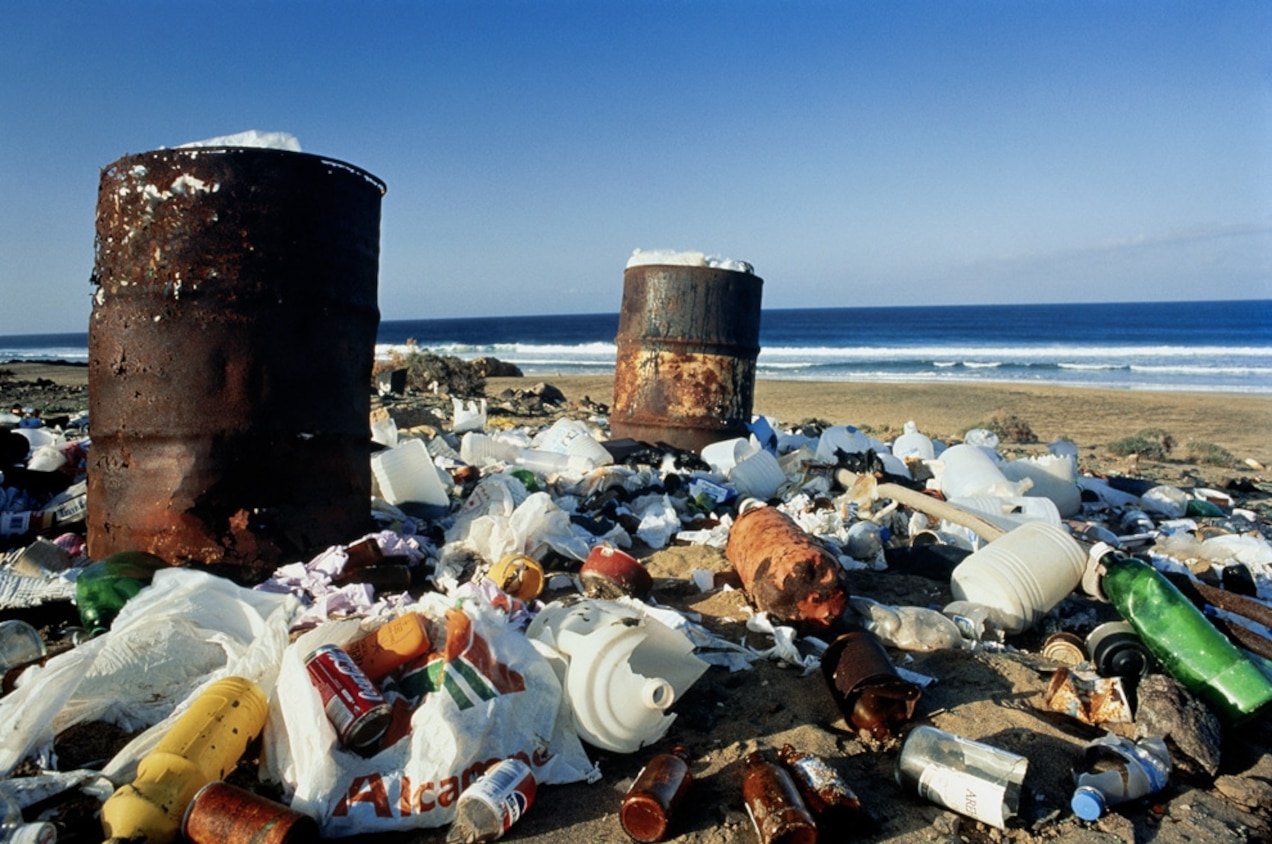
Located halfway between California and Hawaii, there lies the drifting human debris known as the Pacific Garbage Vortex, its estimated size twice that of Australia. It doesn’t exist as a single entity, but rather as a vast garbage soup, much of it just below the surface, coagulating in ocean currents as a defiantly boundless  repository of ship castoffs and swept-up coastal discharge, the vast majority of it plastic substances.

Reliable aerial and trawl estimates (2015-16) inform us that 1.8 trillion plastic pieces are floating in the patch, equivalent to 250 pieces of debris for every human in the world. That was six years ago. Currently, 1.15-2.41 million metric tons of plastic are added each year (theoceancleanup.com),

Plastic infiltration of our oceans poses an immense menace to sea life. The International Union for Conservation of nature (IUCN) reports that 700 marine species have encountered sea debris, 17% of them endangered species, among them, seals, dolphins, and sea turtles entangled in abandoned fishing nets. Many sea creatures mistake the plastics for food, imperiling themselves and their offspring.

01becdf4-e2b3-4ad7-a46f-784bc60ab960

Collectively, these plastics block sunlight to the plankton and algae below, which are the primary feed resources of fish and turtles. Ultimately, this has consequences for predators like sharks, seals and whales. A world without whales? Our grandchildren reduced to viewing photographs?

Bad as all this is, the Pacific Garbage Vortex isn’t an isolated phenomenon. It’s simply the biggest. Located in the Pacific, Atlantic and Indian oceans, these vortexes manifest humanity’s global trashing of the ocean:

Is there any hope at all? Only if we reduce our use of plastics, a formidable challenge in an economy built on their low costs, or adopt biodegradable alternatives that are no easy sell. It’s simply cheaper to rely on plastics, a carbon-containing product present in the clothes we wear, our computers, laundry detergent, and even our children’s toys, ad infinitum. Plastics tend to ultimately find their way into landfills. And yes, into our oceans.

Greenpeace laments that “failure to deliver a treaty at these talks jeopardises the livelihoods and food security of billions of people around the world.”

Sadly, I find their admonition, though well-meaning, typically anthropocentric in its solely human focus, or the essence of what birthed these vortexes in the first place.

Have sea dwellers, many of them preceding Homo sapiens, no right to a space of their own?
–rj


Democratic Republic of Congo to Auction Oil Rights to Virunga Park

I’ve been watching Sir David Attenborough’s magnificent Our Planet series on Netflix, despite the pain it exacts as I witness the devastating plight of wildlife to survive in the context of climate change, largely the result of human exploitation and ubiquitous indifference.

In and around the Bukima tented camp, located in Virunga National Park. Bukima camp is the base from which to see eight separate groups of mountain gorillas, including members of the Rugendo group, pictured here.

In the third episode exploring jungle habitat, Attenborough takes us to the Democratic Republic of Congo and its endangered Silverback gorillas, so strikingly like ourselves. Lamentably, their numbers have dropped by fifty percent, says Attenborough.

The good news is that their numbers have actually increased, according to methodical estimates by The World Life Conservation Society (May 2021). Previously around 600, they’re up to 1,000 due to concerted conservation efforts, a number still perilously low. Their principal habitat is the Democratic Republic of Congo’s Virunga National Park.

In and around Mikeno Lodge. Virunga Park Rangers work with hounds and a spaniel. The hounds help hunt poachers while the Spaniel helps to find weapons and ivory. Ranger Andre Bauma has been taking care of orphan gorillas for more than four years.

The bad news is that the DRC has just announced its intent to auction oil and gas permits in the park, which also features the world’s largest tropical peatlands, constituting the earth’s most extensive carbon sinks. These beautiful creatures have already endured grevious injury due to habitat loss, hunting, poaching, population encroachment, disease —and yes—human conflict, with splinter rebel groups hiding out in the park.

Virunga is a cornucopia of wildlife, both flora and fauna. Africa’s oldest reserve, its 1.2 million acres provide sanctuary for 700 types of birds and 220 species of mammals, including elephants, giraffes and chimpanzees. I shudder to think of the horrid consequences of its demise, wrought by human greed. In the last decade, more than 150 of the park’s rangers have been killed.

Were I younger and financially able, Virunga is where I’d be headed. I believe strongly in eco-tours. For the Congolese, it’s been a money maker, with $2 million in annual earnings.

Hats off to actor Leonardo DiCaprio for his 2014 Netflix documentary, Virunga, and commitment to the survival of the imperiled Silverbacks. It proved successful in halting oil exploration in the park at the time.

My hope is that we can exert pressure on oil corporations to refrain, as we successfully did in 2014. The best way is to discourage insurers and banks from financing the project. As I write, Congolese and international NGOs have submitted a petition of 100,000 signatures, requesting Congo’s President to halt new oil development

–rj