Retired English prof (Ph. D., UNC), who likes to garden, blog, pursue languages (especially Spanish) and to share in serious discussion on vital issues such as global warming, the role of government, energy alternatives, etc. Am a vegan and, yes, a tree hugger enthusiastically. If you write me, I'll answer.
I’m not upset that you lied to me, I’m upset that from now on I can’t believe you.” –Frederick Nietzsche
Karen and I were recently visiting our friends’ new horse farm when I spotted a mare and her two young saddlebred foal companions (see photo) and decided I’d saunter over and say hello. Just wished I’d had some peppermints along. I started with the mare and took her stillness beneath my hand as consent. Of course, the foals wanted in on the action, too, though each time I’d reach out, ever so slowly, they’d flinch. In short, they hadn’t yet learned to trust, at least with regards to me. Trust, after all, is one of those life staples you must earn.
In our human world we can be skittish, too, when it comes to trust, especially if memories linger in us of its betrayal as in a broken promise, lying, infidelity, irresponsibility, abandonment and, alas for children, poor parenting. It’s hard finding an antonym for trust, but deceit comes to mind. For the great Italian poet Dante, it was the worst of human short comings and he classified its several types into betrayal of family, friends, and nation.
I wish I could say trust has the numbers, or upper hand, when it comes to humans, but I know better and so do many of you, and so I treasure it when, serendipity, I stumble on it. Being from New England and growing-up along its coast, I think then of lighthouses, rock solid, faithful sentries shredding the darkness with their rotating beams of pulsating light.
I’ve always held the acute test of trust lies in the context of anonymity, or when we think no one’s watching. If someone runs stop signs, they probably take other short cuts from honor as well, making up their own rules that serve their interests. Deceit, if you will, is uppermost rooted in narcism, or satiating ourselves, damn our fellows.
Deceit or fraud gets frequently collectivized in power and money conclaves, with near daily sightings of their misdeeds in government and banking. The aftermath, of course, is the bruising recession fallout for the rest of us, instigated by CEO greed and spendthrift bureaucrats that jeopardizes our future.
I hurt when trust gets violated by manipulative charlatans. I want to believe the ad tells the truth or a doctor’s new book isn’t a facade for making money or that my local car dealer is giving me the best deal. I want to believe that my friend will keep his word, that my life partner will always love me and my children live honorably.
If love is life’s consummate grace, without trust it will prove tenuous, or like a house built upon the sand, succumb to time’s erosion. Love may be life’s elixir, but to be trusted may be even better.
Idealist that I am, I want to believe, not doubt; to embrace, not shun. Like the young foals, I don’t really want to flinch.
Well, that’s finally settled! After months of vociferous debate the American Psychiatric Association has given its blessing to a revised edition of the Diagnostic and Statistical Manual of Mental Disorders (DSM 5th edition), often called the Bible of psychiatric diagnosis. A vital tool, it facilitates psychiatrists being on the same page.
Unfortunately, the DSM has often been fraught with opinion-based labeling, at times approaching the trendy and political, rather than drawing from established empirical data. Casting a wide net, it can conceivably draw in most of us. The inherent danger of psychiatry has always been its penchant for finding motive and making faulty inferences. It loves labeling.
I’m reminded of a humorous rendition of this syndrome. Two psychiatrists are talking to each other when a third party passes through the room and says, “Good morning!” One of the psychiatrists then looks at the other and exclaims, “I wonder what he meant by that.”
Among some of the controversial changes in the revised DSM are the relegating of Asperger’s Syndrome to the expansive canopy of “autism spectrum disorder” (ASD). (No more Asperger Syndrome label.)
It also includes grief as a clinical disorder, or variant of depression. Many of us will find this a tough sell.
Better not be into loading-up on newspaper clippings, old photos (baseball cards?). Hoarding, whatever that is, can get you into the psychiatric liturgy.
Ironically, sexual addiction gets left out. Go figure!
Labeling is dangerous for its dead-end, stigmatizing write-offs. An educator, I’m aware of the short-circuiting of a student’s potential when an impatient, frustrated teacher simply writes him or her off as essentially unable to learn.
Psychiatry needs to get at causes, not symptoms, often social (e.g., poverty, prejudice, abuse, etc.), and rely less on medication to address supposedly faulty neurotransmitters. Increasingly, research has shown that much of the reported success of SSRIs and the like is mere placebo effect.
Lowering the threshold for DSM inclusion becomes reminiscent of the Pharisees with their penchant for jot and tittle inclusion or the sometimes purist application of Sharia law.
Next time you worry about something be careful not to share it with anyone, at least with a psychologist or psychiatrist. Though anxiety per se is a fact of daily life and hardly rates as mental illness, count on it to land you a high rung in the DSM.
We hear much about global warming these days, understandable given its smothering consequences for all life on earth. Unfortunately, humans have at large remained callous to making lifestyle changes that may delay its full onset or lessen its consequences. Recent research clearly indicts us as primary contributors to climate change in our dependency on fossil fuels. Last year was the hottest on record.
Bad as the global warming scenario may be, I would argue we face a greater crisis elsewhere, simply because it’s happening right now and we’ve less than 20-years to find a solution. I’m writing about the exponential increase in resistant microbes. I don’t mean to push the panic button, but this isn’t a false alarm.
I wish things were otherwise, but an ostrich stance just won’t do. Like many of you, I’ve read articles, even books, promising not only the extinction of many of our primary diseases, but the near abolishment of death itself, or at least pervasive longevity. This optimism, swelled by genetic research, hints at our finding targeted therapies that can prevent, modify, or eliminate diseases like cancer, diabetes, and dementia. With dietary alterations, we may even speed the healing.
I’ve read recently that it’s essentially only 25-years and we’ll find medicine revolutionized. Labs will diagnose your genomes and, like today’s culture specimens, suggest a solution. No more fussing with finding the right medication and risking their frequent side effects. We sometimes call it “metric” medicine, treatment individually tailored to get at or prevent what may ail you.
Unfortunately, this heaven-on-earth scenario isn’t likely to happen any time soon, given the inveterate increase of microbes resistant to antibiotics. Again, its threat dwarfs the crisis of global warming. As Professor Sally Davies, England’s chief medical officer, recently shared with parliament members, “It is clear that we might not ever see global warming; the apocalyptic scenario is that when I need a new hip in 20-years, I’ll die from a routine infection because we’ve run out of antibiotics” (“Antibiotic ‘Apocalypse’ Warning”). www.bbc.co.uk).
By the way, think twice when it comes to a hospital stay. Currently between 5 to 10 percent of patients develop an infection. 90,000 of them die, up from 13,300 just back in 1992 (www.medicine.net). The cost impact of infections is enormous at $20 billion annually and eight million additional hospital days (Centers for Disease Control and Prevention [April 2011]).
Now the World Health Organization warns that we’ve reached a crucial point in the matter of resistant microbes. Consider the present situation:
Presently we’re down to just two antibiotics for treating MRSA and one of these isn’t very good. (MRSA now exceeds AIDS in annual U. S. mortality.)
With highly prevalent gonorrhea, we’re just about out of remedy.
And then there are candida, malaria, tuberculosis, staph and even UTI’s, all of them exhibiting increasing insensitivity to antibiotics.
Like global warming, we’ve done a lot of this to ourselves.
1. Antibiotics are overly prescribed or treatment isn’t fully carried out.
2. Hospital staff don’t consistently practice good hygiene.
3. Cattle are fed antibiotics to inhibit disease and encourage growth.
4. We’re destroying our rainforests, with their potential for new antibiotic substances.
5. Ubiquitous use of antibacterial soaps and napkins, etc, increasing germ tolerance.
6. Increased travel to underdeveloped countries, raising the possibility of Superbug contagion.
Matters aren’t helped by the scourge of HIV and TB raging across Africa, largely due to patient mismanagement of medications. In India, currently, there’s a new Superbug that’s made its appearance, infecting even the water supply in Delhi. Compounding its threat is widespread travel these days, and the bug’s recent appearance in North America. The sad fact is that exotic diseases are potentially only an air flight away.
This is always the ultimate threat–that somewhere, somehow, a new infection source will emerge for which we haven’t any remedy. As Dr. Davis Agus reminds us, even in the context of his best selling The End of Illness (2011) with its vibrant optimism, “The swine flu scare that occurred in 2009 will some day be dwarfed by a real epidemic that will spread rapidly through virgin immune systems and kill millions in its path (as happened, for example, in the flu pandemic of 1918, when an estimated 50 million to 100 million people died” (p. 277).
As I write, a new TB strain has made its appearance in Papua and like AIDS in Africa, is badly managed. Experts fear it may soon defy any cure.
Of course there are optimists who argue we’ll come up with treatment solutions. We always have.
The reality is we’ve very little time and the research isn’t promising. As Professor Hugh Pennington of the University of Aberdeen bluntly puts it, “We have to be aware that we aren’t going to have new wonder drugs coming along because there just aren’t any.”
Johnnie stays in his room, reading as his friends go off to play.
Susie likes to sew by the hours.
Neil is glad the party got cancelled.
I’ve always been interested in personality dynamics, or the way we interact with others, our environment, and even ourselves. Then I came across Carl Jung’s notion of two selves resident in all of us: one Extravert; the other, Introvert.
Unfortunately, psychology often goes astray, treating one dynamic as sum total, when both exist in perpetual tension, though one will prove primary. Think of it in terms of being left or right-handed. We’re born with a tendency, or preference, to use one hand over the other. While we use both hands throughout the day, that preference reveals itself when we take to writing our signature. If you’re right-handed, try writing your signature with your left hand, or vice versa.
It was Katherine Briggs and her daughter, Isabel Meyers, however, who provided popular access to Jung’s personality archetypes, or modes, and built upon them through the eponymous inventory they developed. Its advantage lies in its facility for speed, simplicity and scope in identifying sixteen distinct personality types. The Meyers-Briggs Type Indicator (MBTI) is now routinely used universally, taking-on adjunct status in the business world as a screening tool for new employees or setting up work teams, etc.
The test measures four basic components comprising a personality type (see Tieger and Tieger, TheArt of Speed Reading People [1998]):
1. How we’re energized: (E) Extraversion ——(I) Introversion
2. How we access information: (S) Sensing ——-(N) Intuition
3. How we make decisions: (T) Thinking——(F) Feeling
4. How we organize our world: (J) Judging——(P) Perceiving
I remember taking the MBPI years ago and how accurate, despite its brevity, it turned out. It was me! INFP. Like your fingerprints, it’s your fixed id when it comes down to what makes you tick. While you can’t put the MBPI under a microscope, we know empirically that it functions well in assessing personality dynamics. It may even help you to better understand and relate to those around you or even to avoid relationships fraught with potential personality conflict.
What I’d like to do here has simply to do with Introversion, the canopy I come under, though I’ll also contrast it with Extraversion.
Introversion trademarks: less talkative, more reserved; thinks first, then talks; slower, more precise conversation quietly delivered; focused; doesn’t mind being alone at times; shuns spotlight; cautious; sequential in conversation, providing transitioning.
These traits are in marked contrast to those of the Extravert:
Extraversion trademarks: noisy, enthusiastic; talkative; thinks aloud; desultory in conversation; easily distracted; enjoys attention; impulsive; interrupts or finishes sentences.
In my school days I daily envied the football players who seemed always to hold their place in the sun, the focus of school assemblies, and loved by girls. Older folks would tell me to enjoy this time as best ever, though I couldn’t fathom why. Tall, gangly, pimple spattered and timid, I found shyness got me nowhere, except I compensated some through academics.
I can’t say life beyond high school made it any easier in a world enthralled with high profile athletes, movie stars, TV celebs, charismatic politicians and other PeopleMagazine types.
On the other hand, I’ve found fellow soft-voiced Introverts with their reserve a relief to be around. They tend not to dominate a conversation, or have need to gesticulate with their hands, or interrupt you at nearly every turn, or to stray in their attention. There’s often a sincerity to them that one finds frequently missing with all-talk Extraverts.
Introverts are linear in their preferences. They shun the desultory, preferring to exhaust the topic before moving to the next and keep a steady gaze, unlike the perfidious Extraverts with their disconcerting, wandering eyes.
Extraverts draw strength by the numbers they keep. They love Facebook and accumulating long lists of friends for validation. They prefer doing over thinking, flamboyance rather than simplicity, the latest fashion, the flashy car, loud colors. Introverts, not liking the spotlight, prefer simpler amenities, say a Prius over a Lexus; subdued colors, a less frenetic music.
Introverts are often strong people, able to find a pathway away from the crowd, confident in their values while avoiding arrogance. Revolution and social change begin most always with the Introverts, whom the Extraverts eventually follow.
Sometimes you can distinguish the two entities by way of the hobbies they keep. If you like gardening or fishing, reading or chess, sports like tennis or golf, you’re more likely to be an Introvert. On the other hand, if you’re into team sports like softball, or enjoy card playing, or participating frequently in social networks, then it’s likely you’re an Extravert.
Extraverts and Introverts can be found across the job spectrum, so that generalizations can be faulty as to which occupations allure them. Introverts, however, with their preference for fewer numbers, quieter spaces, and focused challenges, are often found in endeavors associated with medicine, college teaching, libraries, accounting, and computers. On the other hand, Extraverts perhaps find greater contentment in occupations such as entertainment, marketing, and public relations.
Introverts, as proponents of the inner life of the imagination, are often the Artisans, whether in painting, music or literature. Extraverts, in their need for people, make for great actors. We need both: the Introvert to teach us to reflect; the Extravert, to make us laugh; the Introvert to broaden our horizons; the Extravert to make us feel good about ourselves.
But back to Introverts, per se, since this is my primary focus here. We Introverts needn’t deem ourselves second-class citizenry in a gregarious world or be overwhelmed by the social pressures exerted on us in such a world. I would even wager that overall we’re a happy, well-adjusted bunch, at peace with ourselves and proud of our contributions to making a better world. I always remember that Steve Jobs was one of us.
I’ve always found it hard to understand how there are people who can look you in the eyes, never blink, and spin the biggest lie. Of all the kinds of deceit, lying is probably its most common form. My mind boggles at some of the big names across the years, not surprisingly, political: Congressman Dan Rostenkowski; Washington mayor Marion Barry; and then there’s Bill Clinton (“I did not have sex with that woman”).
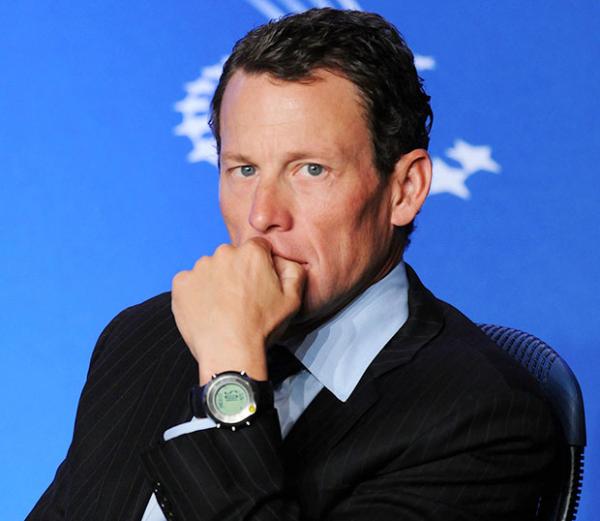
Lately, icons from the sports world have swollen their numbers, though like most liars, they’re often teflon coated when it comes to making the allegations stick. Think Bonds, Clemens, McGuire. And now there’s Lance Armstrong and a confession–of a sort.
I probably don’t need to tell you that lying is also endemic to the business community. It’s estimated that the average consumer is exposed to up to 200 lies daily via advertising.
But let’s not be self-righteous. The truth is we all lie, so maybe our outrage is simply projection rather than seeing ourselves in the mirror. Psychology Today (May 1, 1997) cites the 1996 study of lying by University of Virginia psychologist Bella DePaulo, who found “most people lie once or twice a day.”
Lying sometimes comes with the territory, say law, politics, car sales.
Sometimes it may even seem the moral thing to do. Should a doctor tell every terminal patient his/her prognosis?
Sometimes lying may seem the only way to avoid being punished for telling the truth. Should you tell your boss you were late because you got stuck in traffic rather than the truth you overslept?
Sometimes it may be wiser to tell your wife you like her new dress or hair-do than blurt out, “What were you thinking?
From another vantage point, lying can often be viewed as an ego prop for those with low self-esteem to boost themselves in the eyes of their beholders. The bigger the fish story, the better the payoff in admiration.
Lying is generally motivated by a desire to achieve a goal or to avoid responsibility for a behavior, e.g., overspending, drug addiction, etc.. There is, however, the compulsive liar who does so inversely related to any goal. Such behavior hints at a pyschiatric disorder, requiring treatment. This also gets us into the criminal mind of the sociopath who can lie and even kill without remorse. I think of Susan Smith (1994) who drowned her children, but initially claimed a black man had done it.
While granting that lying is an intrinsic human behavior, I still draw the line between the Lance Armstrongs who lie to mask their wrongdoing such as wholesale cheating or abuse of power and everyday Johns and Janes who lie to cover their embarrassment, or to prevent friction, or to opt for kindness.
What really arouses my disgust is when these self-serving schemers repeat their lies endlessly. We had a decade of this in Armstrong’s case.
Ironically, we often reward our consummate liars. Though they didn’t make it into baseball’s Hall of Fame this year, Bonds and Clemens were candidates and drew over a third of the votes. We also have two recently elected senators, one of whom falsely claimed service in Vietnam repeatedly; the other, to claims of Native American ancestry, presumably to take advantage of affirmative action. In reality, those who vote for such people share the same bottomline rationale of the end justifies the means.
The worst lies, the ones that grieve us and erode our trust, occur when we’re deceived by those we’ve invested our emotions in most, our family and friends. The medieval poet Dante assigned such people to hell’s deepest circle in The Inferno to keep company with the likes of Judas.
Liars are hard to detect because they ape sincerity, empowering their ability to manipulate the rest of us who want deeply to believe we’re being told the truth. This is why polygraphs aren’t always accurate, as they can’t readily filter out the feigner of sincerity.
Some have written in depth on the refined art of lying and strategies for its detection, the best of these being Paul Ekman’s classic 2009 book, Telling Lies: Clues to Deceit in the Marketplace, Politics, and Marriage. You’ll find his take on body language fascinating, although I’m dubious about this since body language can also be feigned. Nonetheless, as an expert on emotions, he brings the closest thing to science on the subject, though he confesses the frequent difficulty, even then, of spotting the skilled liar. Our best defense, in my own view, borrows from Reagan’s maxim: “Trust and verify.”
We do know we resent people like Lance Armstrong, perhaps because he and others remind us of our own vulnerability to manipulation and the hurt we’ve experienced when our trust is violated
While joy is fundamental to our living life well, many of us can’t fully enter into it, given the stress of daily living. It’s just plain hard to have joy when you’re out of work, ill, or facing problems in a relationship. Each of us has his own stresses. Often, however, perspective is everything, especially when you consider what others around you suffer. I was reminded the other day of this while watching a 60 Minutes segment featuring a paraplegic woman completely dependent on loved ones for her care. She was grateful to be part of an experiment in being fitted with a mechanical arm embedded in her skull. Clearly, she was a woman who had joy despite her circumstances.
It’s important for all of us to look up, not down; to be grateful for what we have and each new day; in short, to think good thoughts, or as Buddha put it long ago, “We are shaped by our thoughts; we become what we think. When the mind is pure, joy follows like a shadow that never leaves.”
Below I’ve listed several ways of finding joy, and I know you can add your own:
Friends: You don’t need a lot of them and consider yourself blessed if you have that one good person in your life who listens, counsels wisely, and finds time for you. Friendship is a two-way street, but when it’s on, wow, what a difference to find you’re not alone.
Family: Throughout the years I’ve been close to my siblings, keeping in-touch despite the miles through letters, phone calls and occasional visits. Families can be sources of stress, too, but when they function well, they’re our refuge in a turbulent world. My greatest joy is my wife and daughter, my allies day in, day out.
Simplicity: Joy is independent of money. What matters is abundant living, or investing in those aspects that enhance being rather than possession. It’s giving priority to your needs, not your wants. A 1500 square foot house may be less than what others opt for, but if it suffices, then go for it. Addiction often keeps company with materialism, fed by a need to be validated, and so what we have is never quite enough.
Volunteering: Helping others puts you on the fast track to finding joy. And there is so much need. The ethicist philosopher Peter Singer contends that if all of us gave just 5 % of our income to helping the poor or wiping out disease and the like we’d create a much better world. If we matched our donations with just 3 or 4 hours of our weekly time, we’d move the goal posts still nearer and more quickly.
Awareness: The French writer, Gustave Flaubert, made a comment I’ve never forgotten: “Anything observed closely enough becomes interesting.” Now you can have fun with this idea. Take out a sheet of paper, for example, and brainstorm all the delights you can come up with in association with little children. In addition to their innocent honesty, inquisitiveness, and trust, I think with fondness of their giggling, say when watching a puppet show. Cultivate awareness. Keep a journal. Record your joy at seeing a pink tapestry sunset, first daffodils in bloom, the symphony of an early summer morning chorus of cardinals. Look closely and in every nook. Joy can be found in surprising ways, if were ready for it.
Focusing on the present: Some folks find it difficult to free themselves from their past. This, of course, helps psychologists feed their families. We need to bury our dead–our resentments and regrets, follies and failures. Some reach for the future to relieve themselves from the weight of the present. The truth is that the present writes our future. We should live each day as though it were our last, thinking positively and doing well. A day well spent is a day that gives joy. Each day is an act of grace, an opportunity to begin again.
Reality thinking: You’re unlikely to see this item among sources for joy, but I include it here as fundamental to all human happiness as joy can prove to be a double-edged sword. Life is replete with loss, whether of our children moving far away, the loss of our mate, or of friends across the years. The price of joy is that it derives from what we ultimately forfeit, for sorrow slumbers in the same bed. Knowing this should heighten our joy in what tomorrow may take away.
Those doubting the somber threat global warming poses for all of us should do a reality check by going to the U. S. Global Research site (http://globalchange.gov). Mind you, this is a federal government site, which may surprise you as our recent campaign debates neglected the issue of climate change entirely, so you might think it hasn’t any credence for government. Issues like equal pay for women, while important, hardly merit sequestering the most salient challenge of our time.
Although the Climate Assessment Report, available for downloading at the site, is in draft format, it still packs a punch in its focused details, drawing on more than 240 experts. After review by the National Academies of Sciences and the public, it will be revised, then submitted to the Federal Government for potential inclusion in the Third National Climate Assessment Report to the President and the Congress, required every four years under the Global Change Research Act of 1990.
My intent here is to focus on the report’s introductory overview highlighting its primary findings, keeping in mind we’re dealing with a draft. Specifics are developed within the downloaded document at large and, I must emphasize, are disturbing in their implications for all life on this planet. The bottomline is that we should be on a war-footing in regard to global warming, doing all we can to delay or marginalize its stark consequences. How likely is this given a partisan, intransigent Congress and a constituency still largely insensitive to the implications of climate change? Talk about a program that will put people back to work, this is it!
From Letter to the American People (Jan 11, 2013)
“Climate change, once considered an issue for a disant future, has moved firmly into the present. This report of the National Climate Assessment and Development Advisory Committee concludes that the evidence for a changing climate has strengthened considerably since the last National Climate Assessment report, written in 2009. Many more impacts of human-caused climate change have now been observed. Corn producers in Iowa, oyster growers in Washington State, and maple syrup producers in Vermont have observed changes in their local climate that are outside of their experience. So, too, have coastal planners from Florida to Maine, water managers in the arid southwest and parts of the Southeast, and Native Americans on tribal lands across the nation.
Americans are noticing changes all around them. Summers are longer and hotter, and periods of extreme heat last longer than any living American has ever experienced. Winters are generally shorter and warmer. Rain comes in heavier downpours, though in many regions there are longer dry spells in between.
Other changes are even more dramatic. Residents of some coastal cities see their streets flood more regularly during storms and high tides. Inland cities near large rivers also experience more flooding, especially in the Midwest and Northeast. Hotter and drier weather and earlier snow melt mean that wildfires in the West start earlier in the year, last later into the fall, threaten more homes, cause more evacuations, and burn more acerage.
In Alaska, the summer sea ice that once protected the coasts has receded, and fall storms now cause more erosion and damage that is severe enough that some communities are already facing relocation.
Scientists studyng climate change confirm that these observations are consistent with Earth’s climactic trends. Long-term, independent records from weather stations, satellites, ocean buoys, tide gauges, and many other data sources all confirm the fact that our nation, like the rest of the world, is warming, precipitation patterns are changing, sea level is rising, and some types of extreme weather events are increasing.
These and other observed climactic changes are having wide-ranging impacts in every region of our country and most sectors of our economy. Some of these changes can be beneficial, such as longer growing seasons in many regions and a longer shipping season on the Great Lakes. But many more have already proven to be detrimental, largely because society and its infrastructure were designed for the climate of the past, not for the rapidly changing climate of the present or the future.
This National Climate Assessment collects, integrates, and assesses observations and research from around the country, helping to show what is actually happening and what it means for peoples’ lives, livelihoods, and future.
This report includes analyses of impacts on seven selected sectors: human health, water, energy, transportation, agriculture, forests, and ecosystems and biodiversity. This report additionally focuses on the interactions among several sectors at the national level. It also assesses key impacts on the regions of the U.S.: Northeast, Southeast and Caribbean, Midwest, Great Plains, Southwest, Northwest, Alaska, and the Arctic, Hawaii and the Pacific Islands; as well as coastal areas, oceans, and marine resources.
Finally, this report is the first to explicitly assess the current state of adaptation, mitigation, and decision support activities.”
This past week, perhaps missed in most headlines, is news of the machine gun slaughter of a family elephant herd in Kenya’s Tsavo National Park, the worst of its kind ever seen in Kenya. Horrendous as it is, it’s hardly an isolated incident in Africa, where wildlife are being gunned down at a record pace, including endangered species, by poachers financed by international criminal interests. Says Drew McVey, African elephant and rhino specialist, “This horrific crime demonstrates the lengths that poachers will go to get ivory—even killing a two-month old calf.”
What are the principal causes of the decline in Africa’s wildlife?
Habitat loss: Disruption of the ecosystem through deforestation and agriculture expansion continues unabated.
Poaching: Widespread and growing, corrupt government seems involved as evidenced in a Uganda military helicopter assault from the air in Garamba National Park in neighboring Democratic Republic of Congo. Twenty-two elephants died, their tusks later cut from their bodies.
Population growth: The world’s fastest population growth is taking place in Africa. Today, there are 2-billion Africans, with an average of five children to a family. At present growth rates, the population will double at mid-century.
Poverty: It’s easy to understand the economic impetus behind poaching when a pound of ivory can glean as much as a $1000. Even without widespread poverty, such prices would continue to fuel the market. According to the NYT, tusks from a single adult elephant can be worth more than ten times the average African income. Reports abound that “in Tanzania, impoverished villagers are poisoning pumpkins and rolling them into the road for elephants to eat. In Gabon, subsistence hunters deep in the rain forest are being enlisted to kill elephants and hand over the tusks, sometimes for as little as a sack of salt.”
Terrorism and civil strife: Armed bands like the Lord’s Resistance Army and the Shabab have been on killing sprees to secure funds for weapons. Escapees from the LRA report that LRA head, Joseph Krony, has ordered unlimited killing of elephants. The LRA isn’t alone. In January 2012, the worst massacre on record took place in Bouba Ndjida National Park in Cameroon with 300 elephants slaughtered by Darfur militia 600 miles from home.
Which animals are most vulnerable?
Africa has a variegated animal population, much of it under duress. Among familiar animals, elephants, lions, rhinos, hippos and gorillas face immense survival challenges due to human exploitation.
What is the rate of decline?
Elephants have declined by 99% since the 1930s from an estimated 10 million to about 400,000 currently.
Only 10,000 rhinos survive, representing an 85% reduction since 1970. Of these, the black rhino, which once roamed throughout Africa, is down to just 2500 and confined to East Africa.
Lions have seen their numbers drop by 50% since the 1950s, when they were in the 40,000 range. Ranchers have been the primary cause for their decline.
Where is smuggling most prominent?
Most of the illegal trade takes place in Asia, with Hong Kong its primary center, despite diligent control efforts. In the last three months, custom officers have seized three shipments of ivory with an estimated worth exceeding $6 million. An estimated 70% of ivory smuggling ends up in China. There even exist popular online forums that give counsel on smuggling techniques.
What feeds this demand?
Medicinal: Rhino horns have been long regarded as an aphrodisiac.
Affluence: The pro-longed economic boom in China has fueled the rise of an affluent class that sees possession of such contraband as reflecting status. It’s the same principle behind why some people choose more house than they need or a price-prohibitive car for the general populace. China, however, is not the only country driving demand. Thailand and Vietnam engage in this activity as well. Last week, Thai custom officers seized a suitcase at Bangkok airport containing more than $500,000 worth of rhino horns. The perpetrator, who had just arrived from Ethiopia, has been arrested.
Ignorance: A 2007 poll conducted in China by the International Fund for Animal Welfare showed that 70% percent of the Chinese did not realize an elephant had to be killed to remove its tusks.
Can anything be done?
There are 177 current signatories to the Convention on In international Trade in Endangered Species of Wild Fauna and Flora (CITES), limiting trade in wild animals and their body parts. Collectively, the accord provides some measure of pledged protection for 33,000 plant and animal species. http://www.cites.org/ Unfortunately, this 1989 measure needs more teeth. Domestic as well as international trade bans need to be implemented. As is, apprehended poachers often receive just a slap on the wrist.
Obviously there needs to be greater domestic intervention, with serious penalties. This takes resources and, frankly, the need for surveillance helicopters, rangers, night vision goggles, jeeps, etc. Unfortunately, even an increase in resources may not be sufficient. Garamba has about 150 rangers on a shoot first basis, yet it experienced its own horrid elephant massacre and the perpetrators escaped.
Ironically, the American taxpayer has been footing the bill for millions of dollars in foreign aid to countries like Dafur, Congo, and Uganda for military assistance to defeat the LRA. So far, our State Department denies there is any connection between the militaries of these countries and the orchestrated killings such as in Garamba. I would call it political expediency. The bottom line is that Western governments can, and should, do more to apply pressure on such governments, including China, Thailand, and Vietnam.
A prosperous Africa would result in probable population stability, the pattern in the industrial nations. This would help curtail the destruction of habitat for agricultural expansion. A prosperous African continent, however, seems unlikely anytime soon.
For some, the best trade off, radical as it may seem, is to begin a program of detusking, elephants and rhinos. Obviously this is controversial and an alternative I need to study more before making-up my own mind, but here is a site that opposes this option vehemently: http://www.indiaenvironmentportal.org.in/opinion/cut-it-outhwww.
Africa, the world’s most troubled continent, defies any easy answers. Meanwhile, the carnage continues. It breaks the heart!
Courtesy:yahoo.news: Destroyed home in Dunalley, Tasmania
I ran into a man in recent years, educated and professionally accomplished, who didn’t like a lot of my observations and beliefs. They were too liberal and sometimes he’d laugh or scoff. It so happens that I believe in such things as a woman’s right to sovereignty over her body, a more just system of taxation, dignity of death legislation, universal health care, gay rights, the priority of green living through simplicity, alternative energy, recycling and vegetarianism. I voted the Green Party in the recent election.
The last time we conversed, more than a year ago, he admitted to global warming, but thought of it as cyclic rather than human in origin. That’s ok with me, at least as far as a person’s right to a belief or opinion. However, I’ve often found a lack of fair exchange when it comes to beliefs like my own, perhaps because I live in conservative Kentucky or no longer have daily access to a university campus where my views often enjoy majority status and poetry is still admired. Perhaps views like mine simply make people feel uncomfortable with their resonance of gloom and doom, though I counter that acknowledging a problem begins its solution.
But let me confine myself to global warming at the moment. I find the facts are in: It’s horribly real and its effects are happening universally and exponentially faster than many of our experts had projected. Our hurricanes occur more frequently and grow more menacing; floods and drought devour our landscape. In Europe, a prolonged heat wave this past year killed hundreds. Storms of the century are now decade-ravages, with Katrina and Sandy coming to mind. Meanwhile, the accelerating polar meltdown threatens methane release, a component that exceeds carbon as a dangerous contributor to global warming. Sea tides are rising and coastal cities like New York have begun drawing-up contingency plans.
For another example of what’s going on, there is the current tragedy of bushfires in Tasmania, the result of prolonged drought, high temperatures, and persistent wind gusts. As I write, 65-homes have been lost, hundreds displaced, and 110 squared miles of land scorched. In its proximity to a warming Antarctica, Australia is fast taking on the prototype of our global future, compounded by the increasing impotency of our technology to cope.
Southwest Australia, in particular, knows the scenario of diminished rainfall all too well. Famed for its vineyards abetted by rich soil and ample rainfall, the region has experienced a 15% drop-off in rainfall since 1975. Wheat, another regional staple, has been devastated, as seen in the current deluge of impoverished farmers. Meanwhile, the metropolis city of Perth has seen a 50% decline in its surface water supply since 1975. Sydney in eastern Australia, may face an even greater crisis if drought continues, despite having some of the world’s largest water reserves (Tim Flannery. The Weather Makers, pp. 127-129; 131).
Climate change does, however, have its ardent critics, so my ethics demand fair play. In a recent Forbes article, Larry Bell, who comments frequently on climate and energy issues for the magazine, contends that “while most acknowledge that greenhouse warming may be a contributing factor, it is also true that a great many very informed scientists believe that any human contributions to that influence are negligible, undetectable and thereby grossly exaggerated by alarmists, while far more important climate drivers (both for warming and cooling) are virtually ignored. Particularly consequential among these are long-and short-term effects of ocean cycles along with changes in solar activity” (“Global Warming Alarmism”).
Thank you, Larry, for just the right cough syrup for what ails us. You wrote your article on May 28, 2012, and say at the very beginning that “global temperatures have been pretty flat despite rising CO2 levels since the big 1998 El Niño ….”. Are you not aware that we can track resilient CO2 particles over the centuries and it demonstrates a rise from 645 gigatons (billion tons) of CO2 prior to the Industrial Revolution, or 1800, to our approximate 869 gigatons currently? I’m sufficiently aware that association doesn’t confer causality, but it should caution skeptics to reassess. By the way, half of our present annual CO2 derives from burning fossil fuels. God only knows the fate of our planet with world population continuing to rise and more coal-fire plants and more cars in the works.
Critics needn’t belly ache about alarmists. They’ve got inertia on their side. It’s near impossible, for example, to get rid of plastic bags in our stores, given corporate interests and the abstract nature of a threat seen more theoretical and distant, and thus problematical, by many consumers. Besides, it’s just damn inconvenient to our comfort zone to change our ways. In a time of budget crisis, government is no help, deferring to present needs while defaulting on our children’s future, reminiscent of its widespread underfunding of pensions for future retirees.
Meanwhile, this just in from the National Oceanic and Atmospheric Association (NOAA):
2012 was the warmest year ever recorded in the U. S., and second only to 1998 in the agency’s “extreme” weather listing.
It was also the driest year on record with an average rainfall of 26.57 inches, or 2.57 inches below normal. Wildfires destroyed more than 9.2 million acres, the third highest number in our history.
Worldwide, it’s much the same. According to World Meteorological Organizational Secretary-General Michel Jarraud, “The extent of Arctic sea ice reached a new record low. The alarming rate of its melt this year highlighted the far-reaching changes taking place on Earth’s oceans and biosphere. Climate change is taking place before our eyes and will continue to do so as a result of the concentrations of greenhouse gases in the atmosphere, which have risen constantly and again reached new records.”
As I conclude my post, fire has also swept across large portions of New South Wales, where Sydney is located, destroying forests, pastures and flocks along with many homes. It’s summer down under, and like here, temperatures are at record highs.
Since I was a child I’ve always had this thing about the South Pacific, and, no, I’m not talking about the 1949 Rodgers and Hammerstein musical, whose music still grabs me. No, I’m talking genuine volcanic rock strung out, pearl like, across the equatorial Pacific.
I’ve never gotten there, unless you count a military stopover in Honolulu on my way to Korea or our trip (Karen and I) to New Zealand in 2006. No, I’m thinking of other island hops: places like Tahiti, the Marquesas, Somoa and the Cook Islands. OK, let’s throw in Pitcairn Island, too. Hey, I’m thinking the likes of Captain Bligh, Gauguin, and Robert Louis Stevenson.
How did this hankering ever get started? Hard to say, but I think I drew from the deep well of books I insatiently imbibed as a street child lured daily into the quiet coolness of the Montgomery Street Library, the next best thing to a ten cent matinee ticket to the Jumbo theater on Girard Avenue or an open hydrant in providing relief from Phiilly’s baked asphalt on hot summer afternoons.
In particular, there was Bligh’s account, popularized hither and yon, in the Nordhoff and Hall’s riveting novel version of a mutinous crew and the aftermath of 17 souls set adrift for 41 days across 3600 miles, before finding safety. Just thinking about this book makes me salivate at reading it again.
The novel account had its movie version, one of several beginning in 1935, starring the swashbuckling Clark Gable as mutineer leader Fletcher Christian in bold rebellion against the tyrannical Bligh, portrayed by Charles Laughton. A box office biggie that shreds historical truth, I didn’t get to the Jumbo replay until many years later. I liked sequels, so I tried Pitcairn Island. By God, I was hooked!
I’d be in my bedroom, several hours nightly, supposedly working on my high school algebra, when the truth was I’d be looking at maps, charting mind-journeys. Their very names spiced my excitement: Manihiki, Pukapuka, Yasawa, etc. In another era, I’d have been a runaway, perhaps sailing with Columbus or Magellan.
Fast forward into adulthoood, I’d venture into travel agencies and ransack their slick, glossy pamphlets of South Pacific cruises, always in the end smacking into the reality that such things cost money, lots of it.
In my late twenties, however, dream nearly took on verisimilitude when I was granted the next best thing: permanent resident status in New Zealand, with a teaching post waiting for me in Hawera in Taranawki on the North Island. As it turned out, this gave way to a greater priority–finishing my graduate studies. My wife and I, nonetheless, did visit Hawera on our memorable New Zealand venture in 2006. Still, no South Pacific paradisic lagoons!
After graduate studies, I went through a French phase, learning French and pursuing its art, especially the Impressionists and traveling to their haunts like Aix-en-Province and nearby Mont St. Victoire with their Cezanne echoes. But then I also discovered Gauguin and, naturally, quite understood his flight from the Paris bourse to, yes, the South Pacific.
In later years, I would catch-up again with Robert Louis Stevenson. (What child in that video-game free era of my early youth wouldn’t have enjoyed the likes of Treasure Island?) In graduate school, Stevenson’s sentient lyricism captivated me. Even more, I admired his uncommon fortitude in the face of debilitating illness. Then, of course, there was his leave-taking for Somoa, where his final home, Villa Vailima ( now a museum), gazes down into a verdant velvet of swaying palm, edged by Pacific waters.
I’m older now, and pragmatism has undoubtedly pinned my romantic palette like a butterfly to a wall. I also know that it’s the imagining and not the obtaining that often yields the most, or something like Keats meant when he wrote, “Heard melodies are sweet, but those unheard/Are sweeter” (Ode on a Grecian Urn). As a Jungian devotee, I know the universality of the Edenic quest and the lotus eater lure of its garden. I suspect, too, much of that once pristine garden world has now been sullied by commercial interests and tourist hordes.
Still, in those langorous moments that sometimes sweep ashore into daily life, my thoughts drift to paradisiacal islands like Raratonga, Bora Bora, Tauata, Moorea, Raiatea, and Aiutaki; soft murmurings of attending, giggling maidens; falling coconuts; gentle breezes; slumbrous waves; sheltering lagoons with coral necklace; and of life as approximating what in our musings we mortals sometimes dub “heaven” with its reprieve from time and event.
I think again of Keats (Ode to a Nightingale). Am I awake, or do I sleep?




 Brimmings: up from the well