
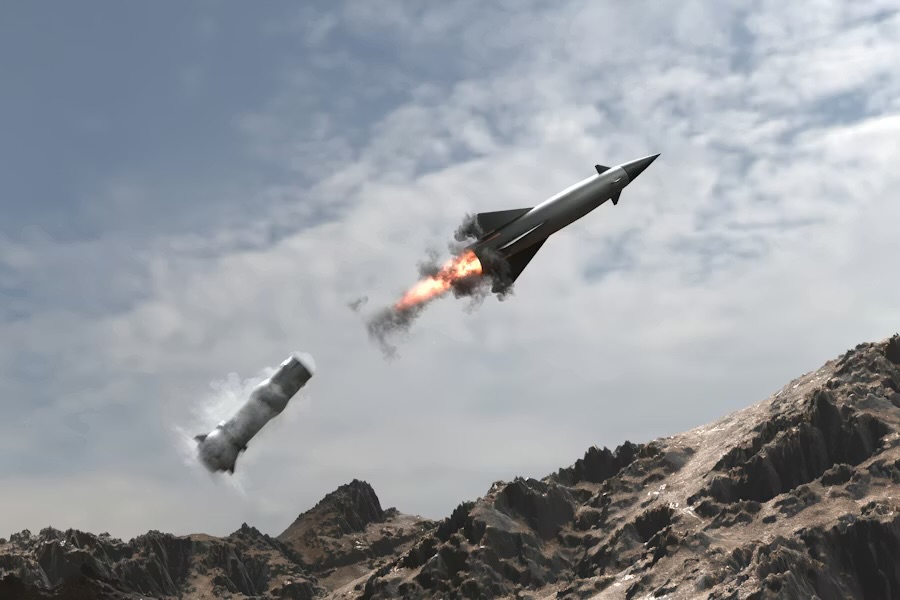
On February 28, 2026, the United States and Israel launched coordinated aerial strikes on Iran, ostensibly to induce regime change and secure stability in the Middle East.
Central to this strategy was the expectation of a mass popular uprising—something glimpsed in January 2026, when tens of thousands of unarmed civilians took to the streets and were met with lethal force. Estimates suggest as many as 30,000 were killed, 7000 independently confirmed. The regime they opposed—a repressive Islamic theocracy entrenched since 1979—remains intact.
This is a war America is unlikely to win.
Despite the destruction of command centers, arsenals, and the targeted killing of senior leadership, including Supreme Leader Ayatollah Ali Khamenei, Iran has demonstrated a capacity for resilience that was either underestimated or ignored.
Its response has been asymmetric and expansive: ballistic missiles and drone strikes aimed not only at Israel but at a widening circle of nations hosting American bases—Qatar, the United Arab Emirates, Kuwait, Jordan, and Saudi Arabia. Recent launches have extended even farther, toward Crete, Turkey, and the joint UK–U.S. base on Diego Garcia in the Indian Ocean, 2400 miles distant.
At such range, the perimeter of vulnerability shifts. Southeastern Europe comes into view; with further technological refinement, even cities such as Rome or Berlin may not remain beyond reach; in a decade, the United States.
As this conflict widens, its economic consequences are already apparent. Iran’s disruption of the Strait of Hormuz, through which roughly one-fifth of the world’s oil supply passes, has driven prices upward, with projections rising sharply. The leverage is stark: Iran need not defeat the United States militarily to impose severe costs. It need only prolong the conflict.
The political implications are equally stark. Domestic opposition is mounting here at home, shaped less by geopolitics than by inflation, felt daily in grocery bills and at the gas pump. A war that amplifies those pressures becomes difficult to sustain, regardless of its stated aims.
Even proposed escalations such as a seizure of Kharg Island, which handles a significant portion of Iran’s oil exports, risk becoming symbolic victories at disproportionate cost.
The comparison to Iwo Jima is not misplaced: a tactical gain unlikely to alter the strategic reality. Much of Iran’s missile infrastructure remains embedded and protected, beyond the reach of conventional assault.
Recent Trump statements suggesting that U.S. objectives have largely been met already signal a search for an exit. Yet an off-ramp may not be readily available. Iran’s advantage lies in time. By sustaining pressure, economic as much as military, it can compel concessions without decisive confrontation.
There was another path.
Rather than precipitating war, a strategy of containment through sanctions and patience might have allowed the regime to atrophy under the weight of its own contradictions. Iran faces converging crises: acute water scarcity, environmental degradation, declining agricultural productivity, economic duress, and deep internal dissent. A large portion of its population—diverse, young, and increasingly disillusioned—has already demonstrated a willingness to demand change at great personal risk.
That internal pressure, not external force, may have proven the more decisive agent of transformation.
–RJ
Discover more from Brimmings: up from the well
Subscribe to get the latest posts sent to your email.

 Brimmings: up from the well
No war can ever be won. War is a failure built into our race.
LikeLike
Fully agree. War is an anachronism that only perpetuates new animosities, leading to the next round.
LikeLiked by 1 person
It’s interesting that you write ‘WE can’t win,’ meaning USA, when it’s the Iranian people who are the subject and supposed beneficiaries.
Beware the seep/down-drip of Trump-thought.
LikeLike