
“I have always imagined that Paradise will be a kind of library.” — Jorge Luis Borges
This year I decided to overhaul my reading habits by adopting what I call focused reading—pursuing a subject deeply rather than wandering endlessly from book to book. Instead of grazing randomly across titles, I try to follow a particular vein: reading several works that illuminate a topic, an author, an era, or a historical moment until the subject begins to feel textured and alive.
For years, though my reading had been eclectic, and not without pleasure, I began to sense that the most memorable intellectual experiences of my life had come, not from isolated books, but from immersion, one work leading naturally to another, ideas conversing across pages and centuries.
Reading then becomes less a pastime than a form of exploration, the mind moving gradually through a landscape rather than darting past it from the window of a passing train.
This year I began, as usual, with my annual eclectic list of fiction and non-fiction culled from authoritative sources. But going forward, I hope to limit that list to perhaps twenty titles—books that seem especially deserving of attention.
Alongside these, I’ve begun concentrating on several areas. This year they include the farming iconoclast Wendell Berry; the conservative economist Thomas Sowell; the late historian Walter Johnson; and the classical world—an area where I lack deeper exposure.
Next year, should I still walk the planet, I can imagine expanding the method further: perhaps ten topic areas, each composed of primary and secondary works. Five books per topic would yield roughly fifty works of focused reading, in addition to the twenty eclectic titles.
To give an example, one of this year’s areas of focus is the classical milieu. Staying within my five-book limit, I chose the following:
• The Republic — Plato
• Nicomachean Ethics — Aristotle
• The Bacchae — Euripides
• Metamorphoses — Ovid
• Letters from a Stoic — Seneca the Younger
So far, my experiment is yielding dividends. I’ve committed to reading a minimum of fifty pages a day—assuming an average book length of about three hundred pages—and by mid-March I’ve completed twelve books. Last year, by contrast, I finished only twenty.
I should confess that Atomic Habits by James Clear helped inspire the discipline. Clear’s practical application of behavioral psychology, ideas traceable to B. F. Skinner, encouraged me to approach reading not merely as an aspiration but as a daily practice. Nowadays I cringe when my routine threatens the minimum and will sometimes delay sleep simply to complete my pages.
Such discipline may seem quaint in an age that offers a thousand distractions. Once it was linear television that eroded the nation’s reading habits; today, the Internet amplifies the trend. Last year, nearly half of Americans, 48.5 percent, did not read a single book. In Britain, the figure stood at 40 percent, according to a YouGov poll reported in the Times Literary Supplement.
Bottom line, Americans spend roughly four to five hours each day watching television or streaming media; in Britain, the average approaches four and a half hours. Platforms such as Netflix, Hulu, YouTube, and Facebook dominate much of that viewing.
Add the hours spent on smartphones, computers, and tablets and the total easily approaches seven hours a day, nearly the equivalent of a full workday, devoted to screens. Much of that time is spent watching movies, sports, or the endless scroll of digital entertainment.
Younger generations, though still fond of sports and films, increasingly inhabit the fast-moving currents of TikTok, YouTube, and video games.
Reading, by contrast, has steadily fallen out of fashion.
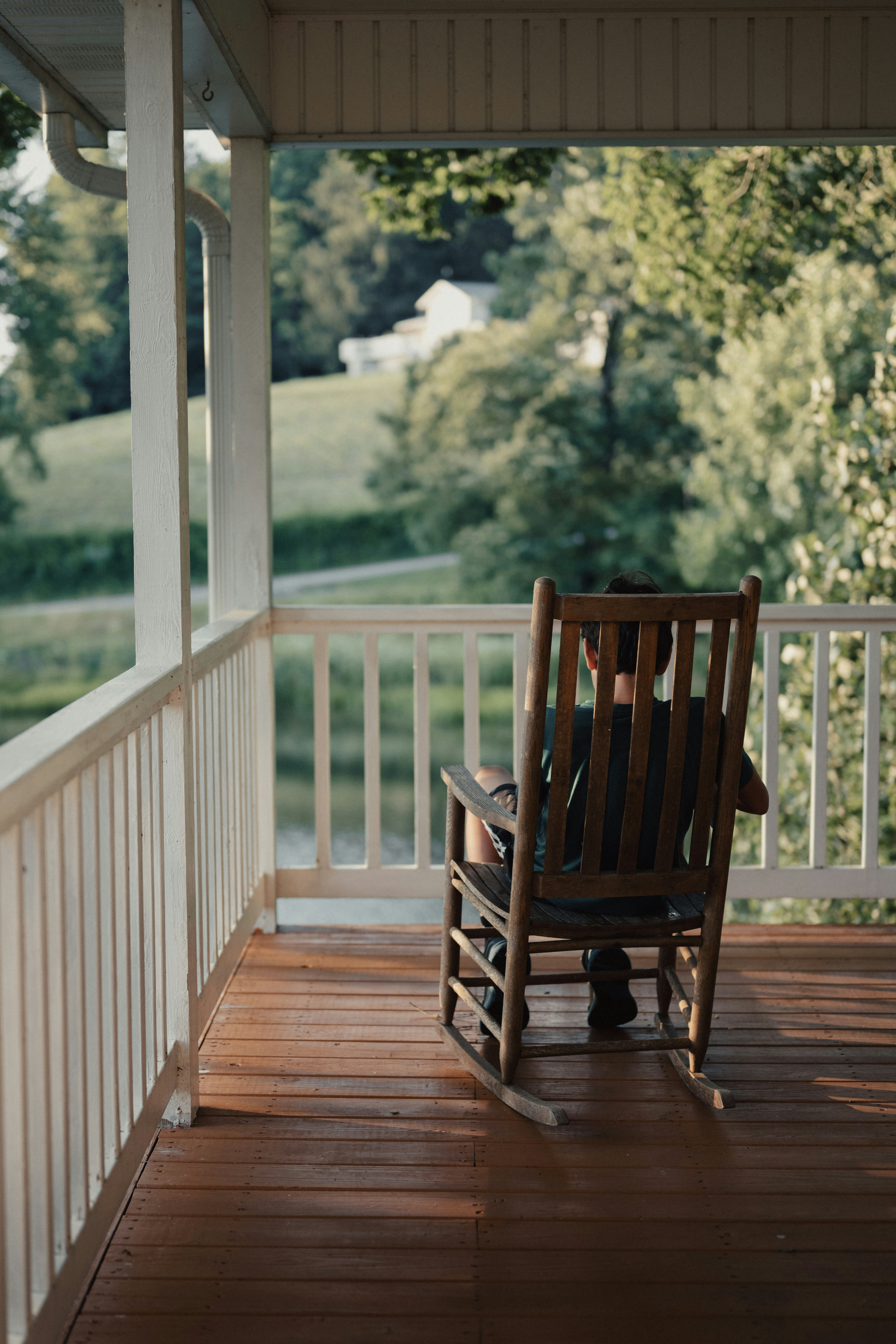
Nor has reading alone suffered. The social fabric has frayed as well. I remember when houses faced the street with broad porches where neighbors gathered in the evening, waiting the advent of night’s coolness, conversation drifting unhindered from one subject to another, board games on small tables, laughter an abundant sprinkling of neighborly fellowship.
This simple act of sitting together seemed reason enough to linger.
Today, many houses turn their porches to the rear, facing private yards rather than the street, as if community itself had quietly retreated.
Perhaps this is why books continue to matter.
Reading restores a community the modern world has forsaken.. Open a book and time folds in upon itself: Plato resumes his patient inquiry into justice; Seneca counsels composure in adversity; Ovid reminds us that the human story is one long sequence of transformations. The centuries speak again in voices at once distant and intimate.
Books, in this sense, comprise the old porch of civilization.
There we sit again with the living and the dead alike, the conversation unbroken. The room grows quiet, the hour late, yet the mind moves freely—wandering Athens with Aristotle, pausing in the tragic shadows of Euripides, or returning, perhaps a little wiser, to our own small corner of the world.
So I keep my modest covenant of fifty pages a day. Not simply to finish more books, though that is pleasant enough. I read because within those pages waits a larger company and a wider horizon.
In a distracted age, the turning of a page may be one of the last quiet forms of freedom left to us.
—rj
Discover more from Brimmings: up from the well
Subscribe to get the latest posts sent to your email.

 Brimmings: up from the well