We Will Not Have a King! America Says No to Donald Trump

I know I’m preaching to the choir for the most part, but silence is not an option given a White House ogre who would be king, trampling the bounds of our Constitution and violating every norm of moral decency

Not a single day passes without his intrusion. He is everywhere — America’s unprecedented micromanager — overriding the citizenry’s right to dissent and Congress’ constitutional sovereignty over the nation’s purse.

He persecutes critics with vitriol, weaponizes the Department of Justice for revenge and governs, not by law, but by impulse and ego.

It was not enough for him to pave over Jackie Kennedy’s iconic Rose Garden. Now a $200 million, 90,000-square-foot ballroom extravaganza is under construction — an East Wing expansion with bulletproof glass and ostentatious design that mocks the White House’s classical restraint.

Three days ago, during a dinner for corporate behemoths — Amazon, Apple, Meta, Google, Microsoft, T-Mobile, and Comcast among them — he unveiled plans for an American Arc de Triomphe to rise across the Potomac, opposite the Lincoln Memorial. Contributors, he promised, will have their names engraved.

Within the White House he’s installed a “Presidential Walk of Fame” lined with photos of his predecessors, except for former President Joe Biden, represented by an autopen image.

On his orders, massive flagpoles have been installed on the White House south grounds. It appears he wants to emulate France’s Louis XIV and facsimile Versailles.

Meanwhile, our nation suffers as his tariffs induce seismic consequence for world markets, a boomerang policy ensuring economic stress here at home. Consumers already feel the pinch.

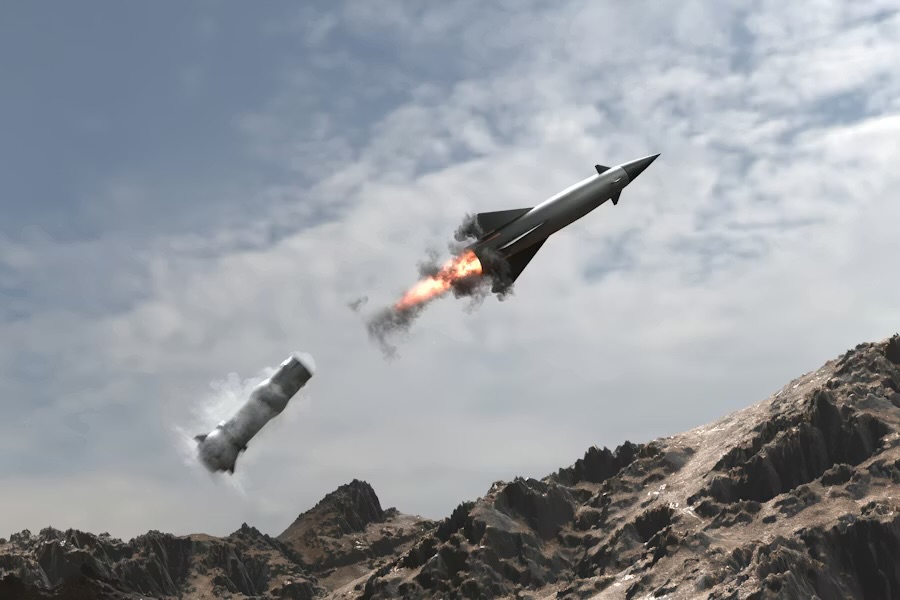
Yesterday, the would be King informed visiting Ukrainian president Zelensky he’ll not be getting those coveted tomahawk missiles after all. Russia and Ukraine must stop their war, even if it means Ukraine must surrender much of its land. In coming weeks, he will meet a second time with despot Putin in Budapest to hammer out Ukraine’s fate. He deems himself a peacemaker even as he plots Venezuelan intervention and guns down boats at sea.

Today, media reports Ukraine’s defenses are rapidly buckling; more so, its morale. Trump’s misfire, propelled by egotism, promises to outweigh Russia’s nightly onslaught of missiles and drones, delivering a coup de grâce assuring Ukraine’s doom.

Yesterday, Trump pardoned the notorious George Santos, sentenced to seven years for multifarious deceit. Will Epstein’s collaborator Ghislaine Maxwell be next?

In this time of climate challenge posing a future earth transformed into a version of Mars, Trump has systematically, unhesitatingly, chosen to war on the environment, auctioning off public lands for fossil fuel development, sanctioned logging the nation’s remaining pristine wilderness, suspended curbs on air and water pollution, subsidies for renewable energy technology—electric vehicles, solar and wind—visionary endeavors prodigious with promise.

Ominously, yesterday he sent 80% of our nuclear arsenal guardians home, surely sheer madness in a time of mounting Russian, Chinese, and North Korean intimidation.

Implementing his autocratic reach for fascism are his incompetent lackeys and sycophantic Republican enablers, who conflate loyalty with virtue.

Let him build his Versailles of glass and steel. We choose otherwise, our priority a republic defined by courage and conscience.

March boldly, my fellow warriors for freedom. Let your voices fill every street and square: “We will not have a king!”

–RJ

Susan Sontag’s Regarding the Pain of Others: A Review

Deborah Feingold/Corbis via Getty Images) Susan Sontag (Photo by Deborah


Taking photos is now so universally accessible via our smartphones that we’re likely to take it for granted.

Until recently, it required buying a dedicated camera, inserting a film roll, setting the lens, then waiting—perhaps a week or more—to see the results of a distant lab.

I think of photos as a freeze on time, lovers as Keats reminded us, still fresh in their youth; sons and daughters, children still; parents and grandparents as we remember them. But photos, buttressed with videos, do even more, providing a window on what ails us.

Susan Sontag in her splendid book I’ve just read, Regarding the Pain of Others, argues that the visual not only helps us remember, but sensitizes us to the plight of those who acutely suffer while we warm ourselves under the blankets on cold winter nights, our bellies full. A moralist and cultural critic, she takes on the scourge of war’s ravages, a predominantly male enterprise it seems, unleashing the human capacity to inflict limitless evil, often with impunity.

Photography reminds us of Hiroshima and Nagasaki viewed aerially following their atom bomb devastations, incinerating 200,000 civilians within minutes; of emaciated prisoners released from Nazi death camps, the residue of 12 million exterminated; of ethnic strife in Bosnia in 1992, culminating in Srebrenica; of the dead and dying of 9/11; the machete butchering, killing 500,000 Tutsis in Rwanda. We cannot afford to let their horrors be relegated to the dumpsters of oblivion.

I remember Vietnam and My Lai (1968) and the American massacre of 500 villagers, the burning of their village, that consolidated American resistance to a needless, barbarous conflict consuming 64000 allied lives and 900,000 Vietnamese, ending a president’s re-election bid. Without film crews, we would have lacked evidence, much like when unleashed Soviet troops raped 130,000 German women after taking Berlin.

The trail is long. Much of Sontag’s narrative isn’t pleasurable reading to be sure, but without photography’s capability for exactitude, man’s inhumanity will never be addressed and perhaps, though distantly, vanish like slavery from the human repertoire. It is our duty not to turn aside, but remember and, beyond acknowledgement, understand war’s antecedents and protest their repetition.

I mourn Sontag’s passing from us in her prime—her cerebral introspection of what ails us, delivered always with compassion and unceasing hope that we can and will do better.

After reading her book, I thought of Palestinians in the Gaza strip, desperate for food, killed daily, many of them women and children. As I write, the UN Office for the Coordination of Humanitarian Affairs (OCHA) informs us that 900 Palestinians seeking food have been killed since mid-May. Unlike other conflicts, the foreign press has been banned from access to Gaza.

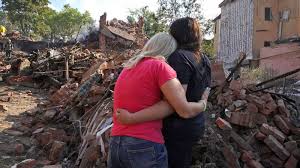
I think, too, of Putin’s accelerated nightly aerial assaults, on Ukraine, targeting civilian infrastructures: hospitals, ambulances, apartment buildings, shopping malls and, by day, farmers plowing their fields.

Photography offers documentation. Sontag was right: without photography, we are denied access to the truth and the scourge of war is assured its continuence.

—rj


Putin’s Aggression, Trump’s Betrayal, and Europe’s Challenge

  • Photo by Ukraine.ua on September 07, 2023.

You may not have heard of Tim Snyder, but he’s worth knowing. A Yale professor of Eastern European history and authority on the Holocaust, his vitae includes sixteen books and many academic awards. A Brown and Oxford graduate, he speaks five European languages and reads in ten.

I mention him because of his ardent defense of a free Ukraine, whose fate now lies in jeopardy. This month he’s been in Ukraine, a participant in a dedication of a new underground school for children a mere twenty miles from the front and within twenty second reach of Russian cruise missiles.

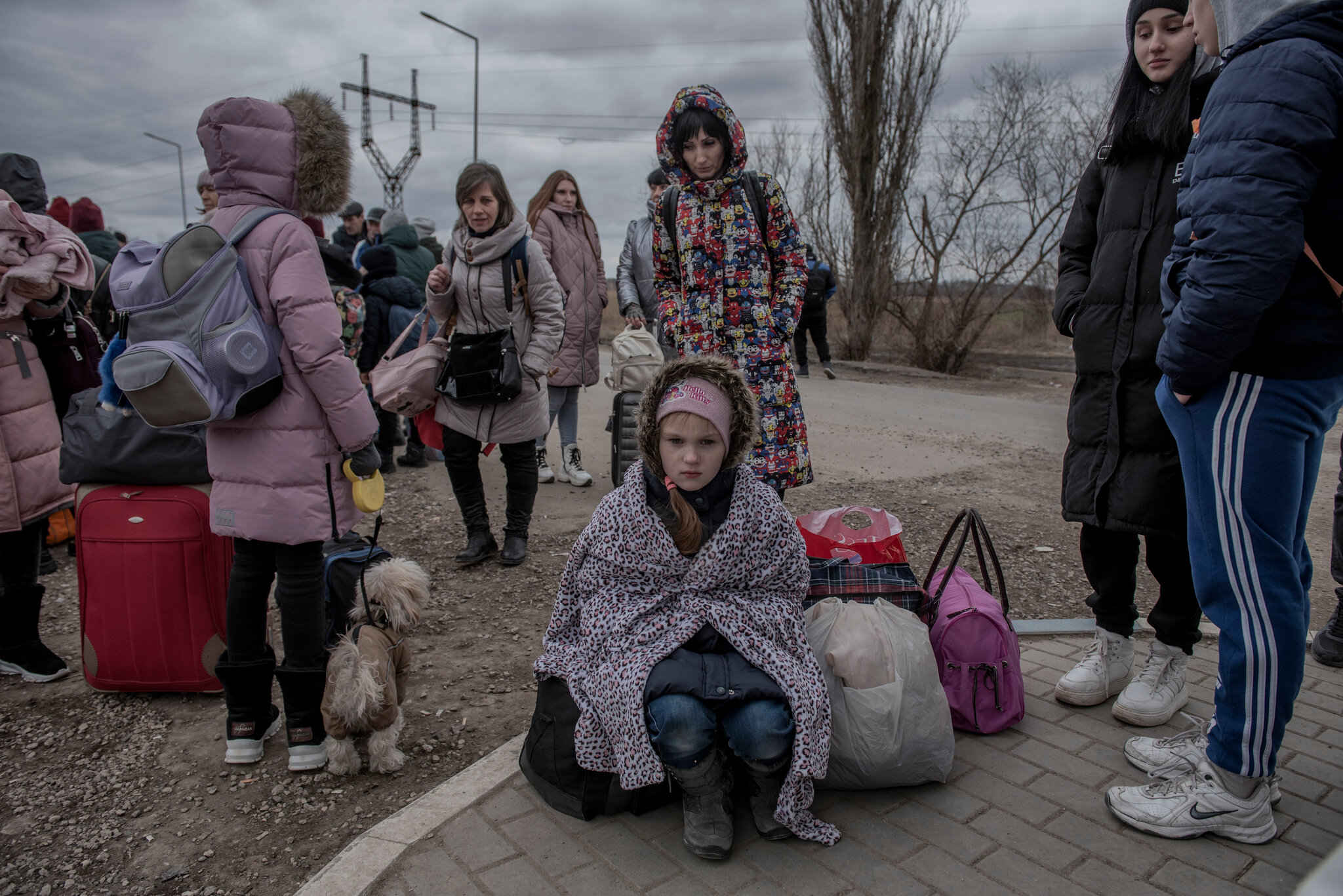
Today marks the end of three years of Ukraine’s brave resistance to its Russian invaders, who now occupy twenty percent of its land. The school has to be underground, as Russian targets include schools as well as hospitals, civilian housing, energy infrastructure, and even shopping malls.

Now Ukraine confronts its most insidious danger—Trump’s abandonment of Ukraine. Snyder reminds us that Trump cares little about Europe. What matters is making deals in exchange for profit as seen in his demand Ukraine grant rights to fifty percent of its minerals. Like Gaza, Greenland, and the Panama Canal, it’s about adding real estate to his portfolio.

Ukraine’s destiny now lies in European hands, but their commitment isn’t assured. Rewarding Kremlin aggression makes more aggression likely, particularly involving the Baltic nations of Estonia, Latvia, and Lithuania, each with a considerable Russian minority similar to that of Ukraine.

There are ways you can help Ukrainians. Snyder sponsors Documenting Ukraine, which affords Ukrainians a voice. There is also Come Back Arrive, supporting Ukrainian soldiers; RAZOM assisting civilians; and United 24, the Ukrainian government’s site for donations.

Few will read my lengthy post, but for those who do, donate, if you can—and while at it, join the resistance. You know what I mean.

—RJoly

One Year Ago Today: Russia Invades Ukraine

A year ago today, Russian troops invaded Ukraine. Bravely, the Ukrainians have held out, despite massive loss of life and daily drone and missile attacks on civilian infrastructure. Fighting remains intense in Bakhmut, with many killed on both sides.

It’s a ruthless enemy, resorting to crimes against humanity, as the mass burial sites of Bucha and Izium bear witness, hundreds of civilians shot, their bodies evidencing torture and mutilation. Wheat fields have been bombed, Ukrainian children deported to Russia.

Western military assistance has been crucial to the Ukrainian resistance. That’s now in jeopardy, given increasing malaise in the West to support Ukraine. In the U.S., a newly elected House majority of Republicans presses for a funding cutoff.

If this happens, Ukraine loses the war and previous Russian imperialism (Chechnya, Georgia, Moldavia), continues and its contagion spreads. Think China, Iran, North Korea.

Loss of Western political will is demagogue Putin’s best hope.

—rj