
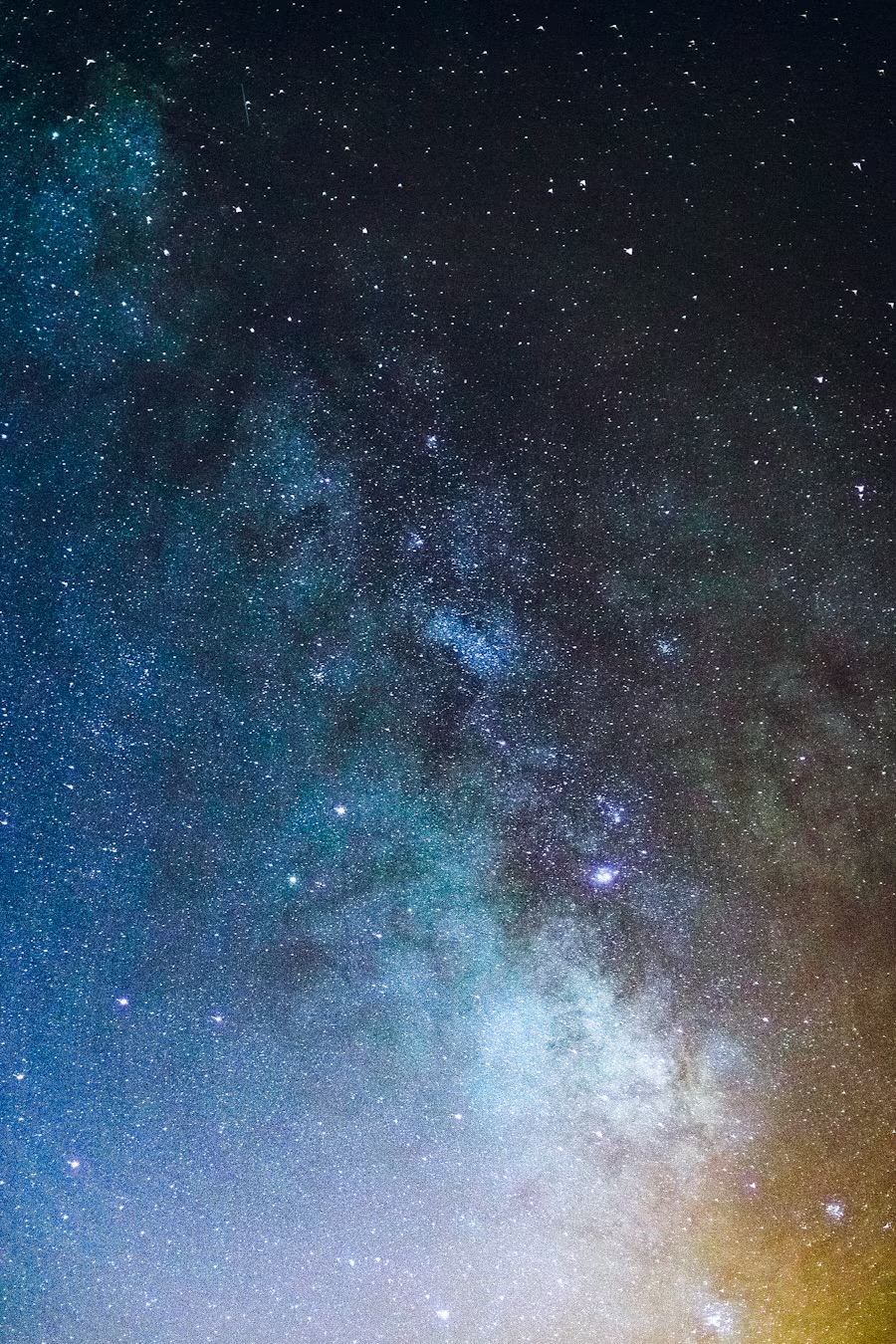
Our universe is mind-boggling in its vastness and mystery. Astronomers estimate it contains on the order of a septillion stars—roughly a 1 followed by twenty-four zeroes—though such figures apply only to the observable universe, bounded by the reach of our most powerful telescopes.
Though stars appear to us as ageless fixtures of deep time, they too—like all things—have beginnings and endings.
Our universe itself burst into being some 13.8 billion years ago. It continues to expand as galaxies rush away from one another, yet it will not expand forever in any form recognizable to us. Ultimately, it will be unable to sustain the structures that make matter—and life—possible.
How it ends remains a matter of fierce conjecture. The leading scenario suggests that as galaxies drift ever farther apart, they will fade beyond visibility; their stars will exhaust their fuel, leaving space cold, dark, and diffuse—a state known as thermodynamic equilibrium, or maximum entropy.
Sleep well, however. Such an ending lies far beyond the human temporal imagination.
Our sun, a middle-aged star at roughly 4.6 billion years old, has another four or five billion years ahead of it. Before its quiet extinction, it will grow hotter and brighter, boiling away Earth’s oceans and transforming the planet into a scorched desert—an irreversible greenhouse effect.
What truly unsettles me is the possibility that other universes may have existed before our own. Classical Big Bang theory posited a singular origin—a point of infinite density from which space and time themselves emerged. More recent theories challenge this view, suggesting instead that our universe may be one episode in an endless cycle of expansion and contraction.
The mystery deepens further. Might other universes exist now, alongside our own? Many physicists think so. If space extends infinitely beyond the observable horizon—currently about 46 billion light-years in radius—there may be regions forever beyond our capacity to detect, perhaps governed by laws of physics unlike our own.
The takeaway is not randomness, but recurrence: a cosmos governed by patterned transformation—birth, death, and regeneration repeating across unimaginable scales.
The end of Earth, and even of our universe, would not mark finality, but transformation.
Our suffering arises from clinging to permanence. The Buddha may have intuited this truth 2,500 years ago: reality is not static but dynamic—endless flux, expansion and contraction. Modern physics echoes the insight in the laws of thermodynamics: energy is neither created nor destroyed, only transformed; and all systems tend toward entropy.
We live, then, not in a fragile accident, but in a universe shaped by the regularity of change itself.
–rj

 Brimmings: up from the well