
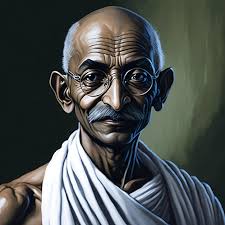
Martyr’s Day: Gandhi’s Vanishing Legacy

Today marks Martyr’s Day in India. On this day, January 30, 1948, Mahatma Gandhi, father of a free India, visiting New Delhi to address an evening Hindu prayer meeting, was gunned down by nationalist Nathuram Vinayak Godse, who fired three bullets into his chest, killing him. Godse believed Gandhi was overly conciliatory to Muslims.

Falling to the ground, Gandhi reputedly moved his hand to his forehead in the Hindu sign of forgiveness, his final words, “He Ram, He Ram” (“Oh God, Oh God”).

This happened a mere five months after India had won independence from British rule.

Committed to the Tolstoy principle of non-violence, Gandhi would be appalled at the changes sweeping across today’s India in the wake of a Hindu fundamentalism of tsunami proportions not adverse to employing violence against those perceived as threatening its interests, augmented by a Modi government keen to buttress its hegemony by supporting religious bias.

A few days ago, January 22, saw the dedication of the new Ram temple in Ayodhya, said to be Ram’s birthplace. Ram is the seventh avatar of the god, Vishnu, and regarded as deity.

_=Ram Temple, Inauguration Day

Modi had promised the temple in his initial run for prime minister and was present to inaugurate the temple: “Today, our Ram has come. After centuries of patience and sacrifice, our Lord Ram has come,” said Modi.

Built on a 70-acre site previously occupied by the four century old Babri Mosque, torn down in 1992 by a frenzied Hindu mob, thousands died in the sectarian violence that followed. None of the perpetrators were sentenced.

Not that any of this mattered to the Bharatiya Janata Party (BJP) of Narendra Modi, entrenched in power since 2014. The Ram Temple symbolizes the supremacy of both the BJP and a Hindu culture that discourages pluralism.

In contrast, India’s founding fathers, recognizing the myriad religious diversity of India—Muslims, Buddhists Christians, and Jains—eschewed pandering to any faction.

Ironically, India seems to be following in the steps of Pakistan, deliberately created as a Muslim state.

Chillingly, there’s the legacy of Hindu nationalist M. S. Golwalkar, advocating that “minorities in Hindusthan must either adopt the Hindu culture and language, must learn to respect and hold in reverence Hindu religion, must entertain no idea but those of the glorification of the Hindu race and culture, i.e., of the Hindu nation and must lose their separate existence to merge in the Hindu race, or may stay in the country, wholly subordinated to the Hindu Nation, claiming nothing, deserving no privileges, far less any preferential treatment – not even citizen’s rights.”

Modi deemed Golwalkar one of his primary influences in his 2008 book, Jyotipunj (Beams of Light).

Today’s Hindu dominated India, 80% of its population, increasingly imposes Golwalkar’s dictum of a monolithic culture impervious to those it views as interlopers, deserving of restriction and possibly extinction.

In the first eight months of 2023, 525 attacks on Christians occurred. In the state of Manipur, 642 churches were torched by Hindu arsonists “receiving support from people in power,” said the United Christian Forum (UCF).

Notorious was the killing of Australian missionary Graham Stuart Staines in 1999, along with his two sons, Philip (aged 10) and Timothy (aged 6), burnt to death by a Hindu Nationalist group named Bajrang Dal. Stains, a medical doctor, had come to India several years earlier to treat lepers and minister to the poor. He was accused of “forced conversions,” a common rumored charge among Hindu nationalists.

As is, Christians comprise a mere 2.3 % of India’s teeming population.

Indian Muslims, comprising the third largest Muslim population in the world, have likewise been continuously assaulted, often accused of cattle rustling.

2020 saw the Delhi riots, killing 53 people, 40 of them Muslim. In its aftermath, Modi denied his government discriminates against Muslims, despite the BJP’s legislating the Citizen’s Act, restricting citizen eligibility of undocumented immigrants, largely Muslim, and prohibiting proselytizing by Muslims and Christians.

An investigation of the Delhi riots by the independent Delhi Minorities Commission found the violence “planned and targeted” and several police actively participating in attacking Muslims. A subsequent video confirmed several policemen beating five seriously injured Muslim men lying on the street and forcing them to sing the Indian national anthem to prove their patriotism.

I won’t go into persecution of the Sikh population, increasingly viewed as disloyal citizenry, seeking establishment of an independent state. Canadian and American intelligence agencies have uncovered assassination plots, one of them succeeding in Canada, against Sikh diaspora leadership.

Meanwhile, President Biden went all out for the state visit of Prime Minister Midi, hosting a vegetarian dinner on June 21, 2023, despite protestors among Democrats and the urgings of Human Rights Watch and Amnesty International that he confront Modi on the matter of human rights in India. The President would later say he did so in private conversation with Modi, but if so, any details were excluded from his public closing summation.

India, which held so much promise for an enlightened democracy upon its emergence as a free nation, has altered its raison d’être over the last decade, increasingly disenfranchising its minorities and critics.

I have wondered how my friends are faring in Kerala, where the apostle Thomas ministered to the natives 2000 years ago. Its Christian community is India’s largest . Unfortunately, the Catholic leadership has cozied up to the BJP in return for its support of a good price for Kerala rubber. I find it a dubious Faustian exchange, prioritizing profit over the welfare of Christians elsewhere in the nation.

I think back to my privileged visit years ago to Gandhi’s simple bed, cup, and walking stick. I had read about him at age ten, which began my lifetime devotion to this great man, advocate of non-violence, charity to the poor, abolishing caste, proponent of women’s emancipation and, of course, India’s freedom. His impact on Martin Luther King and the American civil rights movement is fully acknowledged.

It’s Martyr’s Day as I said at the outset. Is it conceivable Gandhi’s leading India’s into the promise land of sovereignty has transpired into a new tyranny of oppression, imposed not by a foreign entity, but by an Indian government weaponizing nationalism for its own ends?

Sadly, Modi and the BJP enjoy widespread favorability in today’s India, assuring long term oppression of India’s religious and political minorities, usurping the enlightened legacy of Gandhi and Nehru with their targeted bigotry.

–rj

The New Martyrdom: Christians in Peril

NewsweekLogo-1 [Converted]

What do these nations below have in common?  Quick answer:  they all persecute Christians.  What’s more, thirty-seven of them are Muslim nations:

  1. North Korea
  2. Somalia
  3. Syria
  4. Iraq
  5. Afghanistan
  6. Saudi Arabia
  7. Maldives
  8. Pakistan
  9. Iran
  10. Yemen
  11. Sudan
  12. Eritrea
  13. Libya
  14. Nigeria
  15. Uzbekistan
  16. Central African Republic
  17. Ethiopia
  18. Vietnam
  19. Qatar
  20. Turkmenistan
  21. Laos
  22. Egypt
  23. Myanmar
  24. Brunei
  25. Columbia
  26. Jordan
  27. Oman
  28. India
  29. Sri Lanka
  30. Tunisia
  31. Bhutan
  32. Algeria
  33. Mali
  34. Palestine
  35. United Arab Emirates
  36. Mauritania
  37. China
  38. Kuwait
  39. Kazakhstan
  40. Malaysia
  41. Bahrain
  42. Comoros
  43. Kenya
  44. Morocco
  45. Tajikistan
  46. Djibouti
  47. Indonesia
  48. Bangladesh
  49. Tanzania
  50. Niger

This shouldn’t come as any surprise.  As the Skeptical Inquirer reports, Islam currently poses the world’s greatest threat to human freedom, or to think for oneself.

You’ll note that this is a gradated list, with the worst offenders coming first, among them North Korea, a non-Muslim Stalinist holdout that persecutes Christians vigorously.  Estimates have it that between 50,000 to 70,000 Christians languish in prison camps, with few survivors likely, given the brutal conditions.  An unconfirmed report, says that  80 Christians were executed in November, 2013.  Change the regime, however, and the persecution will cease, as happened after the collapse of the Soviet Union.  Ironically, today’s Russia is the one nation that has vigorously denounced the persecuting of Christians.

Not so for Uzbekistan, Turkmenistan, and Tajikistan–all former Muslim constituents of the Soviet Union–where persecution of Christians continues.

You’ll see that the list also features some U. S. allies like Saudi Arabia and even Kuwait, a Muslim nation we saved from Saddam’s incursion.

And, of course, we all know about Pakistan with its endless duplicity, a nation outraged by our killing of Osama bin Laden who had taken refuge there and a free haven for the Taliban.  Persecuting Christians is almost a sport in Pakistan, with Christians often accused falsely of violating blasphemy laws by those seeking their property.

But Kenya, a nation with a predominantly Christian population, is also on the list.  This is because Kenya also has a minority Somalian population.  Bombings are frequent as in the recent terrorist insurgency from Somalia itself, resulting in the Nairobi mall massacre in which Christians were deliberately targeted and Muslim hostages let go.

Meanwhile in Egypt, several hundred Coptic churches have been ransacked and many of them burned by deposed President Morsi supporters from the Muslim Brotherhood.

As in Kenya, a nation needn’t have a Muslim majority for Christians to be singled out.  Take, for example, the Central African Republic, which has been in the recent headlines.  Following a recent seizure of power by a Muslim in a county overwhelmingly Christian, the Muslim minority immediately began to kill Christians.  Here, Christians formed their own militias to wade off the attacks, successfully driving the usurpers from power.

Some of the worst scenarios for Christians are playing out in war-ravaged Syria, whose Christian community dates back to the first century and St. Paul, who was converted on his way to Damascus.   In 2013, 2,123 Christians died, representing a 100% increase over the previous year.  Assad, by the way, didn’t persecute Christians.  In some Christian towns, insurgents have given Christians the option of converting or being executed on the spot.  Priests have been killed; nuns taken hostage.

It’s conceivable that soon there will be no Christians left in the Middle East.  Consider Iraq:  Before our incursion in 2003, there were some 2 million Christians in Iraq.  Only about half now remain.  According to the UN Committee for Refugees, 850,000  Christians  have left at last count.  There may even be as few as 250,000 remaining.

Before the rise of Islam in the 7th century, the Levant and North Africa were actually largely populated by Christians.   St. Augustine, in fact, was a North African bishop. Then came the Arab invasions, spreading “the religion of peace” by the sword.  The truth is that Islam hasn’t changed very much across the centuries, in doctrine or behavior.  Unlike Christianity, it’s rooted in a fundamentalism that has stubbornly resisted reform.  It’s as though time stood still.  It’s questionable whether Islam can ever reconcile with the tenets of democracy, for what Islam fears most is divergent opinion.

But I also want to be fair.  I studied in France a number of years ago and came into contact  with a good many Muslims.  My politics, not my religion, was what mattered.  In fact, not once did faith enter into our conversations.  Additionally, I frankly sympathize with the Palestinians in their quest for nationhood and a return to 1967 borders.  I haven’t any quarrel with secular Muslims, whom militants place in the same company as Western “infidels.” I cherish the several friendships I developed that transcended religion and homeland, whether Iraq, Palestine, Syria, Jordan, or Iran.

Unfortunately, where persecution of Christianity does exist, it often generates from a perception of the West as anti-Muslim.  We give billions to Israel annually, much of it employed to buttress Israel’s military might.  Think, for a moment, how you would feel were your people strafed and bombed by Israeli pilots flying American fighter jets, or your lands appropriated by Israeli settlers feverishly supported by many American evangelicals.  We don’t have a good footprint when it comes to the Middle East.  I would even argue that our disregard for the Islamic culture and faith has made groups like al Quaeda possible, feeding on aeons of resentment.  Unfortunately, Christians are caught in the exchange.

Religion, like politics, can prove violent in absolutes giving no ground.  I despise the lingering animosities of every political and religious faction.  True progressives move past ideology to an embrace of the human family.  I also distain religionists who fashion deity into a human assemblage, or composite of ourselves, incumbent with our prejudices and capacity for malevolence.

I likewise dislike the silence of governments with regard to the assault on Christians in their pursuit of  the political game of expediency.  I find this as unsavory as militant Islam’s historical penchant to impose religious and socio-political hegemony.

I yearn for the day that moderate Muslims disavow the sword; that Israelis cease their apartheid; that the U. S. commits itself to genuine justice for those long denied.  I think of Article 18 of the Universal Declaration of Human Rights:  “Everyone has the right to freedom of thought, conscience and religion; this right includes freedom to change his religion or belief, and freedom, either alone or in community with others and in public or private, to manifest his religion or belief in teaching, practice, worship and observance.”

But do I wake or sleep?

–rj