Susan Sontag’s Regarding the Pain of Others: A Review

Deborah Feingold/Corbis via Getty Images) Susan Sontag (Photo by Deborah


Taking photos is now so universally accessible via our smartphones that we’re likely to take it for granted.

Until recently, it required buying a dedicated camera, inserting a film roll, setting the lens, then waiting—perhaps a week or more—to see the results of a distant lab.

I think of photos as a freeze on time, lovers as Keats reminded us, still fresh in their youth; sons and daughters, children still; parents and grandparents as we remember them. But photos, buttressed with videos, do even more, providing a window on what ails us.

Susan Sontag in her splendid book I’ve just read, Regarding the Pain of Others, argues that the visual not only helps us remember, but sensitizes us to the plight of those who acutely suffer while we warm ourselves under the blankets on cold winter nights, our bellies full. A moralist and cultural critic, she takes on the scourge of war’s ravages, a predominantly male enterprise it seems, unleashing the human capacity to inflict limitless evil, often with impunity.

Photography reminds us of Hiroshima and Nagasaki viewed aerially following their atom bomb devastations, incinerating 200,000 civilians within minutes; of emaciated prisoners released from Nazi death camps, the residue of 12 million exterminated; of ethnic strife in Bosnia in 1992, culminating in Srebrenica; of the dead and dying of 9/11; the machete butchering, killing 500,000 Tutsis in Rwanda. We cannot afford to let their horrors be relegated to the dumpsters of oblivion.

I remember Vietnam and My Lai (1968) and the American massacre of 500 villagers, the burning of their village, that consolidated American resistance to a needless, barbarous conflict consuming 64000 allied lives and 900,000 Vietnamese, ending a president’s re-election bid. Without film crews, we would have lacked evidence, much like when unleashed Soviet troops raped 130,000 German women after taking Berlin.

The trail is long. Much of Sontag’s narrative isn’t pleasurable reading to be sure, but without photography’s capability for exactitude, man’s inhumanity will never be addressed and perhaps, though distantly, vanish like slavery from the human repertoire. It is our duty not to turn aside, but remember and, beyond acknowledgement, understand war’s antecedents and protest their repetition.

I mourn Sontag’s passing from us in her prime—her cerebral introspection of what ails us, delivered always with compassion and unceasing hope that we can and will do better.

After reading her book, I thought of Palestinians in the Gaza strip, desperate for food, killed daily, many of them women and children. As I write, the UN Office for the Coordination of Humanitarian Affairs (OCHA) informs us that 900 Palestinians seeking food have been killed since mid-May. Unlike other conflicts, the foreign press has been banned from access to Gaza.

I think, too, of Putin’s accelerated nightly aerial assaults, on Ukraine, targeting civilian infrastructures: hospitals, ambulances, apartment buildings, shopping malls and, by day, farmers plowing their fields.

Photography offers documentation. Sontag was right: without photography, we are denied access to the truth and the scourge of war is assured its continuence.

—rj


No Other Land: A Story That Must Be Told

The Academy Awards take place tonight, but I may not watch.

I have misgivings, particularly about the industry’s apparent exclusion of films that highlight the Palestinian plight in Israel.

Like many others, I don’t miss theaters. It’s nice just lounging in an easy chair, scrolling through endless streaming choices on a big-screen TV, microwaved popcorn at hand. Traditional studios have taken the hint, shifting their priorities toward digital platforms.

A few times, I’ve ve been tempted to return to the theater to see films like Top Gun: Maverick for its effects, or Oppenheimer, for its brilliant portrayal of a conflicted scientist. But I always hold off, knowing that within months, I can rent or buy the film and avoid the steep ticket prices.

Now comes another film, a documentary No Other Land, winner of the Berlin International Film Festival and the Gotham Award for Best Documentary, now an Oscar nominee.

Yet no American studio dares to sponsor it.

Jointly directed by Palestinian and Israeli filmmakers, No Other Land lays bare the struggles of Masafer Yatta, a West Bank community facing near-daily assaults from Israeli Defense Forces and encroaching settlers who want them gone, the latter, an updated version of the Ku Klux Klan. The IDF claims it needs the land for a military training base.

Two weeks before the film’s Oscar nomination, masked settlers stormed Masafer Yatta, destroying homes. In one instance, caught on film, a resident was shot in the stomach. The filmmakers themselves have been harassed, even shot at, over five years of production.

Palestinian director Basel Adra, a Masafer Yatta resident, has been targeted multiple times. Yet he refuses to leave the land where his family has lived for generations.

His Israeli co-director, Yuval Abraham, told The New York Times:
“I look at Basel, who’s living a much more difficult life than myself, and as long as he’s continuing, I feel like I also have to continue. Even if reality is only changing for the worse, it’s not as if we know what would happen if there is no documentation.”

So far, the film has reached just 23 American theaters. Still, the directors hope for broader exposure to awaken audiences to Israel’s deepening colonization of the West Bank and shift public perception.

But in America, supporting Palestinian rights often invites accusations of antisemitism. Trump has proposed deporting Palestinian student protesters. As for Gaza, he advocates expelling its 2 million inhabitants without a right of return.

Ta-Nehisi Coates’ new book, The Message, devotes half its pages to his time in the West Bank. Some criticize him for omitting Hamas’ attack on Israel and its atrocities. Daniel Berner of The Atlantic calls Coates’s analysis simplistic. Yet liberal Israelis, though a minority, may find his perspective compelling.

Coates focuses on the West Bank, not Gaza. In an interview with New York Magazine, he remarked: “I don’t think I ever, in my life, felt the glare of racism burn stranger and more intense than in Israel.”

As expected, some have labeled him antisemitic. The New Republic sees it differently, calling the backlash a massive media failing: “Coates is not antisemitic to defend Palestinian human rights” (Shiner, October 2, 2024).

If No Other Land makes it to my local theater, I’ll give up my easy chair, venture out to the theater, pay the ticket price, not only to witness a remarkable documentary, undertaken at great risk, but to lend my support to a story centered in truths that must be told.

RJoly

US Complicity: A Lack of Political Will


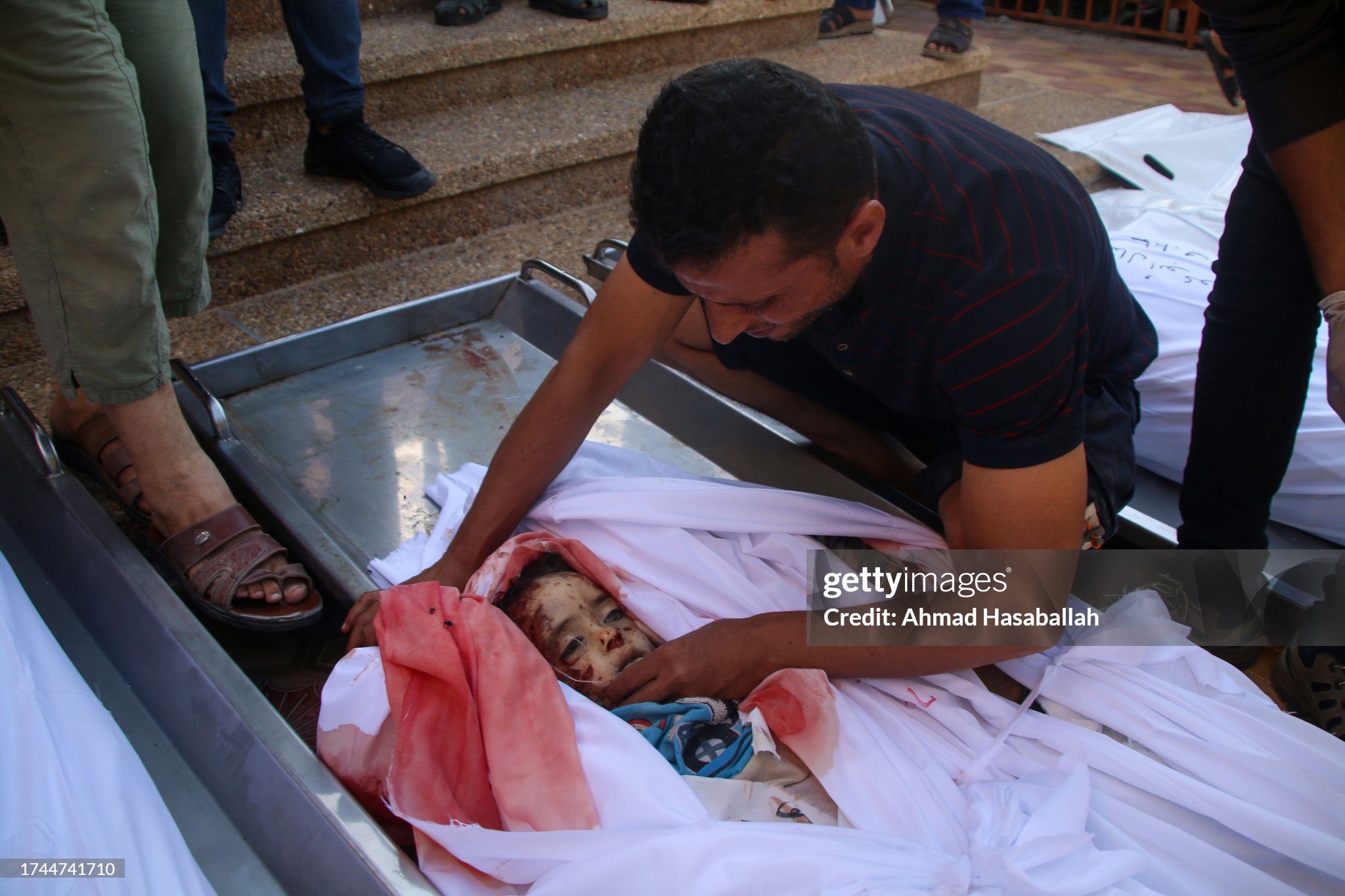
KHAN YUNIS, GAZA -t. (Photo by Ahmad Hasaballah/Getty Images)

If ever there’s been a clarion call for the United States to abandon its military support for Israel, it’s now. Prime Minister Natanyahu has made it clear to Washington that there will be no Palestinian state on the West Bank, rejecting Secretary of State Blinken’s recent plea for a two state resolution as Israel’s surest means to security.

Nor will the Prime Minister, a friend of Donald Trump since the 1980s, scale back Israel’s offensive in Gaza until total victory and return of remaining hostages is achieved.

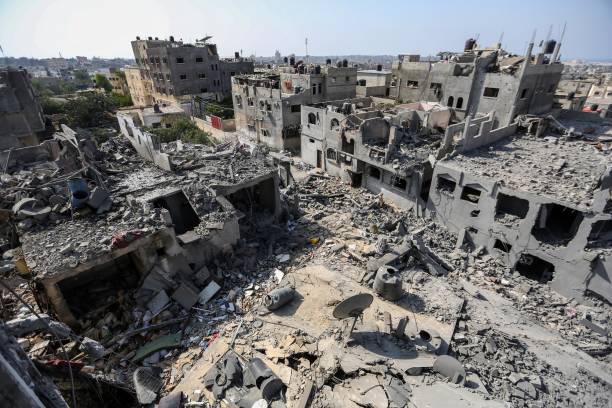
As I write, nearly 25,000 Palestinians have been killed, two-thirds of them women and children; hospitals, mosques, churches and refugee camps bombed; and a frightened civilian population, 1.9 million of them, or 80% of the Gaza population, herded into a southern corridor, and confronted with disease and starvation.

This constitutes the true genocide, which South Africa has brought to the attention of the International Court of Justice (ICC), the UN’s highest court. Fifty-six other nations support the suit, but not the United States and UK. The European Union has chosen silence.

KHAN YUNIS, GAZA – General view of buildings which were destroyed during Israeli bombardment. Photo by Ahmad Hasaballah/Getty Images)

South Africa has also filed a referral to the International Criminal Court (ICC), not to be conflated with the ICJ, though both are located in the Hague. The ICJ can issue arrest warrants, as it did for Vladimir Putin, who must now avoid signatory countries that include South Africa.

What’s not received ample attention is the economic plight Palestinians face. Before Hamas’ October 7 incursion, 400,000 Palestinians were employed by Israel, largely in construction, agriculture and service sectors. I87,000 Gazans have had their work permits canceled; similarly, 167,000 Palestinians on the West Bank.

In the meanwhile, Israel has set up worker recruiting offices in India and Sri Lanka, with the goal of importing between 50,000 to 100,000 replacements.

This may be part of a long term stategy by Israeli nationalists to encourage Palestinians to leave Israel. Take, for example, Finance Minister Bezalel Smotrich’s call for Palestinian residents of Gaza to leave, replaced by Israelis, who could “make the desert bloom.”

Unfortunately, the Biden administration, despite its call for a cease fire and a two state solution, is unwilling to risk political capital and rebuff Netanyahu by suspending military aid to Israel.

By default, it’s rendered the US complicit in Israel’s criminality, angered Progressives, alienated the Muslim community, made the US a global atavar of hypocrisy, and risks dragging the country into a wider conflict, inflicting incalculable consequences, both home and abroad.

–rj