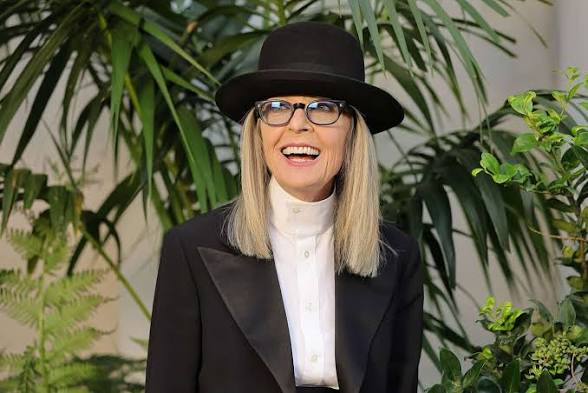
Diane Keaton: Rare and Superb

We’ve just added “Something’s Gotta Give” to our streaming collection—Diane Keaton’s own favorite among the seventy films in which she starred.

I’ve never been much drawn to romantic comedies, but this one—also featuring Jack Nicholson and Keanu Reeves—has held a special place for me.

A compassionate woman, Keaton was more than a Hollywood icon. She gave freely of her time and means to causes close to her heart, including animal welfare. I hadn’t known she refused to eat meat: “I don’t eat meat. I’m a vegetarian, and I’ve been a vegetarian for twenty-five years—and I’ve stopped even eating fish.” Learning this, I admire her all the more.

Art, as Keats reminded us, transcends mortality. We’ve lost you, Diane, but through your movies—and the goodness that shaped you—your legacy endures.
RIP.

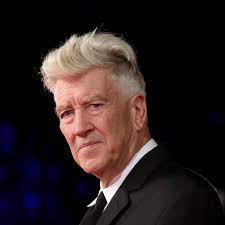
David Lynch: Visionary Filmmaker, Advocate for Inner Peace

Famed director, screenwriter, and actor David Lynch died on Thursday at age 78. Accolades have praised his visionary, surreal contributions to the film industry, featuring productions such as Mulholland Drive and the TV hit series Twin Peaks.

Although no official cause of death has been announced, informed sources suggest he may have been a victim of the LA fires. Forced to evacuate his home, his chronic emphysema reportedly worsened. In November, he said he required oxygen for “walking across the room” (Lynch death). A year earlier, he told sources he was unable to leave his house.

I owe a personal debt to Lynch. A few years ago, I began exploring ways to lessen my daily anxiety. Cognitive behavioral therapy, though offering insights for changing my mindset, hadn’t sufficed. I didn’t want medication with its potential side effects. I wanted to be me.

I turned to meditation, having been impressed by multiple neurological brain imaging studies at Harvard and Massachusetts General Hospital. They showed that meditation conducted on Transcendental Meditation practitioners facilitated anxiety reduction by promoting pacifying beta brain waves.

Looking first for a way to begin, I came across Lynch, who’d begun TM in 1973:

“I started Transcendental Meditation in 1973 and have not missed a single meditation ever since. Twice a day, every day. It has given me effortless access to unlimited reserves of energy, creativity and happiness deep within. This level of life is sometimes called ‘pure consciousness.’ It is a treasury. And this level of life is deep within us all,” he wrote.

Lynch dedicated himself to spreading the word, establishing the David Lynch Foundation for Consciousness Based Education to financially assist adults and children throughout the world to learn TM.

Convinced, I hired a TM instructor and did the training. But it’s important you have the right teacher. I did not.

I couldn’t stop the incessant mental gossip known as “the monkey mind.” That is, until I read Yongey Mingyur Rinpoche’s The Joy of Living. Everything fell into place. You listen to the chatter, returning to your mantra or breath when the mind engages or pursues.

I learned technique, using any of the five senses.

But it was Lynch who did the convincing. As he said, “If you don’t already meditate, take my advice: Start. It will be the best decision you ever make.”

–rj

Julia Thurman: Crafting Worlds with Words

The writers I admire most never use a careless word. Their sentences are unimprovable —Judith Thurman, A Left-Handed Woman.

There exist those books we scarce can put down, riveting us with suspense, prose eloquence, and resonance of human experience.

Others, we struggle with, bored or chagrined by their non-relevance or absurdities. The usual counsel is to jettison them quickly.

Had I done so with Julia Thurman’s A Left-Handed Woman, a book largely focused on fashion couture, playground of wealthy indulgence, I’d have lost out immensely.

Collectively, Thurman’s adroitly articulated 39 essays, gathered mostly from fifty years of writing for The New Yorker, transcend her primary fashion genre, yielding portraitures mostly of heroic women finding autonomy in a patriarchal milieu, leading to my admiration for Thurman, awe at her salient intelligence, fine-tuned to meticulous observation and set-apart brilliance in prose mastery.

As Henry Finder, one of her editors at The New Yorker observes, “She’s not happy with a paragraph until it sings.”

Thurman’s acumen is indisputable, having achieved numerous awards that include a National Book Award for Non-fiction for her biography, Isak Dinesen: The Life of a Writer (1983), inspiring the hit movie, Out of Africa.

Her Secrets of the Flesh: A Life of Colette (1999), earned a finalist National Award for Nonfiction.

She is a recipient of the Ordre des Artes et Lettres by the French government for her contributions to French literature.

A Left-Handed Woman has won PEN’s award for essay excellence .

Nothing surprises me about Thurman. Is there anything she misses in her myriad subject matter teeming with wide-ranging vignettes on not only fashion designers such as Sara Berman, Isabel Toledo, Elsa Schiaparelli , Miuccia Prada Guo Pei and Ann Lowe, but disparate entities like Margaret Fuller, Emily Dickinson, Elena Ferrante, Lee Miller, Eva Zeisel, Amelia Earhart, Isa Genzken, Greta Stern, Alison Bechdel, Laura Elizabeth Ingalls Wilder, Rachel Cusk, Yasmina Reza, Vladimir and Vera Nabokov, and even Helen Gurley Brown and Cleopatra, among still others, their successes and, yes, the not infrequent intrusions of fate cascading fame and fortune to their doom.

While men do appear in her essays, they’re a distinct minority, sometimes perversely objectifying women as ancillaries of male prerogative:

Conversely, she writes of women, “I scoured literature for exceptions, and there were some. But nearly all of them had achieved distinction at a price their male counterparts didn’t have to pay. In that respect, one might say they were all left-handed: they defied the message they were not right.”

My favorite essays come toward the book’s close, featuring Simone de Beauvoir and in a surprising thematic shift, Thurman’s memoir of cave exploration, torch in hand, accompanying renowned French anthropologists at ancient Dordogne cave painting sites, Chauvet and Niaux.

I believe Thurman is right in crediting de Beauvoir with the genesis of the modern feminist movement with her seminal The Second Sex. As for her revels exploring caves and pedaling across French landscape, it’s truly a tour de force.

One last thing: Thurman is a self-taught fluent speaker of two languages beyond her native English that include French and Italian, highly engaged as she is in French and Italian literary and artistic culture.

She also achieved reading fluency in Danish as prerequisite to her research on Isak Dinesen.

Favorite passages:

“What we bring with us—embedded in our flesh and bugging it; embedded in art and animating it—is the mystery of how we become who we are.”

“There’s a hidden cavity in every story, a recess of meaning, and it’s often blocked by the rubble of your own false starts, or by an accretion of received ideas left behind by others. That updraft of freshness is typically an emotion you’ve buried.”

“The transcendence of shame is a prominent theme in the narrative of women’s lives. The shame of violation; the shame of appetite; the shame of anger; the shame of being unloved; the shame of otherness; the shame, perhaps above all, of drive.”

“Most of the time, a piece of prose lies on the page bristling with cleverness, yet inert, until I hit upon the precise sequence of words—the spell, if you like—that brings it to life. At that moment, language recovers its archaic power to free a trapped spirit.”

“She could love and desire intensely, but rarely at the same moment, and she could think and feel deeply, but not often in the same sentence.”

—rjoly

Democracy’s Failure

While democracy has been widely touted as the best form of government, it’s had many detractors in Britain and America, who fearing a working class majority of the uninformed, intellectually unprepared, politically manipulated by partisan interests, proposed education in the liberal arts as a safeguard for assuring an informed, discriminating electorate.

One thinks of Matthew Arnold’s classic Culture and Anarchy and John Henry Newman’s The Idea of a University as examples. The truth is it hasn’t worked to salvage democracy. As Costica Bradatan comments in his insightful book, In Praise of Failure, “Populism and authoritarianism are flourishing today in places with remarkably high educational levels. For all the self-flattering talk about civic-mindedness and political engagement, the citizenry in the West is in no better shape than it was one hundred years ago. And we seem resigned to the situation.”

Derek Bok, former president of Harvard, comments in his Universities in the Marketplace that the arts and sciences faculties “display scant interest in preparing undergraduates to be democratic citizens, a task once regarded as the principal purpose of a liberal education.”

Viewing our current political milieu, I see only the debris of a once heralded idea to make government truly feasible in the best interests of our nation. Alas, not since the Civil War, has America been so fractured in its allegiances.

Alexander Hamilton, suspicious of public sovereignty, supported the idea of the Electoral College. That certainly hasn’t worked.

Back in England, John Stuart Mill proposed a plutocracy of the educated allowed multiple votes. Fortunately, it wasn’t well-received.

As for the prototype Athenian democracy, women couldn’t vote, nor foreigners and slaves.

I confess I don’t know the answer, except to offer that democracy, for all its liabilities, surpasses those protocols previously attempted.

—rj

American Sniper: Anatomy of a Mauling

amsniper

There’s been heavy flak, to say the least, over Clint Eastwood’s blockbuster film, American Sniper.

It started with film director Michael Moore’s take on snipers as “cowards” who shoot people in the back.”

Others soon piled on, like Seth Rogen, who compared the film to Nazi propaganda.

Outspoken Bill Maher went further, condemning real life Chris Kyle, on whom the movie is based, as a psychopathic killer.

Returning blows, Kid Rock hoped Michael Moore would “catch a fist to the mouth soon.”

Surprisingly, Jane Fonda tweeted her appreciation of the film: “Bradley Cooper sensational. Bravo Clint Eastwood.”

Nominated for six academy awards, including Best Movie, the controversy hasn’t gone away and, in all probability, precludes any Oscar possibility.

Anyway, I knew I had to see the film after both my dental hygienist and neighbor, first thing out of their mouths, asked if I’d seen it.

So I dutifully went the very next day to a matinee showing, surprised by the large audience on a weekday.

I was on the edge of my seat throughout, gripped by the film’s graphic, nearly non-stop violence spurting from nearly every Sadr City window, rooftop, or corner.

Not since Platoon had I seen a you-are-there war movie like this, replete with in your face carnage inflicted by a relentless, hidden foe relying on ambush.

Retired marine sniper Jeff Crenshaw says “It’s the most realistic thing I’ve seen since the battlefield.  It shows the true nature of war and how awful it is and the toll it takes on a human being.”

Like Vietnam, not knowing who your foe is, possibly even a mother or child, you had to watch your back, and that’s where Kyle comes in, portrayed as protector, not assassin.

My take is that the film’s been misunderstood by its critics, even deliberately maligned by those with political agendas oriented to the Left. They hated the Iraqi war, thought it a ruse for oil interests. Nourishing grudges, they will neither forget nor forgive.

I found American Sniper neither a glorification of war nor right wing propaganda.

Neither a “Republican movie” nor a film appealing to innately angry audiences of Tea Party stripe.

In fact, it sidesteps politics altogether.

Even the Mahdhi insurgents are shown to be ferocious in defending what they regard as their turf against the invading American forces, superbly equipped with the latest weaponry and technology.

Hardly a psychopathic killer, Kyle is always shown as an interventionist, honing in on his target in the nick-of-time to safeguard his fellow soldiers at risk of a hurled grenade or a shot from a window.

At times he waits hard and long, reluctant to shoot a child who may be carrying an incendiary device towards unsuspecting American troops.

In another scene, he prays that a child struggling with a rocket grenade launcher will drop the weapon. He’s not in Iraq to kill children. Fortunately, the child drops the weapon.

Iraq is a place where you’d best never drop  your guard, since it’s not clear who’s enemy, as we see when Chris and other soldiers get invited to a civilian’s home, which turns out to be a setup for ambush.

Kyle ultimately breaks down, telling his wife he wants to come home, clearly having his fill of war; in fact, four tours.

Clint Eastwood has defended his movie, echoed by Gary Sinise, saying that the movie is really about what happens to our soldiers on their return home, themselves victims of war.

Married and father of two children, he may be physically present, but mentally he’s absent as his troubled wife tells him.

He endures a nagging guilt he needs to be there to protect them.

Implying Kyle was a coward is simply way over the top.

As for Maher, who quotes Kyle’s autobiography in which he denounces his foes as “barbarians” and expresses pleasure in killing them, this is umbrage born of ignorance, not surprising in people who’ve never served a day in uniform or participated in combat, nor seen their fellows blown apart, tortured or shot at.

But let’s leave the verbal broadsides of the critics aside.

The film isn’t really about Kyle.

It’s about the American soldier, or all soldiers for that matter.

Unfortunately, the critics have been engaged in killing off the messenger in failing to distinguish between statement and meaning, which is what artistic irony entails.

Literalists, they can’t fathom ambiguity.

In one scene, the at home veteran nearly kills the family’s pet fog, conflating its play with his young son as aggression.

Kyle clearly isn’t a well man.

The bottom line is that he suffers from post traumatic stress disorder (PTSD), which includes all its pervasive symptoms:

Anxiety

Guilt

Anger and irritability.

Depression

Alienation

Difficulty in relationships

Inability to focus.

I’ve just come off reading Laura Hillenbrand’s Unbroken, her masterful biography of WWII hero Louis Zamperini, who survived 48 days at sea in a rubber raft, only to land in the Japanese occupied Marshall Islands, then subsequently transported to Japan, where he endured near starvation and daily beatings at the hands of a sadistic camp commandant for two years.

Returning home at war’s end, Zamperini’s travail continued with nightmares in which his tormentor appeared, along with alcohol dependency, alienation from his wife and friends, a hatred for his captors, and a determined resolve to return to Japan and kill the man singularly responsible for heinous crimes afflicted on himself and fellow POWs.

In short, Zamperini suffered the classic symptoms of PTSD.

So what if Kyle wrote of his loathing of the enemy, Maher?

This is what inevitably happens whenever critics like Maher launch personal attacks, shallowly judging by symptoms and not rooting out causes, or lifting behavior from context.

Truth is, war often strips us of our humanity.

We say and do things alien to the better angels of ourselves.

PTSD is a wounding of the mind and spirit every bit as real as any physical wound.

Hardly simplistic, I found American Sniper a tell-it-like-it-is movie, replete with ambiguity of the kind integral to tensions formulated whenever humane values conflict with the killing mores of the battlefield.

I salute first lady Michelle Obama, speaking recently before a veteran’s group, who accurately appraised the film as “complex, emotional, and a realistic depiction of a veteran and his family.”

While I know there have been critics, I felt that, more often than not, this film touches on many of the emotions and experiences that I’ve heard firsthand from military families over these past few years.  This movie reflects . . . the complex journeys that our men and women in uniform endure.

That resonates for me, a veteran.

What’s more, it speaks for millions of audience goers as well, from every demographic: red state and blue, gender, race, and ethnicity.

rj



Maleficent: a must see movie!

“No society treats its women as well as its men.”
UN Development Programme, 1997)

Jolie

There’s a new movie I’m wanting to see. It’s called Maleficent and stars Angelina Jolie.

It’s timely because it’s really about rape, which has now entered into virtually every fabric of American life, including our schools. On our higher college campuses, one out of five coeds will be raped.

Time Magazine in its recent cover issue on the subject, mentions that the University of Montana (Missoula) has averaged 80 rapes annually over the last two years. It isn’t unique: even the Ivy League schools have a high incident rate–that is, of reported rapes, twenty percent of them related to alcohol. Some experts speculate that most campus rape goes unreported.

Across the nation, the same 20% figure prevails, with 80% of rape victims below age 25, according to The National Intimate Partner and Sexual Violence Survey, done in 2010, and made public last year. Stalking, now abetted by smart technology, is even more widespread, or five times the number of rapes.

But let’s get down to bedrock: The survey estimated that 1.27 million American women were raped–or one woman every 29 seconds–and 5.1 million stalked–a fall out rate of one woman every 7 seconds.

Rape is so much a part of our national fabric that it’s found its way into a Walt Disney film in a grim version of Sleeping Beauty. In the eponymous film, Maleficent is a fairy initially enjoying unlimited aerial freedom in a forest setting (i.e, archetypal rendering of situational danger), who falls in love with Stefan, a human being, who betrays her.

Rape, in the film’s metaphorical version, is transposed into Stefan’s drugging Maleficent so that he can take her wings back to the king of humans. In this age of ambien, pervasive alcohol, and PT141 on the horizon, sounds familiar, doesn’t it?

In a cogent review, http://huff.to/1lbymvh, Hayley Krischer writes that “Maleficent is a commentary on current male and female relationships. It’s a commentary on rape culture. And much more, it’s a story that allows a woman to recover. It gives her agency. It gives her power. It allows her to reclaim the story. And this is something that can’t be ignored.”

Sadly, clipping a woman’s wings is what many men do, with rape its ultimate manifestation, taking away their ability to be fully themselves, free to pursue their dreams, able to soar above the nets of male malice, discrimination, exploitation and often betrayal. (Krischer reminds us that 70% percent of rapes are committed by someone the woman knows.)

While many gains have been made with the rise of feminism in the 1960s, the rape culture is still with us, and even more, of men who still try to clip a women’s wings through unequal pay, feminization of poverty, career barriers, sexual harassment, verbal abuse, and physical violence.

In a culture still dominated by testosterone driven men I doubt this sad scenario will ever fully vanish, but at least a film like Maleficent can give women awareness and its articulation, empowering them to keep their wings intact.

–rj