Susan Sontag’s Regarding the Pain of Others: A Review

Deborah Feingold/Corbis via Getty Images) Susan Sontag (Photo by Deborah


Taking photos is now so universally accessible via our smartphones that we’re likely to take it for granted.

Until recently, it required buying a dedicated camera, inserting a film roll, setting the lens, then waiting—perhaps a week or more—to see the results of a distant lab.

I think of photos as a freeze on time, lovers as Keats reminded us, still fresh in their youth; sons and daughters, children still; parents and grandparents as we remember them. But photos, buttressed with videos, do even more, providing a window on what ails us.

Susan Sontag in her splendid book I’ve just read, Regarding the Pain of Others, argues that the visual not only helps us remember, but sensitizes us to the plight of those who acutely suffer while we warm ourselves under the blankets on cold winter nights, our bellies full. A moralist and cultural critic, she takes on the scourge of war’s ravages, a predominantly male enterprise it seems, unleashing the human capacity to inflict limitless evil, often with impunity.

Photography reminds us of Hiroshima and Nagasaki viewed aerially following their atom bomb devastations, incinerating 200,000 civilians within minutes; of emaciated prisoners released from Nazi death camps, the residue of 12 million exterminated; of ethnic strife in Bosnia in 1992, culminating in Srebrenica; of the dead and dying of 9/11; the machete butchering, killing 500,000 Tutsis in Rwanda. We cannot afford to let their horrors be relegated to the dumpsters of oblivion.

I remember Vietnam and My Lai (1968) and the American massacre of 500 villagers, the burning of their village, that consolidated American resistance to a needless, barbarous conflict consuming 64000 allied lives and 900,000 Vietnamese, ending a president’s re-election bid. Without film crews, we would have lacked evidence, much like when unleashed Soviet troops raped 130,000 German women after taking Berlin.

The trail is long. Much of Sontag’s narrative isn’t pleasurable reading to be sure, but without photography’s capability for exactitude, man’s inhumanity will never be addressed and perhaps, though distantly, vanish like slavery from the human repertoire. It is our duty not to turn aside, but remember and, beyond acknowledgement, understand war’s antecedents and protest their repetition.

I mourn Sontag’s passing from us in her prime—her cerebral introspection of what ails us, delivered always with compassion and unceasing hope that we can and will do better.

After reading her book, I thought of Palestinians in the Gaza strip, desperate for food, killed daily, many of them women and children. As I write, the UN Office for the Coordination of Humanitarian Affairs (OCHA) informs us that 900 Palestinians seeking food have been killed since mid-May. Unlike other conflicts, the foreign press has been banned from access to Gaza.

I think, too, of Putin’s accelerated nightly aerial assaults, on Ukraine, targeting civilian infrastructures: hospitals, ambulances, apartment buildings, shopping malls and, by day, farmers plowing their fields.

Photography offers documentation. Sontag was right: without photography, we are denied access to the truth and the scourge of war is assured its continuence.

—rj


US Complicity: A Lack of Political Will


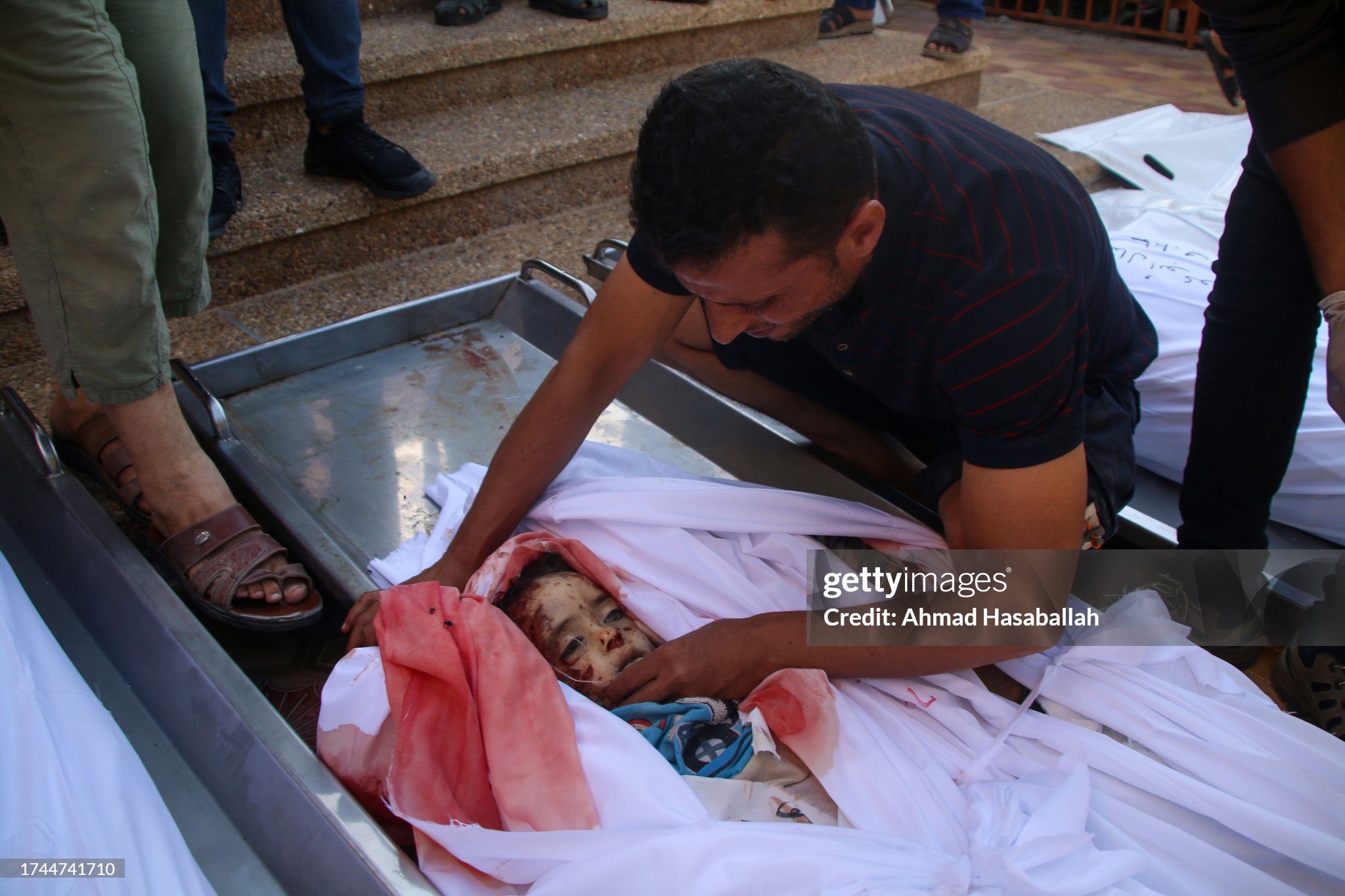
KHAN YUNIS, GAZA -t. (Photo by Ahmad Hasaballah/Getty Images)

If ever there’s been a clarion call for the United States to abandon its military support for Israel, it’s now. Prime Minister Natanyahu has made it clear to Washington that there will be no Palestinian state on the West Bank, rejecting Secretary of State Blinken’s recent plea for a two state resolution as Israel’s surest means to security.

Nor will the Prime Minister, a friend of Donald Trump since the 1980s, scale back Israel’s offensive in Gaza until total victory and return of remaining hostages is achieved.

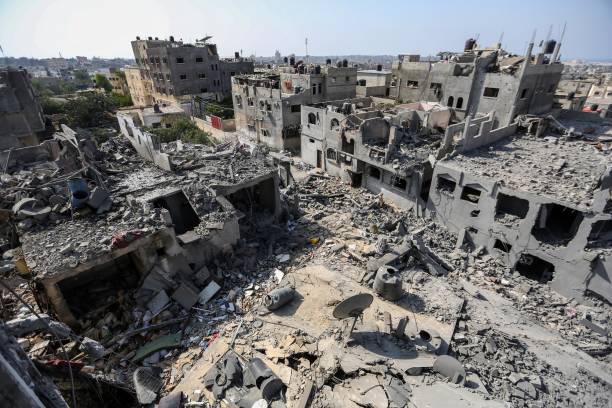
As I write, nearly 25,000 Palestinians have been killed, two-thirds of them women and children; hospitals, mosques, churches and refugee camps bombed; and a frightened civilian population, 1.9 million of them, or 80% of the Gaza population, herded into a southern corridor, and confronted with disease and starvation.

This constitutes the true genocide, which South Africa has brought to the attention of the International Court of Justice (ICC), the UN’s highest court. Fifty-six other nations support the suit, but not the United States and UK. The European Union has chosen silence.

KHAN YUNIS, GAZA – General view of buildings which were destroyed during Israeli bombardment. Photo by Ahmad Hasaballah/Getty Images)

South Africa has also filed a referral to the International Criminal Court (ICC), not to be conflated with the ICJ, though both are located in the Hague. The ICJ can issue arrest warrants, as it did for Vladimir Putin, who must now avoid signatory countries that include South Africa.

What’s not received ample attention is the economic plight Palestinians face. Before Hamas’ October 7 incursion, 400,000 Palestinians were employed by Israel, largely in construction, agriculture and service sectors. I87,000 Gazans have had their work permits canceled; similarly, 167,000 Palestinians on the West Bank.

In the meanwhile, Israel has set up worker recruiting offices in India and Sri Lanka, with the goal of importing between 50,000 to 100,000 replacements.

This may be part of a long term stategy by Israeli nationalists to encourage Palestinians to leave Israel. Take, for example, Finance Minister Bezalel Smotrich’s call for Palestinian residents of Gaza to leave, replaced by Israelis, who could “make the desert bloom.”

Unfortunately, the Biden administration, despite its call for a cease fire and a two state solution, is unwilling to risk political capital and rebuff Netanyahu by suspending military aid to Israel.

By default, it’s rendered the US complicit in Israel’s criminality, angered Progressives, alienated the Muslim community, made the US a global atavar of hypocrisy, and risks dragging the country into a wider conflict, inflicting incalculable consequences, both home and abroad.

–rj

No Room for Palestinians: Israel’s Calculated Violence

The photos featured in today’s media of masses of Palestinians fleeing Israel’s incessant bombing validates the truth that “a photo is worth a thousand words,” but in a sad way.

As I write, more than 11,000 Palestinians have died, 4000 of them children, and 25,000 have been wounded. The violence continues, Israel stubbornly ruling out a cease fire, demanding Hamas first release its 240 hostages.

The news on the West Bank is dismal as well. An area much larger than Gaza and an Arab majority, it has seen 175 civilians killed, nearly all of them Palestinians, 33 of them children, since Hamas’ incursion into Israel on October 7. Israel holds several thousand West Bank prisoners, hundreds without charge or trial.

The UN Office for the Coordination of Humanitarian Affairs reports that more than 1000 Palestinians with title to their land have been forcibly removed from their homes on the West Bank since October 7.

This follow a long history of settler intimidation, abetted by Israel Defense Forces, targeting Bedouin herders, Palestinian olive groves and farms. Homes are burned and protestors killed, yet the media allows this criminality to go unreported. It cares only about normalization, not Palestinian grievances.

Al Jazeera has it right: “Were the American media and political establishment not so firmly committed to transmitting a thoroughly decontextualised version of this war – and of Israel/Palestine in general – perhaps a news anchor would ask whether it never occurred to Israel that the Palestinians would ever “retaliate” for 75 years of ethnic cleansing, suffocating blockades and massacres” (https://www.aljazeera.com/opinions/2023/11/12/how-americas-bloodthirsty-journalism-cheers-on-israels-war-on-gaza).

While Hamas’ barbarism is surely condemnable, it’s the nature of Israel’s disproportionate response that troubles the international community. Disallowing humanitarian aid, curtailing food, water, and energy, bombing hospitals, ambulances and mosques, a refugee camp two days in a row, justifies growing international rage.

Ordering 1.2 million Palestinians to abandon their homes in north Gaza, with no real place to flee while denying them subsistence, constitutes a glaring war crime.

Concurrently, the United States, Great Britain, and France have contributed to Israel’s unmeasured response, accelerating arms shipments to Israel and making themselves complicit

Israeli repression of Palestinians, often violent, has its lengthy narrative. With the seizure of the West Bank following the 1967 War, a new chauvinism of a greater Israel ensued to the detriment of Palestinians in the Negev, Gaza, and the Golan Heights, resulting in the rise of Hamas, a Palestine offshoot of the Muslim Brotherhood.

In 1983, Israel conspired with Christian Phalangists in Lebanon in the massacres of several thousands of Palestinians and was found culpable by both the UN’s and Israel’s own subsequent investigations. The UN termed it “genocide.”

In the aftermath of 1948’s birth of the state of Israel and its victory over Arab armies, Israel expelled 750,000 Palestinians from their homeland, many of whom populate today’s Gaza and West Bank.

Five years ago, during the Great March of Return in Gaza, Israelis killed hundreds of peaceful demonstrators and wounded several thousand others.

While we hear a lot about a two state remedy, it’s unlikely, since it takes a marriage of minds for that to happen. Palestinians don’t trust Israelis, especially a government led by nationalist leadership under Netanyahu. They’ve also witnessed the second class citizenship of Arabs granted citizenship.

There do exist Israelis who want to address Palestinian grievances, but do so at great cost. Many have been arrested, their identities and addresses posted online, their families threatened.

In 1995, a religious extremist killed Prime Minister Yitzhak Rabin, who had sought to implement the Oslo Accords with its provision for Palestinian self rule in Gaza and the West Bank: “We who have fought against you, the Palestinians, we say to you today in a loud and a clear voice: Enough of blood and tears. Enough… We are today giving peace a chance and saying to you and saying again to you: Enough.”

In the aftermath of Rabin’s assassination, Netanyahu came to power, resulting in negotiations for a just settlement with the Palestinians being abandoned in favor of surveillance and military might. Hamas was to be controlled, not dismantled. Netanyahu needed Hamas to offset the West Bank’s Palestinian Authority, open to negotiation. October 7 changed the venue.

Zionism is the real culprit here. Israel has never subscribed to the two state idea in which Palestinians would be masters of their own house.

Addressing Palestinian members of Knesset in 2021, far right Defense Minister Bezalel Smotrich said, “It’s a mistake that Ben-Gurion didn’t finish the job and didn’t throw you out in 1948.”

Recently, Smotrich has voiced sentiment for a one state Israel: “Peace will not emerge so long as we maintain our hold on starting assumptions that this land is fated to contain two collectives with conflicting national aspirations. If this is the case, our grandchildren and our great grandchildren will inevitably be destined to live by the sword….The ‘Palestinian People’ is but a counter-movement to the Zionist movement. Those who choose not to let go of their national ambitions will receive aid to emigrate to one of the many countries where Arabs realize their national ambitions, or to any other destination in the world.”

Is it conceivable that Israel’s vociferous response, defiant of the international community’s call for a ceasefire, is deliberately strategic? That not only Hamas should be eliminated, but the Palestinian presence once and for all? Make it so intolerable for them that they’ll leave?

Ominously, Prime Minister Benjamin Netanyahu, addressing his country on October 28, quoted Deuteronomy: 25:17: “You must remember what Amalek did to you.” If you continue to verse 19, you’ll read, “You shall blot out the memory of Amalek from under heaven. Never forget!” In 1st Samuel 15: 2-3, the Hebrew Bible exhorts, “Now go, attack Amalek, and proscribe all that belongs to him. Spare no one, but kill alike men and women, infants and sucklings, oxen and sheep, camels and asses!”

He didn’t have to go on. He had made his point.

–rj