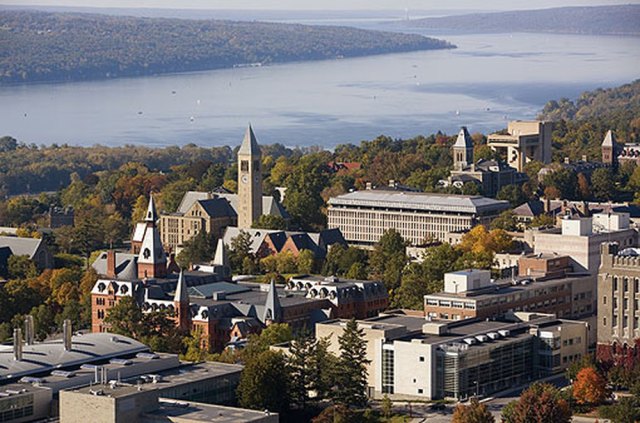
 Ithaca, New York, at the southern end of Cayuga Lake, is a progressive town of about 30,000 people and hub to one of the state´s prettiest areas of undulating rural greenery, consisting of vineyards, apple orchards, pastoral farms and scattered water bodies known as the Finger Lakes.
I´ve never been to Ithaca, but it´s one place I wish I had. Everything I read about it tells me it’s a very broad minded place known for its demographic diversity and liberal cultural milieu, anchored by Ivy League Cornell University and Ithaca College. Like Chapel Hill where I went to grad school, it stands out as a blue dot, defiant and steadfast, surrounded by a sea of political red.
Ithaca has been consistently rated as one of America’s most livable college cities. Vegan and gay friendly, it’s home to the legendary Moosewood Cafe, made famous by its cookbooks. In 1997, Utne Reader deemed it “America’s most enlightened city.”
Alex Haley (Roots, The Biography of Malcolm X) was born here. Among its most famous residents was Vladimir Nabokov (Lolita).
I got interested in the place years ago when I found out that Carl Sagan taught at Cornell for many years and Diane Ackerman, one of my favorite essayists whose books on nature read like poetry, lives there.
A hilly city beautified by its gorges and waterfalls and must see Cornell Botanic Gardens sprawling over 4000 acres, Ithaca happens to be blessed with a vibrant environment ethic. Nearby, three state parks offer multiple hiking trails, camping and scenic vistas.
Every fall, its population swells with the influx of young people, yet Ithaca attracts retirees as well, despite its snowy winters.
I´m proud of Ithaca for standing tall to corporate gas interests (Millennium Pipeline and others), who a few years ago wanted to bring fracking to the area, stirring up a hornet’s nest.
A gateway Cornell study (2011) had revealed hydraulic fracking to be considerably more dangerous than even coal and oil in contributing to climate change in its inevitable association with methane leakage. As biochemist Robert Howarth pointed out in the study, methane poses a warming potential eighty-six times greater than that of carbon dioxide.
In short, natural gas isn’t the clean alternative touted by its supporters. Mostly methane, even small leaks are significant. Shale gas, which involves fracking, can emit an average 8% methane leakage over the life of a shale well.
Although it was Governor Cuomo who ultimately imposed a state-wide ban on hydraulic fracking in 2014, it came only after Cornell’s monumental study along with the efforts of the Ithaca-based Park Foundation and concerned townsfolk that brought the issue into public gaze.
Credit is also due to renowned Ithaca College biologist and author Sandra Steingraber with her expertise on the link between toxic chemicals and cancer (Living Downstream: An Ecologist’s Personal Investigation of Cancer and the Environment).
As a teenager, I used to go to summer camp at nearby Lake Canandaigua and remember its bucolic beauty to this day. Thankfully, it remains..
–rj

 Brimmings: up from the well