
In his Meditations, Marcus Aurelius recommends we accept all things, even the painful: “Convince yourself that everything is the gift of the gods.” Although this seems problematic, with everything that happens to us, good or bad, we can gain insight, transcend rather than recoil or take offense. If someone hurts me, I reach for the good that remains in that person. If stricken ill, I’m more mindful of healthy changes I must make. With the pandemic, I gain awareness of my need to protect others and give thanks for more time at home with those I love. As Epictetus, whom Aurelius follows, tells us, “Everything has two handles.” In all things, grasp the easier, more positive handle, and give thanks, both now and always.
When Elephants Are Photos Only

Poaching continues to pose a massive threat to wildlife in Africa. According to the World Animal Foundation, one elephant is killed every 15 minutes. Over the last decade, 1000 park rangers have died, half of them killed by poachers. Exponentially contributing to wildlife loss is expanding agricultural intrusion, human settlement in animal sanctuary areas, and the relentless impact of climate change. In the last ten years, elephant numbers have declined 62%, with 100 killed daily for ivory, meat and body parts. Elephants may be extinct by the end of this decade.
It isn’t just about elephants. Animal numbers in general have declined 68% since 1970, as human infringement on dedicated eco systems continues unabated, according to the WWF and Zoological Society of London’s (ZSL) comprehensive biennial Living Planet Report 2020. It isn’t only Africa. In North America, for example, a 24% drop off in animal species has occurred, affecting reptiles, birds and fish as well as mammals. Shockingly, vertebrate wildlife has declined two thirds since 1970.
As Robin Freeman, who headed the ZSL research trenchantly said, ”It seems that we’ve spent 10 to 20 years talking about these declines and not really managed to do anything about it. It frustrates me and upsets me. We sit at our desks and compile these statistics but they have real-life implications. It’s really hard to communicate how dramatic some of these declines are.”
Sadly, our grandchildren are likely to know these once roaming herds of majestic, intelligent elephants only through photos.
Trading English for Italian: Jhuma Lahiri’s Choice
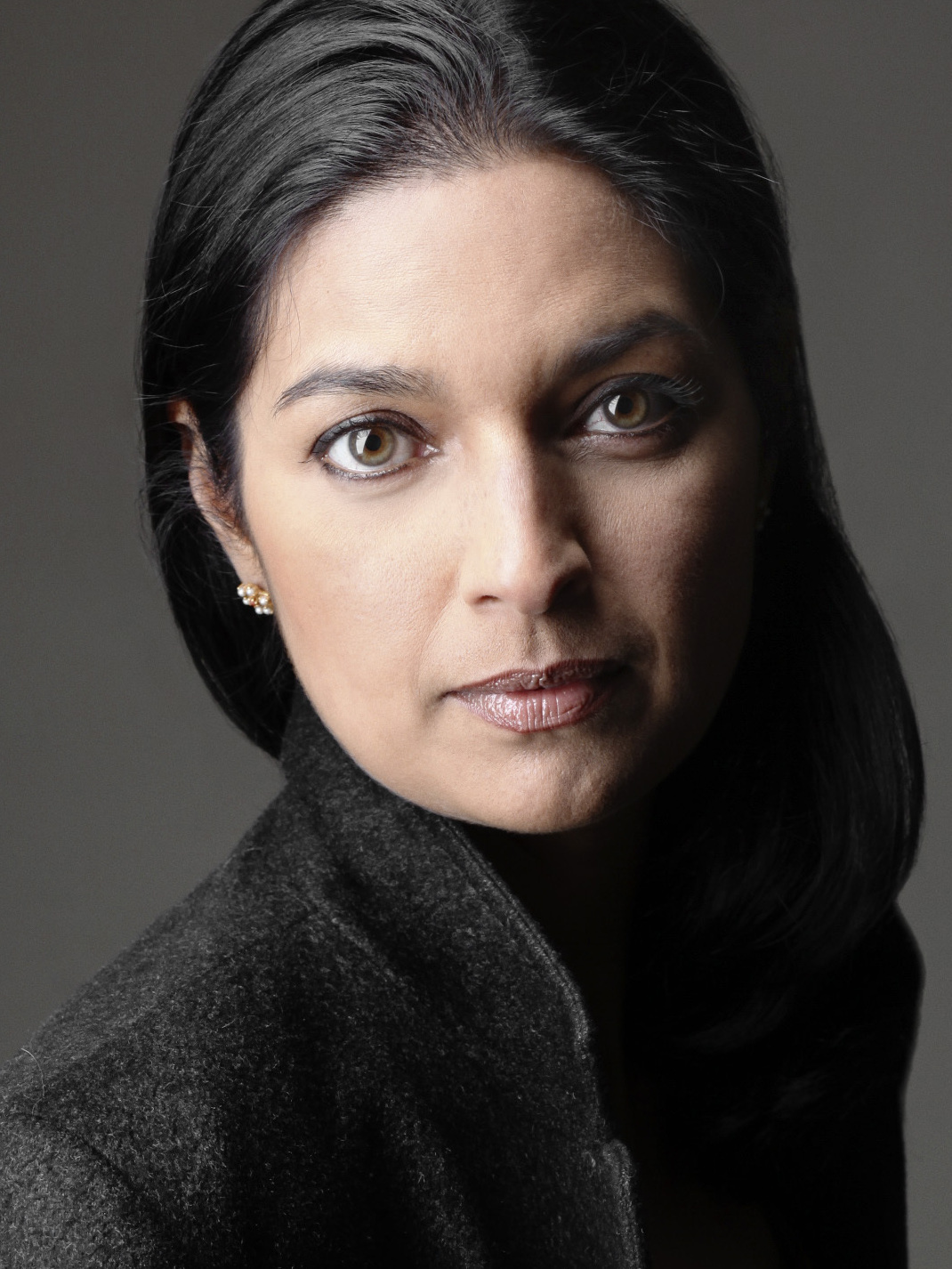
I happen to be a linguaphile, or lover of languages, having lost count of how many I’ve pursued, at one time or another, with French and Spanish at the top of my list. I like French for its euphony and cultural legacy. It’s also the language of my inheritance. But then I study Spanish, almost daily, largely for its ubiquity and hence utility.
Yet in all of this pursuit, I cherish English as the greatest repository for infinite articulation, featuring the largest vocabulary, eclectically drawn, rich in subtlety of nuance, syntactical variation, and thus fit vessel for poetry in particular. While learning Chinese seems to be catching on, myriad tones, script and accents spell difficulty for Westerners. Finally, English is like no other language in producing so universal a writer as Shakespeare. It bothers me when I see it abused.
I didn’t know until recently that Oscar Wilde wrote his play Salome in French or that celebrated beat writer Louis Jean Kerouac grew up in Lowell, Massachusetts, speaking French as his first language and began writing On the Road in French. Few Americans probably know he wrote other novels and poetry in French, writing in his journal, “It’s hard for me to talk in English.”
Conrad and Nabokov also come to mind, but I think they chose writing in a foreign language more from necessity, than disavowal of their inheritance, ultimately selecting English as their idiom, or much like Danish writer, Isak Denison. Nabokov was bilingual from childhood, never simply Russian speaking. Perhaps today’s most notable writer in another language is Czech born writer Milan Kundera, who insists he should be considered a French writer.
More recently, there is American novelist Jhumpa Lahiri, Pulitzer Prize winner for her short stories in English, Interpreter of Maladies (2000), who became enamored with Italian after a student trip to Florence, subsequently relocating to Rome with her husband and children and no longer reading and writing in English, apart from lately translating her work into English.
As a West Bengali diaspora child, born in London, brought up in Rhode Island, Lahiri experienced the frequent immigrant sense of dislocation. Italian delivered escape from painful memories and opportunity “to reconstruct myself.” Her early novels and short story collections in English mirror the Indian immigrant experience in America. Of all America’s immigrant writers, Lahiri’s thematic is displacement, ironically providing for a universality of readership, whether of race, gender, age or sexual orientation, ad infinitum.
In a revealing essay in The New Yorker {2015), “Teach Yourself Italian,” originally composed in Italian and translated into English by Ruth Goldstein, Lahiri elaborates: “My relationship with Italian takes place in exile, in a state of separation….In a sense I’m used to a kind of linguistic exile. My mother tongue, Bengali, is foreign in America. When you live in a country where your own language is considered foreign, you can feel a continuous sense of estrangement. You speak a secret, unknown language, lacking any correspondence to the environment. An absence that creates a distance within you.”
One of our most accomplished contemporary writers, Lahiri has received many awards that include the Old Henry Award PEN/Hemingway Award, Frank O’Connor International Short Story Award. She has been a finalist for the Man Booker Prize and The National Book Award and as mentioned, the Pulitzer Prize. A graduate of Barnard College (Columbia), she has an MA, MFA, and Ph. D. from Boston University.
Her narratives are compelling for their empathetic unveiling of life’s myriad alienated, lonely, and distraught, the quotidian experience of failing relationships, the deaths of loved ones. Transcending the Indian diaspora, Lahiri renders universality without sentimentality.
Her style exhibits simplicity, housed in a refreshing directness, every word le mot juste that would make Flaubert proud. Imagery conveys inner moods, a day’s ordinariness, the anxiety of continuing challenge, inward as well as outer, to not fail, to move past and prevail.
Take this passage, for example, from her short story, “A Temporary Matter,” with its straight-forward sensory depiction of marital dissonance, that exhibits, not tells, as all good writing does the pathos of marital alienation:
Tonight with no lights, they would have to eat together. For months now they’d served themselves from the stove, and he’d {Shukumar} taken his plate into his study, letting the meal grow cold on his desk before shoving it into his mouth without pause, while Shoba took her plate to the living room and watched game shows, or proofread files with her arsenal of colored pencils at hand.
Her first work in Italian, In altre parole in which she writes of her choice of Italian, appeared in 2015, followed by her novel, Dove mi Trove in 2018, which she later translated into English, titled Wandering
The anomaly of her exile is that Italy doesn’t provide for the assimilation America features, despite its salient racism. Italians are notoriously xenophobic, resistant increasingly to immigrants who increasingly populate Rome. Lahiri admits to a swelling nativism reflected in the nation’s political life: “I am alarmed and terrified by the rise of the extreme right in Italy, by intolerance toward foreigners, and by acts of brutal violence perpetrated against them. I follow these events closely in the Italian press. I am equally anguished by the populism in this country that made Trump’s election possible. It really strikes me that the two countries I now shuttle between and consider home are places where xenophobia still thrive” (The New Yorker, January 29, 2018).
Has her writing suffered from her language transition? This is a serious question I can’t answer, as I don’t read Italian. There are critics who think so. “Whatever sharpness and shrewdness Ms. Lahiri possesses seems to have been surgically removed,”writes NYT literary critic, Dwight Gardner (February 9, 2016). In her non-fiction In Other Words, translated from Italian, she expounds on her linguistic displacement, confessing that “I know that my writing in Italian is something premature, reckless, always approximate.”
Ironically, Lahiri may now actually be a better writer in Italian than in English. Commenting on her most recent novel, Dove Mi Trovo, or Whereabouts (2018) in its English translation, Alessandro Giammei, an assistant professor of Italian at Bryn Mawr and former colleague of Lahiri, thinks so: “If, in English, Lahiri is an eye, he added, “in Italian, she’s an ear” (NYT, April 27, 2021).
While I appreciate her attempt to assuage the linguistic impositions of birth and early emigration, age three, to America, and transcend bicultural dissonance by deliberately choosing her idiom and culture, I think it a conflict of her own making. So much of life isn’t of our choosing. We don’t choose our parents, skin color, country of birth, ad infinitum.
Still, I admire her daring. It’s one thing to learn another language or more; quite another, to achieve literary mastery in a language not bequeathed by birth or upbringing. Besides, I confess “l’italiano è una lingua così bella.”
–rrjoly
California Reminiscence
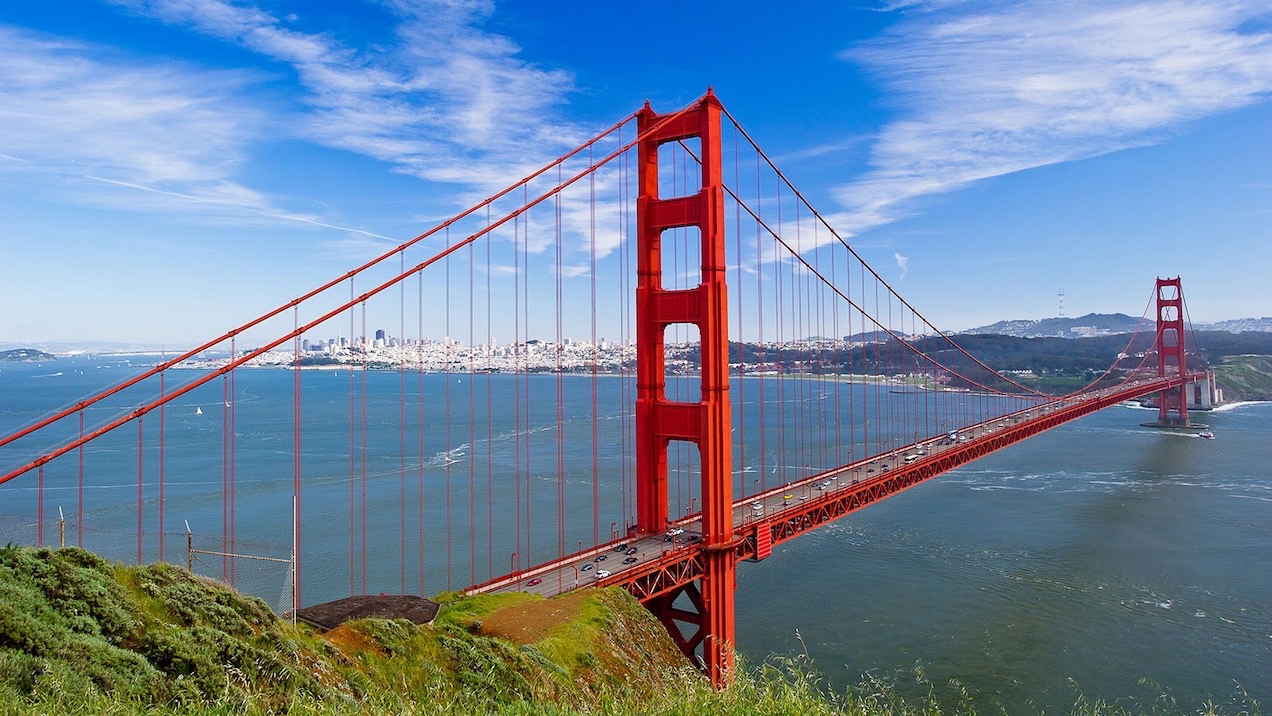
I remember my first rendezvous with California, the Golden State, as a 17-year old serviceman on his way to Korea, dazzled by snow-capped mountains thrown back in the crystal blue waters of Lake Tahoe, the descent into orchard country and, then, San Francisco. Suddenly, I understood my brother and a beloved uncle making it their home.
Ultimately, I married a California girl and nearly thirty years ago we honeymooned in Monterey and its environs. Our children and grand-babies are Californians and, when we can, we make the trek. I know California well, studied in California on a government grant, am a devotee of Big Sur country, aficionado of poet Robinson Jeffers, writers Steinbeck, Didion, Chandler, Solnit and still others.
But the California I knew, along with countless generations, has lost much of its golden hue. For only the second time in its history, more people have moved out than moved in, fleeing rampant taxation, escalating housing and utility costs, and the state’s crazy politics.
California with 12% of the nation’s population has one third of its welfare recipients. A once proud educational artifice of well paid teachers and progressive schools now ranks 37th. It’s last in the number of K-12 students per teacher (2015-16).
Last summer, impacted by climate change, 4 million acres of forest burned and severe drought, a now annual specter, taunts the state’s huge agricultural sector, much of it irrigational. I could write pages on the consequences of the demise of the Sierra Nevada snowpack, the state’s most significant water resource. Or of salinization of the Sacramento/San Joaquin Delta that supplies drinking water for 20 million Californians. Today, California suffers the worst air quality in the nation, resulting in huge medical outlays.
Even big tech has caught on to what’s happening, several firms recently choosing their options elsewhere for more welcoming states like Arizona, Texas, Idaho and Washington. Last year, Tesla CEO Elon Musk, the world’s second richest man, announced plans to move his HQ to Texas/Nevada and sold $100 million of California real estate. (Tesla is the last auto manufacturer in the state.)
Political polity provided by a once robust two party rivalry of Democrats and Republicans has been vastly eroded. Between 1970 and 2018, the Hispanic population increased from 12% to 39%. They overwhelmingly prefer Democrats. Identity politics is everywhere.
Don’t get me wrong. Not everything is doom and gloom in California. Even with its troubles, California, were it a country, would rank fifth in GDP, exceeding several European countries such as England, France and Italy and nearly doubling Canada.
And yet, like the California haze that increasingly infiltrates our summer and fall traditionally vibrant blue New Mexico skies where Karen and I live, something’s gone out of things and a golden El Dorado no longer allures.
–rj
A Changing France: The Demise of Intellectual Exchange
When I was in high school in Newburyport, MA, I was thrilled to have my first taste of learning French under earnest Mrs. Waltz, mesmerized by its nasal intonations and lilting cadence. What can be more beautiful than telling your loved one, “Je t’aime avec tout mon coeur?”
Yes, I confess to being a Romantic, filled with passion, a love for all things beautiful, and a fondness for hard-thinking, attributes I associate with France. Besides, I’m three-quarters French.
I studied French on my own for many years, devoured Hugo, Flaubert, Maupassant, Proust, and Camus, been to Québec, sojourned a summer in France, taken students there, walked Paris streets, been to Provence, adore Aix-en-Provence, home of Cézanne and picnicked in the shadows of his beloved Mt. Sainte Victoire. And the food, I still remember that Menton garden-setting with its salade delicieuse washed down with Chardonnay.
But the France I have known is changing rapidly, symbolized by the recent demise of Le Débat, France’s leading journal of intellectual exchange in the spirit of the Enlightenment. Though founded by Leftists, appropriately on the day of Sartre’s funeral in 1980, and at one time edited by influential literary critic Michel Foucault and associated with anthropologist Claude Lévi-Strauss, it allowed for open debate, but is now a casualty of France’s import of America’s cancel culture wave of identity politics with its revisionist history, infiltration of college campuses, abridgment of free speech, resultant censorship, threats of boycott, vigilante violence, and libelous personal attacks via social media. Le Débat has ceased publication.
Despite President Macron’s pledge that France “will not erase any trace or name from its history. It will not forget any of its works. It will not topple any statues,” the fate of Le Débat, France’s foremost intellectual journal, signals the hollowness of such a claim.
It used to be said that when France sneezed, all the world caught a cold. Alas, France is but a shadow of its former self and with its demise, tolerance for free exchange of ideas is everywhere diminished and social fracture its consequence. C’est dommage!
–R. Joly
Cherished Company
From a chiId I’ve always craved the company of animals, sometimes preferring them over humans. It was Darwin who in his massive studies of the animal kingdom posited that reason, emotion, and even morality, weren’t solely relegated to humans through evolution. My long acquaintance with animals tells me Darwin was on cue. Oh, the many stories I could tell.
Relatedly, there’s a delightful new little book just out by John Gray, titled Feline Philosophy, obviously about cats. And I can tell you a lot about them as well, though my wife, Karen, exceeds me greatly.
I like Gray’s cogent observation about animals when he says, “Lacking self-consciousness, non-human animals are present in the world more completely than we are. They inhabit nature fully whereas we are always dislocated, at a right angle, from it. Indeed, we are destroying it.”
So you see, you don’t have to consult a Buddhist monk to find serenity. It was the Buddha who taught us that suffering lay in desire and refusal to accept impermanence. On the other hand, our animal friends are simply their authentic selves, with each day a sojourn in life’s palate. Scarce wonder I pursue their company.
—r
Of Paradise Lost: W. S. Merwin’s “After the Dragonflies”
“After the Dragonflies” by W. S. Merwin
Dragonflies were as common as sunlight
hovering in their own days
backward forward and sideways
as though they were memory
now there are grown-ups hurrying
who never saw one
and do not know what they
are not seeing
the veins in a dragonfly’s wings
were made of light
the veins in the leaves knew them
and the flowing rivers
the dragonflies came out of the color of water
knowing their own way
when we appeared in their eyes
we were strangers
they took their light with them when they went
there will be no one to remember us
When I lived in Kentucky and kept up a flower garden, I’d hear every now and then a whizzing sound above my head, look up, and see a dragonfly moving swiftly to snag its mid-air prey between its long legs. I never thought much about them as such. They were simply there.
I regret that now and am unlearning my indifference. Dragonflies, like many other insects, are disappearing, a reality Merwin hints at in this melancholic poem, treating mutability and, with it, loss; a nature tapestry vanishing before our very eyes.
The journal Biological Conservation informs us that 40% of insect species, and that’s in the millions, are in serious decline. “If we don’t stop it, entire ecosystems will collapse due to starvation,” says University of Sydney researcher Francisco Sánchez-Bayo. Our fate will be to perish with them.
Lamentably, dragonflies, these bejeweled aerial acrobats, are among those insects suffering decline. Fundamental inhabitants of freshwater ecosystems, their loss would have immeasurable consequence. Along with climate change, habitat encroachment and degradation have contributed to their falling numbers.
Folklore has it that dragonflies are emissaries of good fortune. And so it seemed for some 300 million years. Members of the phylum Arthropoda, they comprise some 5,000 species in varied sizes and hues.
Merwin’s poem, abjuring punctuation to simulate conversational flow, employs a temporal schema of past, present, and future to depict the incipient fate of dragonflies and, by implication, of other fated creatures, once of prodigious number, now facing not only decline, but future extinction. Contrast looms large in the poem’s time’s sequences.
The poem opens with the persona’s conjecturing past aeons before Man, when dragonflies “were as common as sunlight,”the double use of “were” in the opening lines contrasting their present decline. The simile associating their once prodigious numbers to the sun’s plentitude dazzles in its originality.
Employing kinetic imagery, the persona visualizes a former halcyon indulgence of lingering dragonflies amid time’s seeming suspension: “hovering in their own days/backward forward and sideways.”
Or like the varied probings of memory: “as though they were memory.” And, I might add, like the poem in its past, present and future interweave.
The jarring “now” in its emphatic positioning at the beginning of the fourth line transitions readers fully into the present with its glaring contrast.
Despite the miraculous artistry wrought by evolutionary mechanisms over vast stretches of time, there exist “grown-ups” who, suffering a disconnect with nature and “hurrying” to other pursuits, have never seen a dragonfly
That “they do not know what they/ are not seeing,” harbors the poem’s concluding warning. Not only does the present suffer a nature deficit, but future generations may never know dragonflies existed.
Exiled in the present, humans lack cognizance of that primordial garden, if not Edenic paradise, of teeming dragonflies, diaphanous creatures born of water, instinctual, spontaneous, integral eco entities not knowing Man:
the veins in a dragonfly’s wings
were made of light
the veins in the leaves knew them
and the flowing rivers
the dragonflies came out of the color of water
knowing their own way
The alienation motif follows with Man’s trespass. In time’s vast unfolding, the dragonflies had not known us: “when we appeared in their eyes/we were strangers.”
Unable to live in a human world, it’s as though they took flight, with consequential, if not incalculable loss for mankind. This is our future and the penultimate line stuns: “they took their light with them when they went.”
Creatures of a once thriving abundance, the dragonflies are extinct! We have come full circle, the sun’s plentitude of the opening line gone dark.
On a scientific note, dragonflies are often depicted as translucent creatures associated with the sun. Merwin, a mindful observer of nature and diligent keeper of a garden, was aware of this: “the veins in a dragonfly’s wings/were made of light.”
Biologically, we know they possess a variety of opsin genes that encode light sensors (science.com
The poem’s last line serves as warning: “there will be no one to remember us,” signifying our own ultimate demise, both as individuals and as species, as our survival cannot be severed from nature’s fate.
It also returns us to the “After” of the title, perhaps initially problematic. Now we know its why. In the immediate of a world devoid of dragonflies, we will have suffered a grievous loss beyond boundary. Merwin’s gift lies in making us feel that loss.
If nature’s eclipse emerges as seemingly ineluctable in this eco-poem, its melancholy consequence lies with Man as its implied source.
Merwin wrote this poem in 2016 when in his late eighties, going blind, and just three years before his death. If you look at the poem’s dictional element closely, you’ll notice its many verbal seeing and light allusions, beginning with the sun simile of the poem’s opening. The poem’s imagery is consistently visual.
Dragonflies are often described in biology depictions as translucent, their heads virtually a gigantic eye.
–rj
Morning Respite: W. S. Merwin’s “To Paula in Late Spring”
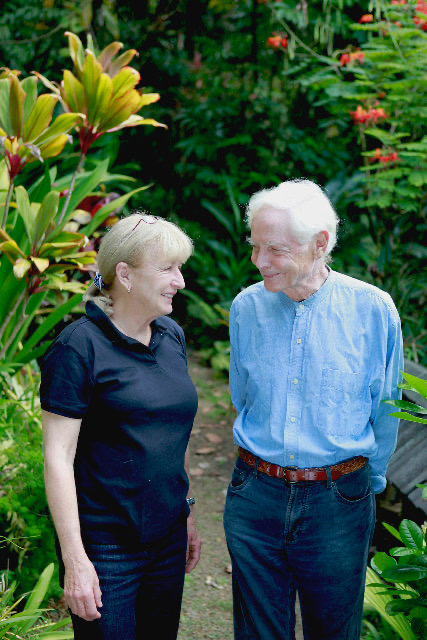
I’m tired of politics and, as I often do, when requiring exit, resort to poetry, finding sanctuary beneath its canopy.
This morning, I came upon this love poem by poet W. S. Merwin to his wife, Paula, and imbibed its garden calm.
“To Paula in Late Spring”
Let me imagine that we will come again
when we want to and it will be spring
we will be no older than we ever were
the worn griefs will have eased like the early cloud
through which the morning slowly comes to itself
and the ancient defenses against the dead
will be done with and left to the dead at last
the light will be as it is now in the garden
that we have made here these years together
of our long evenings and astonishment
Review: Rabih Alameddine’s An Unnecessary Woman
RJ’s 2021 Draw-bag Booklist
In compiling my annual draw-bag list for 2021 I’ve invested many hours, seeking the most relevant, informative, and challenging books out there, of which there are so many that I’ve had to practice tough-mindfulness in deciding what to exclude. My list includes classics that remain resonant as well as newer works on many subjects, providing provocation and challenge. As we travel 2021 together, I wish you good reading, health and abundant joy. —rj
Fiction:
Anderson, Sherwood. Winesburg, Ohio. (Often considered among the first modernist American novels, narrated in twenty-two short stories exploring the psychological consciousness of protagonist George Willard, it remains an enduring and influential classic of life in pre-industrial small town America.)
Anyuru, Johannes. A Storm Blew In From Paradise. (Taking Sweden by storm, Anyuru’s novel, drawn from the life of his Uganda father and himself, movingly, and without sentimentality, narrates a story of loss, exile, and search for identity.)
Bruner, John. Stand on Zanzibar. (Bruner is largely unknown, save to science fiction buffs, which is a pity. A prolific genius, Bruner penned more than 80 SF novels along with short stories, of which Stand7 on Zanzabar (1968) is eerily prescient in anticipating our contemporary world.)
le Carré, John. The Spy Who Came in From the Cold. (le Carré’s most renowned espionage novel set in East Germany, it transcends plot to indict practices inconsistent with professed democratic and moral values.)
Lewis. Sinclair. Main Street. (Edged out for the Pulitzer because it was judged too political, it remains Lewis’most renowned novel, satirizing small town America and setting the stage for the Nobel Prize for Literature a decade later.)
Marquez, Gabriel Garcia. Love in the Time of Cholera. (One of Latin America’s greatest writers, Marquez’ embraces love, aging and mortality in what will remain an enduring classic.)
McEwan, Ian. Atonement. (A stunning achievement telling of love, war and the destructive capacity of the imagined, rendered in stunning prose.)
Penny, Louise. Still Life. (First in detective series featuring inspector Armand Gamanche. Penny’s mysteries, numbering fifteen, have been translated into twenty-three languages.)
Robinson, Kim Stanley. Ministry for the Future. (Prolific and gifted, science fiction writer Robinson presciently narrates a killing heat wave that may become our future. Superbly relevant.)
Roy, Arundhati. The God of Small Things. (Set in Kerala, India, Roy’s novel narrates an illegal liaison with fateful consequence. A novel destined to become a classic.)
Shakespeare, William. The Tempest. (Believed to be one of Shakespeare’s last plays, The Tempest has sparked revived interest for its timeless relevance.)
Wharton, Edith. Age of Innocence. (An enduring classic, set in the Gilded Age, it was awarded the Pulitzer Prize, making Wharton its first female recipient.)
Non-Fiction:
Aronoff, Kate, et al. A Planet to Win: Why We Need a Green New Deal. (A specific strategy for limiting global carbon emissions simultaneous with promoting economic equity.)
Aurelius, Marcus. Meditations. Tr. Gregory Hays. (If I were exiled to a remote island I can’t fathom a better companion. Wise meditations on what really matters.)
Berlin, Isaiah. Four Essays on Liberty. (GPS host Fareed Zakaria says Berlin’s book profoundly impacted his political views. That’s good enough for me.)
Blum, David. Quintet: Five Journeys Toward Musical Fulfillment. (The late conductor Blum’s revealing portraits of five beloved classical music performers: cellist Yo-Yo Ma, the conductor Jeffrey Tate, the violinist Josef Gingold, the pianist Richard Goode, and the opera singer Birgit Nilsson. )
Cose, Ellis. The Short Life and Curious Death of Free Speech in America. (A cogent polemic revealing the usurpation of the First Amendment by marginal interests groups bent on distorting truth and despoiling American democracy.)
Dalrymple, William. The Anarchy: The Relentless Rise of the East Asia Company. (The history of an international corporation in India, its arrogance, racism, and corporate abuse.)
Dawkins, Richard. River Out of Eden. (A summation for the layman of Dawkin’s previous works on the legacy and centrality of evolution. )
Davis, Wade. Magdalena: River of Dreams. (Davis’ exploration of Columbia’s arterial waterway, explores not only a river, but through largely indigenous narratives, the lives it touches. Powerful, unforgettable.)
Dillard, Annie. For the Time Being. (Miscellaneous topics, among them Dillard’s rejection of “the doctrines of divine omniscience, divine mercy, and divine omnipotence.”)
Ferry, Matthew. Quiet Mind Epic Life: Escape the Status Quo and Experience Enlightened Prosperity Now. (Ferry compellingly shows us how to escape a chattering mind and find inner peace,)
Graeber, David. Bullshit Jobs: A Theory. (Best selling, Graebner’s exploration of the rise of “meaningless” jobs and their social consequences.)
Hãaglund, Martin. This Life: Secular Faith and Spiritual Freedom. (A powerful reexamination of our material pursuits under capitalism and challenge to commit ourselves to values that sustain and promote true freedom.)
Jefferies, Richard. The Story of my Heart. (Jefferies died at 39, leaving behind some of the keenest observations of nature ever written. This moving work will leave you wiser.)
Kendi. Ibram X. Stamped from the Beginning: The Definitive History of Racist Ideas in America. (A sobering critique of the continuing presence of racism in American life,)
Kolbert, Elizabeth. The Sixth Extinction: An Unnatural History. (Humanity’s destructive contribution to species decline.)
Nussbaum, Martha. The Monarchy of Fear: A Philosopher Looks at Our Political Crisis. (A brilliant and candid analysis of the culture of fear by one of our leading moral philosophers.)
Obama, Barak. Dreams from my Father. (I love this man for his decency and eloquence. This seems a good place to begin.)
Obama, Barack. The Promised Land. (No former president has written so remarkably candid a memoir like this, first of two volumes.)
Pickney, Steve. Angels of our Better Nature. (Harvard psychologist’s reasoned contention that violence is not our future.)
Sheehy, Gail. Passages: Predictable Crises of Adult Life. (The late Sheehy’s 1976 study explores transitional stages of human development from early adulthood to midlife and beyond.)
Thompson, Evan. Why I am not a Buddhist. (A critique of modernism within Buddhism per se. Thompson, for example, views the notions of non-self, mindfulness and nirvana as empirically problematic.)
Westover, Tara. Educated. (Raised in a survivalist Mormon family, Westover recounts her journey to independence, academic achievement and self-esteem.)
Wilkerson, Isabel. Caste: The Origins of our Discontents.
(May well-be the priority non-fiction read of 2020 in its timely assessment of America’s enduring legacy of racial divide. Riveting, transforming, magisterial.)
Zakaria, Fareed. Ten Lessons for a Post-Pandemic World.
(What constitutes good governance? Drawing on economic and cultural resources, Zakaria provides a convincing answer.)
 Brimmings: up from the well