Russia will go nuclear in Ukraine: the emerging scenario

Russia’s cruise missile attack on Kyiv yesterday just after UN Secretary António Guterres’ visit with Ukraine’s President Zelenskiy demonstrates the determined, relentless resolve of Putin to bring Ukraine to heel and punish its Western sympathizers.

We know about Russia’s crimes against civilians, raped, tortured and executed; its killing of soldiers who have surrendered; bombings of train facilities providing civilian egress from war zones; attacks on schools and hospitals.

The truth is Russia blundered into this war, thinking a quick assault on Kyiv and regime change would yield victory within a few weeks.

Surprised by the vehemence of Western reprisals via sanctions and steadfast supply of weaponry, increasingly of an advanced nature, and fierce Ukrainian resistance, Russia now faces prolonged, bloody entrenchment and even defeat.

British intelligence indicates a loss of 15,000 troops, with many more wounded.

American sources indicate the Russians have lost 25% of their military capability.

Now the war has expanded into Russia, with military infrastructure within Russia being hit, causing panic upon nearby civilians and calls for retaliation.

Meanwhile, despite Putin’s denials, the Russian economy has suffered enormously.

For several weeks, Putin has been menacing the West with apocalyptic warnings of nuclear consequences for nations threatening its security, notably the U.S. and Britain: “If anyone intervenes in Ukraine and creates unacceptable threats for us that are strategic in nature, our response will be lightning fast. We have all the tools for this that no one else can boast of having. We won’t boast about it, we’ll use them, if needed.”

Will Putin carry out his threat?

Yes, but not against NATO nations, for that would lead to an unimaginable horror fallout of nuclear exchange and Moscow’s decimation to rubble in minutes.

What’s more likely to happen is a low-yield employment of nuclear tactical weaponry delivered through aircraft and artillery.

Russia, probably correctly, thinks the West will pull back its support and Ukraine will surrender, with huge loss of its territory, in short order.

Putin cannot afford to lose this war he’s presumptuously waged.

Thus far, the West has not singled any probable response to nuclear weaponry in Ukraine, increasing the likelihood of Russia’s adopting such draconian measures similar to what the U.S. resorted to in Japan.

We should all be afraid.

–rj

Morning Thoughts

I begin my day daily, reading the news, the wrong way to commence a new day, heavy with humanity’s burdens I can do little about.

I would do better in rising with the sun, to set my day’s course like a compass pointing to true North on what matters, enriches, and contributes to well-being, not only for myself but, more importantly, for others.

I remember lines from one of Mary Oliver’s last poems: “Wherever I am, /the world comes after me. /It offers me its busyness. /It does not believe that I do not want it.”

We think of ourselves as separate from the main. Prisoners of self-interest, we’ve relinquished poet John Donne’s maxim, “No man is an island.“

As humans we crave togetherness.

We abhor loneliness.

We require bonding and the cohesion it brings.

I’ve traveled to many places, often alone, but the trips I remember most were those I’ve shared with others. To experience something awesome, but with no one to share it, somehow bottoms out its delight.

Like leaves on a tree, individual in their shape and shimmering on their branches, we feed into a trunk that flourishes when its leaves work collectively. We are citizenry of a greater Self.

We live in a time of electronic fellowship. Billions turn to Facebook, Twitter, Instagram, ad infinitum, in a desire to connect, ample evidence we need one another to complete ourselves.

We find the relational in other, more meaningful ways. We love, we marry, we have children, we make friends, we frat with those sharing like interests, we bond with our pets. And yes, we write books—and even do blogs!

Unfortunately, since Descartes with his “I think, therefore I am,” we’ve weighed our lives down with ego indulgence, mindless of that greater entity of collective humanity and of Nature that grants us being and sustains.

In Victorian times, Bentham’s notion of utilitarianism was in vogue, its thesis that what promotes happiness is good; what promotes pain is bad. Essentially hedonistic, it was vehemently satirized by Dickens in Hard Times as serving the wealthy at the expense of the working class.

Modern psychology hasn’t helped mend our ways. Self-validation defines its focus. Witness the plethora of books on self-improvement. I was schooled in behaviorism at the grad level with its notion that humans are little more than pigeons, subject to stimulus response, driven by self-interest. Accordingly, prescribed behavior can be reenforced through operant conditioning that awards the positive; conversely, extinguishing the negative via the punitive. Anthony Burgess, whom I met briefly many years ago, deciphered it rightly in Clockwork Orange (1962), one of the 20th century’s most profound books.

In economics, capitalism is founded upon the same a priori of what’s in it for me, ushering in the Adam Smith credo of self-interest and competition as prerequisites to prosperity. Its consequences are with us daily, the one percent owning half the wealth, the exponential decline of the middle class, the continuous emphasis on growth despite diminishing natural resources.

In his widely published The Selfish Gene (1976), evolutionary biologist Richard Dawkins tells us that genes act to preserve their self-interest, with altruism, when it does exist, functionally symbiotic as in bees and ants. In fairness, Dawkins does propose that humans have potential capacity with growth in moral intelligence to modify evolution’s predilection for self-interest. Harvard’s eminent psychologist Stephen Pinker, who sets out in The Angels of Our Better Nature (2011) to statistically validate the decline of violence, should be pleased.

On a human scale, I think of Japan, unique in its protocol of collective behavior in the interest of public welfare that critics might disdainfully dismiss as herd mentality or, essentially, a vestige of Hobbes’ “enlightened self-interest.” Nonetheless, Japan is one of our few stable nations, high in economic equality, rare homelessness, and little crime. When the tsunami struck in 2011, unlike in other nations, there were few reports of looting. No need to send in the National Guard. My own memories of Japan confirm a pervasive politeness and honesty I’ve found unequaled in my travels.

In contrast, I think of what took place with the COVID outbreak, nearly a third of Americans not getting vaccinated and, even more, refusing to mask. As one business man told me, “It’s a personal choice.” But then this isn’t confined to America. In France, Belgium, and Germany gargantuan anti COVID protocol demonstrations, some of them violent, have occurred. Theirs is the right to infect others and continue the pandemic. By the way, Japan’s COVID mortality rate was 14.52 versus 233.8 in the U.S. as of Nov. 21, 2021, according to Johns Hopkins University stats.

Reading the news reminds me of the human folly behind the headlines, whether of individuals or nations, in pursuing self-interest. Sowing greed, we have reaped social dissonance with high crime, economic disparity, and homelessness among its results.

Frost wrote a renowned poem, “Mending Wall” in which the persona tells us of his neighbor, who advocates “Good fences make good neighbors.” I’m for tearing down walls that separate us.

In mutuality we find our common denominator, making for a better world.
In discovering the Other, we find ourselves.

–rj
Not a Choice: Reflections on Political Folly

Across the country, even globally, the mad rush is on by politicians to indulge the public mood and eliminate COVID restrictions. I think it a mistake and that it comes too soon.

At home, nearly a million Americans have perished and our medical grid buckles as COVID patients, the vast majority unvaccinated, take up hospital beds. Meanwhile, many needing cancer screening, surgery or follow-up are turned aside. New research reveals its devastating consequences.

Long term COVID can be dehabilitating, even for those vaccinated. Recently, I had conversation with a man from Louisville, a home physical therapist. He shared he had come down with the virus six months ago, was placed on a ventilator, then developed pneumonia. He still doesn’t feel right. He’s married with four children and just 29. He told me—I didn’t need convincing—that he’d not be here at, all had he not been vaccinated.

Yes, omicron infections have been plummeting, but they still highly exceed the number of infections before the Delta impact, then averaging between 12,000 and 16,000 daily cases. In contrast, “the U. S. daily average of cases and hospitalizations on 16 February was about 124,000 and 81,000” (NYT).

As Vanderbilt University School of Medicine infectious disease expert William Schaffner cautions, “Some governors think we are almost there – they are dropping mask mandates – and my response is: good luck to you. My fingers are crossed on your behalf.”

I believe strongly in Biden’s mandates to ensure public safety, sadly thwarted by the courts under the auspices of the First Amendment and public non-compliance. Good government that seeks the welfare of its citizens fulfills government’s proper role without nullifying the tenets of our Constitution.

Observing COVID protocol is not a personal choice. It’s a necessity.

—rj

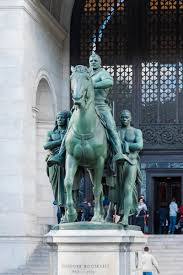
Theodore Roosevelt Statue Removed: Reflections

The press largely missed last week’s removal of the Teddy Roosevelt statue from the grounds of New York’s American Museum of Natural History, which had been in place for eighty years. Progressives argued it was colonialist in nature, a white man on horseback accompanied by an African and Native American on foot.

Roosevelt is consistently rated as among America’s best ten presidents, an ardent naturalist and political liberal. The African and Native American reflect his renowned role as explorer, not colonialist bent on exploitation. Nonetheless, the efforts of the Left, ignoring cultural antecedents, persist in rewriting history, or what I call “purging” it to conform with ideology.

I’m reminded of Orwell’s still relevant observation that “the really frightening thing about totalitarianism is not that it commits ‘atrocities’ but that it attacks the concept of objective truth; it claims to control the past as well as the future.” Similarly, progressives seek to assuage history’s realities by projecting their politics on to the past, while hypocritically ignoring the malignant realities of today’s Cuba, Venezuela, and Nicaragua.

As always, we do well to avoid peripheries, whether of Left or Right. We properly amend history by learning from its failures and not repeating them.

—rj

Tom Brady’s Finest Moment

Yesterday’s Tampa Bay come-back win, led by legendary Tom Brady in the final two minutes over the Jets, highlights Brady’s remarkable career. His greatest moment, however, may have come with his compassion for troubled teammate Antonio Brown, who quit the team in the third quarter, tossing his shirt into the crowd and running into the exit tunnel. “I think everybody should do what they can to help him in ways that he really needs it. We all love him, we care about him deeply. We want to see him be at his best, and unfortunately it won’t be with our team.” Johns Hopkins Medicine reports that 26% of AmerIcans over 18 suffer from some form of mental illness, including anxiety disorders; of our homeless, an estimated 25% from mental illness. Obviously a troubled man, Brown, needs professional help, like so many others in these stressful times. “I think everyone should be very compassionate and empathetic toward some very difficult things that are happening,” Brady added. Thank you, Tom, for showing us the way. —rj

What Counts Most in a Person?

Of all character attributes, what counts most? For me, it’s integrity, or doing the right thing, regardless of circumstance, especially when no one’s around. I say this because of the pervasive anonymity our high tech age confers. I confess to being a Marcus Aurelius devotee, who in Meditations wisely counseled, “Do not act as if you were going to live ten thousand years. Death hangs over you. While you live, while it is in your power, be good.”

I was seated by a corporate CE0 on a flight years ago and we began to converse. He shared that what he looked for most were trustworthy employees committed to doing the job right, workers not requiring micromanagement. Warren Buffett echoes this sentiment when he counseled, “We look for three things when we hire people. We look for intelligence, we look for initiative or energy, and we look for integrity. Without the latter, the first two can hurt you.“

In short, trustworthiness is primary, sorely lacking in business, politics and even religion today. And yes, too frequently in private conduct. Some may call it, ‘walking the talk.” I call it Integrity.—rj

Thanksgiving Reflections:

In his Meditations, Marcus Aurelius recommends we accept all things, even the painful: “Convince yourself that everything is the gift of the gods.” Although this seems problematic, with everything that happens to us, good or bad, we can gain insight, transcend rather than recoil or take offense. If someone hurts me, I reach for the good that remains in that person. If stricken ill, I’m more mindful of healthy changes I must make. With the pandemic, I gain awareness of my need to protect others and give thanks for more time at home with those I love. As Epictetus, whom Aurelius follows, tells us, “Everything has two handles.” In all things, grasp the easier, more positive handle, and give thanks, both now and always.

California Reminiscence

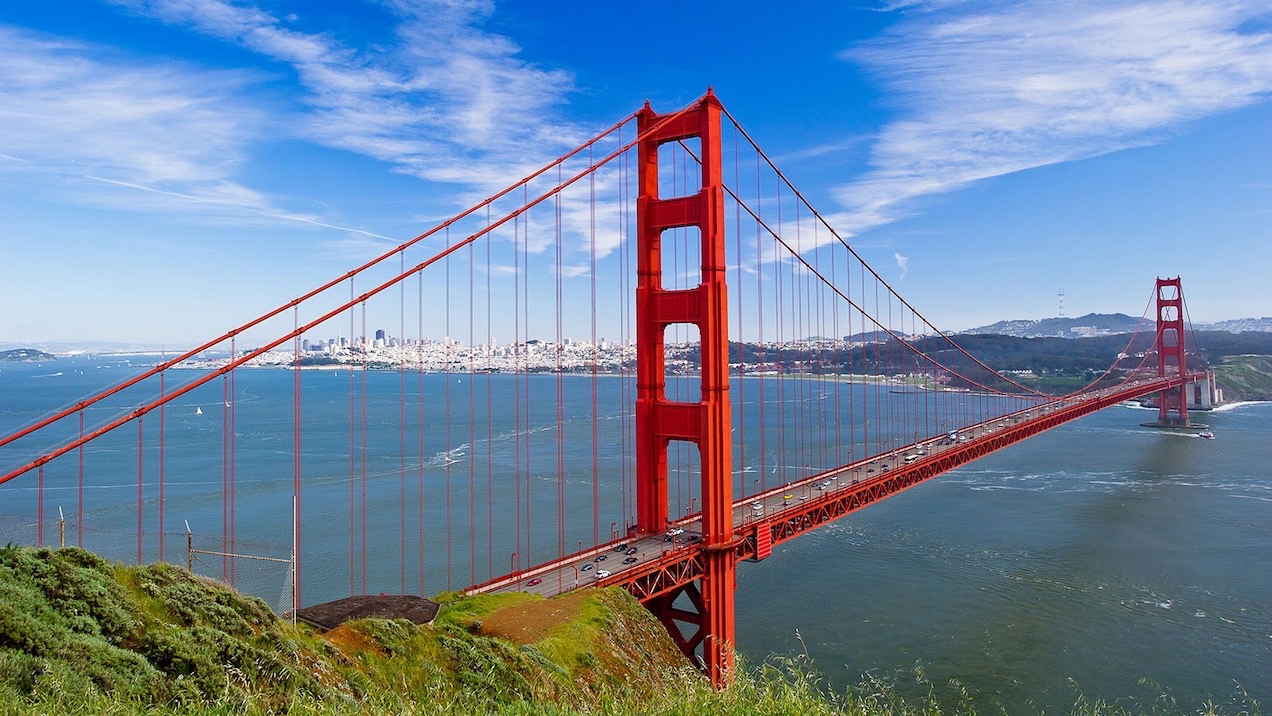
I remember my first rendezvous with California, the Golden State, as a 17-year old serviceman on his way to Korea, dazzled by snow-capped mountains thrown back in the crystal blue waters of Lake Tahoe, the descent into orchard country and, then, San Francisco. Suddenly, I understood my brother and a beloved uncle making it their home.

Ultimately, I married a California girl and nearly thirty years ago we honeymooned in Monterey and its environs. Our children and grand-babies are Californians and, when we can, we make the trek. I know California well, studied in California on a government grant, am a devotee of Big Sur country, aficionado of poet Robinson Jeffers, writers Steinbeck, Didion, Chandler, Solnit and still others.

But the California I knew, along with countless generations, has lost much of its golden hue. For only the second time in its history, more people have moved out than moved in, fleeing rampant taxation, escalating housing and utility costs, and the state’s crazy politics.

California with 12% of the nation’s population has one third of its welfare recipients. A once proud educational artifice of well paid teachers and progressive schools now ranks 37th. It’s last in the number of K-12 students per teacher (2015-16).

Last summer, impacted by climate change, 4 million acres of forest burned and severe drought, a now annual specter, taunts the state’s huge agricultural sector, much of it irrigational. I could write pages on the consequences of the demise of the Sierra Nevada snowpack, the state’s most significant water resource. Or of salinization of the Sacramento/San Joaquin Delta that supplies drinking water for 20 million Californians. Today, California suffers the worst air quality in the nation, resulting in huge medical outlays.

Even big tech has caught on to what’s happening, several firms recently choosing their options elsewhere for more welcoming states like Arizona, Texas, Idaho and Washington. Last year, Tesla CEO Elon Musk, the world’s second richest man, announced plans to move his HQ to Texas/Nevada and sold $100 million of California real estate. (Tesla is the last auto manufacturer in the state.)

Political polity provided by a once robust two party rivalry of Democrats and Republicans has been vastly eroded. Between 1970 and 2018, the Hispanic population increased from 12% to 39%. They overwhelmingly prefer Democrats. Identity politics is everywhere.

Don’t get me wrong. Not everything is doom and gloom in California. Even with its troubles, California, were it a country, would rank fifth in GDP, exceeding several European countries such as England, France and Italy and nearly doubling Canada.

And yet, like the California haze that increasingly infiltrates our summer and fall traditionally vibrant blue New Mexico skies where Karen and I live, something’s gone out of things and a golden El Dorado no longer allures.

–rj


A Changing France: The Demise of Intellectual Exchange

When I was in high school in Newburyport, MA, I was thrilled to have my first taste of learning French under earnest Mrs. Waltz, mesmerized by its nasal intonations and lilting cadence. What can be more beautiful than telling your loved one, “Je t’aime avec tout mon coeur?”

Yes, I confess to being a Romantic, filled with passion, a love for all things beautiful, and a fondness for hard-thinking, attributes I associate with France. Besides, I’m three-quarters French.

I studied French on my own for many years, devoured Hugo, Flaubert, Maupassant, Proust, and Camus, been to Québec, sojourned a summer in France, taken students there, walked Paris streets, been to Provence, adore Aix-en-Provence, home of Cézanne and picnicked in the shadows of his beloved Mt. Sainte Victoire. And the food, I still remember that Menton garden-setting with its salade delicieuse washed down with Chardonnay.

But the France I have known is changing rapidly, symbolized by the recent demise of Le Débat, France’s leading journal of intellectual exchange in the spirit of the Enlightenment. Though founded by Leftists, appropriately on the day of Sartre’s funeral in 1980, and at one time edited by influential literary critic Michel Foucault and associated with anthropologist Claude Lévi-Strauss, it allowed for open debate, but is now a casualty of France’s import of America’s cancel culture wave of identity politics with its revisionist history, infiltration of college campuses, abridgment of free speech, resultant censorship, threats of boycott, vigilante violence, and libelous personal attacks via social media. Le Débat has ceased publication.

Despite President Macron’s pledge that France “will not erase any trace or name from its history. It will not forget any of its works. It will not topple any statues,” the fate of Le Débat, France’s foremost intellectual journal, signals the hollowness of such a claim.

It used to be said that when France sneezed, all the world caught a cold. Alas, France is but a shadow of its former self and with its demise, tolerance for free exchange of ideas is everywhere diminished and social fracture its consequence. C’est dommage!

–R. Joly

Cherished Company

From a chiId I’ve always craved the company of animals, sometimes preferring them over humans. It was Darwin who in his massive studies of the animal kingdom posited that reason, emotion, and even morality, weren’t solely relegated to humans through evolution. My long acquaintance with animals tells me Darwin was on cue. Oh, the many stories I could tell.

Relatedly, there’s a delightful new little book just out by John Gray, titled Feline Philosophy, obviously about cats. And I can tell you a lot about them as well, though my wife, Karen, exceeds me greatly.

I like Gray’s cogent observation about animals when he says, “Lacking self-consciousness, non-human animals are present in the world more completely than we are. They inhabit nature fully whereas we are always dislocated, at a right angle, from it. Indeed, we are destroying it.”

So you see, you don’t have to consult a Buddhist monk to find serenity. It was the Buddha who taught us that suffering lay in desire and refusal to accept impermanence. On the other hand, our animal friends are simply their authentic selves, with each day a sojourn in life’s palate. Scarce wonder I pursue their company.

—r