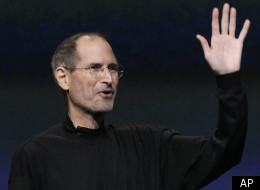
Postscript: Steve Jobs

I just came upon this Steve Jobs’ quote, originally conceived as an Apple ad, perhaps the most memorable ad ever made. I wanted to share it, since it sums up Steve’s vision and, of course, his legacy:

Here’s to the crazy ones. The misfits. The rebels. The troublemakers. The round pegs in the square holes. The ones who see things differently. They’re not fond of rules. And they have no respect for the status quo. You can quote them, disagree with them, glorify or vilify them. About the only thing you can’t do is ignore them. Because they change things. They invent. They imagine. They heal. They explore. They create. They inspire. They push the human race forward. Maybe they have to be crazy. How else can you stare at an empty canvas and see a work of art? Or sit in silence and hear a song that’s never been written? Or gaze at a red planet and see a laboratory on wheels? We make tools for these kinds of people. While some see them as the crazy ones, we see genius. Because the people who are crazy enough to think they can change the world, are the ones who do.

Steve Jobs: an uncommon hero

Appropriately, the news of Steve Job’s death popped-up on my iPad at bedtime, or about 10:30 PM. Instead of falling asleep, I tapped my news applications for details. Already, tributes were pouring-in from all over the world, perhaps the most eloquent from President Obama.

I became an Apple devotee in 2007 after years of discarded PCs, each generally down to a crawl after about three years, always under virus threat, at times confusing in their set-up and operation. In contrast, I’m typing on the same Macbook Pro laptop bought nearly five years ago, never a hiccup along the way, a little outdated in some of its features, but otherwise fully adequate for my needs. I paid more, but have outpaced that investment with its longevity. It’s like choosing a Lexus over a Corolla. Macs work the way all computers should.

Like many of you, I’ve branched out to other devices: iPod, iPhone, and last year, my favorite, the iPad. The latter has revolutionized my electronic life, virtually replacing even my laptop, except for productivity needs. Games, music, news, books, you name it, I have it all: ease embedded in quality.

Steve’s life amazes me. I’m talking biography rather than tech savvy. I hadn’t known he’d been put-up for adoption by his biological mother and was ultimately raised by working class parents, or that he had only one semester of college. Jobs had a taste for following the road less travelled, or this pluck most of us lack, the courage to seek the right fit, the fortitude to prevail. I’ve also learned he didn’t suffer fools gladly. He could be difficult, but he always played the hunch and followed his intuition.

Many rank him with Edison and Einstein in the impact of his genius. Actually, he was less inventor, much more innovator. He had a nose for good ideas that could be made better and surrounded himself with those who could materialize his vision. I understand this kind of creativity well. Writers like Vergil and Joyce could translate the extant into the revolutionary. Collectively, the Romans and contemporary Japanese are like this. Perhaps his greatest legacy, like that of all good teachers, was an ability to simplify the difficult. Apple devices exceed not only in their efficiency, but their ease.

I hadn’t known he ventured to India and returned a Buddhist devotee. His desire in life wasn’t to make money, but to live meaningfully. Simplicity characterized not only his products, but his life.

Brave beyond brave, and against all odds, he broke through not only economic and social barriers, but those posed by pancreatic cancer and its nearly always fatal consequence. Each new day he lived with hope.

Despite his outer success, he was in some ways “born under an unlucky star,” as the poet Keats might have put it. After all, 56-years is not a long-life. Paradoxically, he was also one of the luckiest of mortals. Most of us live longer, but not as well. Steve Jobs’s life, on the other hand, is the stuff of legends.

In 2005, Jobs gave the commencement address at Stanford University. In its wisdom and simple eloquence, its somber simplicity and earthly truths, the address affirms an uncommon realism of counting one’s days. Available online, it deserves a full-reading. In his honor, here are some of his final words to that youthful audience of just 6-years ago:

My third story is about death. When I was 17 I read a quote that went something like “If you live each day as if it was your last, someday you’ll most certainly be right.” It made an impression on me, and since then, for the past 33 years, I have looked in the mirror every morning and asked myself, “If today were the last day of my life, would I want to do what I am about to do today?” And whenever the answer has been “no” for too many days in a row, I know I need to change something. Remembering that I’ll be dead soon is the most important thing I’ve ever encountered to help me make the big choices in life, because almost everything–all external expectations, all pride, all fear of embarrassment or failure–these things just fall away in the face of death, leaving only what is truly important. Remembering that you are going to die is the best way I know to avoid the trap of thinking you have something to lose. You are already naked. There is no reason not to follow your heart.

About a year ago, I was diagnosed with cancer. I had a scan at 7:30 in the morning and it clearly showed a tumor on my pancreas. I didn’t even know what a pancreas was. The doctors told me this was almost certainly a type of cancer that is incurable, and that I should expect to live no longer than three to six months. My doctor advised me to go home and get my affairs in order, which is doctors’ code for “prepare to die.” It means to try and tell your kids everything you thought you’d have the next ten years to tell them, in just a few months. It means to make sure that everything is buttoned up so that it will be as easy as possible for your family. It means to say your goodbyes.

I lived with that diagnosis all day. Later that evening I had a biopsy where they stuck an endoscope down my throat, through my stomach into my intestines, put a needle into my pancreas and got a few cells from the tumor. I was sedated but my wife, who was there, told me that when they viewed the cells under a microscope, the doctor started crying, because it turned out to be a very rare form of pancreatic cancer that is curable with surgery. I had the surgery and, thankfully, I am fine now.

This was the closest I’ve been to facing death, and I hope it’s the closest I get for a few more decades. Having lived through it, I can now say this to you with a bit more certainty than when death was a useful but purely intellectual concept. No one wants to die, even people who want to go to Heaven don’t want to die to get there, and yet, death is the destination we all share. No one has ever escaped it. And that is as it should be, because death is very likely the single best invention of life. It’s life’s change agent; it clears out the old to make way for the new. right now, the new is you. But someday, not too long from now, you will gradually become the old and be cleared away. Sorry to be so dramatic, but it’s quite true. Your time is limited, so don’t waste it living someone else’s life. Don’t be trapped by dogma, which is living with the results of other people’s thinking. Don’t let the noise of others’ opinions drown out your own inner voice, heart and intuition. They somehow already know what you truly want to become. Everything else is secondary.

Combating the new global killers

The UN’s World Health Organization (WHO) has just announced that heart and lung disease, cancer, and diabetes are responsible for 63% of deaths globally. That surpasses the former number one killer, infectious diseases. WHO attributes the high mortality to largely preventable sources such as smoking, sedentary living, and faulty diet. In the West, Australia ranks first in heart and cancer mortality (35% heart; 20% cancer). 17 % of Australians smoke and a shocking 64% are obese. Unfortunately, Americans top the obesity scale, with some 71% of us overweight.  Global Burden Chart

One noticeable observation is that even third world countries are experiencing rising heart and cancer mortality, as their diets increasingly incorporate meat and daily products. Back in the 80s when noted Cornell nutritionist T. Colin Campbell made his blockbuster study of rural Chinese diets, heart disease and cancer were rare among those consuming an entirely plant based diet. The study’s empirical evidence has been confirmed in analyses differentiating Chinese immigrants and their offspring in the U. S. Americanized Chinese exhibit the same high incident rate for heart disease and cancer as the general population.

The real culprit here is animal protein, not fat per se. To avoid these chronic diseases the world needs to shift to a plant based diet. Studies give convincing evidence that doing so not only lessens the occurrence of heart disease, but often reverses it. Cancer incidence also decreases.

Ironically, our current health system contributes to our declining health with its continuing endorsement of a daily 30 gram fat content, low fat meat, fish, poultry, and dairy foods. Some doctors are downright defiant of plant diet research. Dr. Eduardo Azap, president of the Union For International Cancer Control, debunks the notion that “cancer is a problem of rich countries” as “a misconception” (Chronic Killers).  And yet when you look at WHO’s own listing, Ethiopia, for example, has a 4% cancer mortality rate; India, 6%. Contrast this with the U.S. 23% cancer mortality rate. It isn’t that we eat too much; it’s that we eat the wrong food.

Consider Harvard’s School of Public Health recently released alternative to the USDA’s MY Plate diet. Harvard’s plate seeks to offer more specific nutritional guidelines under the same USDA categories: fruits, vegetables, grains, and proteins. Nonetheless, the Harvard plate still recommends poultry and fish as good food sources, albeit, Harvard does make some helpful suggestions, for example, recommending whole grains in place of refined grains found in foods such as white bread and while rice, which contribute to heart disease and type 2 diabetes. It also makes a bold breakthrough in recommending water over milk.

Concurrently, an independent panel of 22 health experts (nutritionists, dieticians, cardiologists among them) reviewed 20 popular diets, with the Dash and Ornish diets finishing 1 and 3 respectively under Best Heart-Healthy Diets. Dr. Ornish advocates a virtual vegan diet that strongly resembles those proposed by Drs. Campbell, Mcdougall, Esselstyn and Fuhrman, stalwart pioneers with convincing empirical data behind their advocacy of a plant based diet in combating heart disease and cancer.

The truth about the Mediterranean diet

Diets come and go. Some are better than others. Some are downright dangerous. One such diet, still highly popular, and the basis for several others, is the Mediterranean diet, which draws upon French research (Lyon Diet Heart Study) centered in Cretan eating habits in the 1950s. Cretans were virtually free of heart attacks and obesity rare, despite more than 40% of their diet deriving from fat, or mostly olive oil. Otherwise, they consumed mostly fruits, veggies, beans and fish. They also worked very hard in the fields. Unfortunately, Americans got hung-up on the olive oil rather than the preponderancy of vegetables, concluding the oil was good for you.

French scientists experimented with the Cretan diet. Those on the Mediterranean diet suffered 50 to 70% fewer cardiac incidents. Now that’s pretty impressive, enough certainly to foster enthusiasm for the diet.

Today’s Mediterranean Diet, however, has little resemblance to the Cretan diet that formed the basis of the Lyon study. For many of us, it conjures up images of pasta and Italian bread, staples not friendly to your colon. There is more meat and poultry.

As for the experimental group in the study, four years after it began, 25% on the diet had died or experienced a cardiac event. As often happens, media coverage can be as shallow as it is volatile. So much for the success of the Mediterranean diet. The truth is that olive oil is one of the most calorically dense and fattening foods you can consume. On a pound for pounds basis, it’s worse than butter (3200 calories) vs olive oil (4,020). Moreover, 14 percent of olive oil is saturated fat. Since it can lead to weight increase, it can also increase LDL (the bad kind of cholesterol).

There is evidence that monounsaturated fat, found in olive oil, gives some protection from strokes. Nevertheless, because of its caloric density, only thin people should consume it, if at all. (See D. D. Blankenhorn, et al. ”The Influence of diet on the Appearance of New Lesions in Human Coronary Arteries.” Journal of the American Medical Association, Mar. 23, 1990.)

The brilliant Cornell epidemiologist who wrote the landmark, China Study, while acknowledging that the Mediterranean diets were virtually the same, commented, “I would say the absence of oil in the rural Chinese diet is the reason for their superior success“ (qtd. In Caldwell Esselstyn Jr., Prevent and Reverse Heart Disease, p. 84).

The upshot in all of this? If you want to eat healthy, minimize disease, control weight, and foster longevity, then a a plant-based diet is your best bet.

Oh, about the Cretans, they now eat like most of us and, like most of us, now suffer similar rates of heart attack, stroke, diabetes, colon and breast cancer.

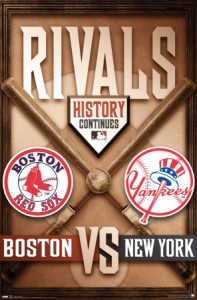
And they say baseball’s boring?

This weekend saw the renewal of baseball’s fiercest rivalry in the clash of two perennial powers, the Yankees and Red Sox. On Friday, night the two teams of the American League East were tied for first. Living up to its billing, the first game ended up in a hard fought pitching dual that saw the Yankees eking out a 3-2 win.

That made for a bleak outlook for the Sox in Saturday’s contest, when they would be pitching lack-luster John Lackey against 16-game winner CC Sabathia. Why show up?

But as often occurs when these gargantuans wrestle, anything can happen, and Lackey, supported by Boston’s famed hitting machine, pitched well enough in his six innings to set up a Red Sox win, 10-4.

The teams again deadlocked for first, momentum now favored the Sox in the rubber game, with ace Josh Beckett taking the mound against Freddy Garcia, a dismal 0-2 and 10.13 era this season against the Sox. But Garcia pitched well, allowing just 1 run in 5 innings.

In the 7th, the score tied at 1-1, veteran Sox reliever Matt Albers let one slip, serving up a homer to Gardner, the Yankees now taking the lead, 2-1.

At this late stage, the lights were beginning to dim for Red Sox Nation with baseball’s best reliever, Mariano Rivera, in the wings.

Having been through this before, I opted to go to bed. Minutes later, I heard my wife from the other room shouting,”Tied game!” Scutaro had scored from third in the 9th on Pedroia’s sacrifice fly. Rivera had blown the save! Once again, we had the future Hall of Famer’s number.

In the 10th, after Sox reliever Bard’s return to form, the Yankees countered with starter John Hughes. With one out and two on, rookie Josh Reddick, 0 for 4, lined a ball into the left field corner, sending substitute runner Darnell McDonald home from 2nd base. Game over!

Whew, what a game!

And some people say baseball’s boring?

The kidnapping of a nation

Many are doubtless giving a sigh of relief at the apparent compromise in DC, resulting in the lifting of the deficit ceiling and avoidance of the first-time ever debacle of a U. S. unable to honor its debts. The terms of this deal, however, may turn out worse than insolvency, the cure worse than the disease.

1. Who are the winners?

Clearly this is a victory for the Tea Party wing of the Republican party, with its insistence on a balanced budget, meaning spending cuts, and no increase in taxes. While they had also resisted raising the deficit ceiling, it represents their only instance of compromise.

2. Who are the losers?

President Obama: Americans may not perceive it this way, but it’s the President, who blinked, despite initially insisting on a package that would raise taxes for those earning more than $250,000 a year. We should have gotten wind of this pattern when at the end of 2010 he caved in to Tea Party demands of not raising tax revenue in exchange for extending unemployment compensation.

Democrats: This agreement curtails the New Deal/Great Society mandates foundational to the Party’s outreach to the indigent, working poor, and middle class. Medicaid, Medicare, and Social Security, social mainstays for many, will see cuts, even as inflation increases and medical costs escalate. Cuts will affect our National Parks, environmental safeguards, education, etc. The costs in lost revenue to the States is yet to be reckoned in. As Steven Cohen, Director of Columbia University’s Earth Institute, has it: “All of President Obama’s brainpower, charisma and speaking skills have not translated into clear, crisp, leadership. Instead, I see just another calculating, poll-driven politico. His re-election campaign dominates his Presidency.” Huffington Post Politics, Aug.1, 2011.

Republicans: The GOP will be the primary recipient of public rage in the 2012 elections for their subservience to their Tea Party wing. Ironically, the GOP faces a high probability of the Tea Party running as a third party in 2012, should Republicans nominate a more moderate conservative such as Romney.

The average American: Ironically, our down economy, now into its third year, requires more cash infusion, not less, as a temporary means to stimulating the market place. Had the present legislation been in effect at the outset of the Great Recession in 2008, a hand-cuffed president would not have been able to bail out Chrysler and General Motors, for example. Three years later, these companies have paid back their loans and added 150,000 workers. Making spending cuts are likely to put out whatever blue embers there are, plunging us this time into world depression on a scale paralleling the 1930s.

3. Are there other consequences?

The worst is yet to come. As you’re probably aware, this agreement calls for a Super Committee composed of six Republicans and six Democrats to suggest further budget areas for cutting. If the Committee stalemates or the Congress balks, automatic cuts will ensue. Not only will entitlement programs be targeted as major areas for cutting, but the Defense Department as well, potentially hazarding our national security. What we lose is our flexibility to respond to crisis, whether economic or military.

This imbroglio hasn’t really been about cutting spending. It’s been ideological, a small core of die-hard conservatives operating as an insurgency to overthrow big government. Holding our country hostage, they have been quite willing to shove Americans over the cliff unless their ransom gets paid.