Retired English prof (Ph. D., UNC), who likes to garden, blog, pursue languages (especially Spanish) and to share in serious discussion on vital issues such as global warming, the role of government, energy alternatives, etc. Am a vegan and, yes, a tree hugger enthusiastically. If you write me, I'll answer.
I’m not into music the way my wife is, whose collection of music is vast in its eclectic sweep. I confess to being hooked on literary reads across the years, which includes poetry as well.
Still, I’m repeatedly stirred by music from many genres when I take time to listen. It’s why I try never to miss the annual Kennedy Center award broadcasts, introducing me to artists, well known to the public, but largely new to me.
I do subscribe to Apple Music, my way of catch-up for what I’ve missed across the years and what’s happening now. With my new Bose headphones, the stereo comes in, loud and clear. I’m transfixed. Oh my god! What have I missed? I’m this kid unleashed in a chocolate factory after hours.
One music artist I’ve come to especially appreciate is composer, pianist and conductor John Williams, prolific genius behind many of Hollywood’s award-winning musical scores. An American treasure who belongs to the world, he turned 91 this past February.
Where would Spielberg and Lukas be without him: winner of five Academy Awards for Best Original Score, think Fiddler on the Roof, Jaws, ET, Star Wars, and Schindler’s List.
Collectively, Williams has garnered 25 Grammy Awards, five Academy Awards, seven British Academy Film Awards, four Golden Globe Awards, and 53 Academy Award nominations.
But this isn’t the whole story. Williams wrote the theme music for the 1984 Olympics among still other feats independent of Hollywood.
He’s also served as principal conductor of the renowned Boston Pops (1980-1993) and has composed numerous classical works.
In 2004, he was honored by the Kennedy Center.
In 2005, the American Film Institute selected his score to 1977’s Star Wars: Episode IV – A New Hope, as the greatest film score of all time.
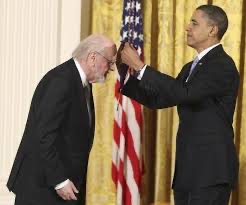
In 2009, President Barack Obama presented him with the National Medal of Arts in the East Room of the White House, “America’s highest honour specifically given for achievement in the arts conferred to an individual artist on behalf of the American people” (irp.nih.gov).
Recently, Williams announced his retirement from writing film scores, only to take it back: “I’ve at least 10 more years to go. I’ll stick around for a while”(comicbook.com).
One prize has eluded him: The Presidential Medal of Freedom, our country’s highest award to a civilian for “an especially meritorious contribution to the security or national interests of the United States, world peace, cultural or other significant public or private endeavors” (change.org).
Surely, it’s long overdue, a remiss I hope President Biden will promptly address, since time is of the essence.
A year ago today, Russian troops invaded Ukraine. Bravely, the Ukrainians have held out, despite massive loss of life and daily drone and missile attacks on civilian infrastructure. Fighting remains intense in Bakhmut, with many killed on both sides.
It’s a ruthless enemy, resorting to crimes against humanity, as the mass burial sites of Bucha and Izium bear witness, hundreds of civilians shot, their bodies evidencing torture and mutilation. Wheat fields have been bombed, Ukrainian children deported to Russia.
Western military assistance has been crucial to the Ukrainian resistance. That’s now in jeopardy, given increasing malaise in the West to support Ukraine. In the U.S., a newly elected House majority of Republicans presses for a funding cutoff.
If this happens, Ukraine loses the war and previous Russian imperialism (Chechnya, Georgia, Moldavia), continues and its contagion spreads. Think China, Iran, North Korea.
Loss of Western political will is demagogue Putin’s best hope.
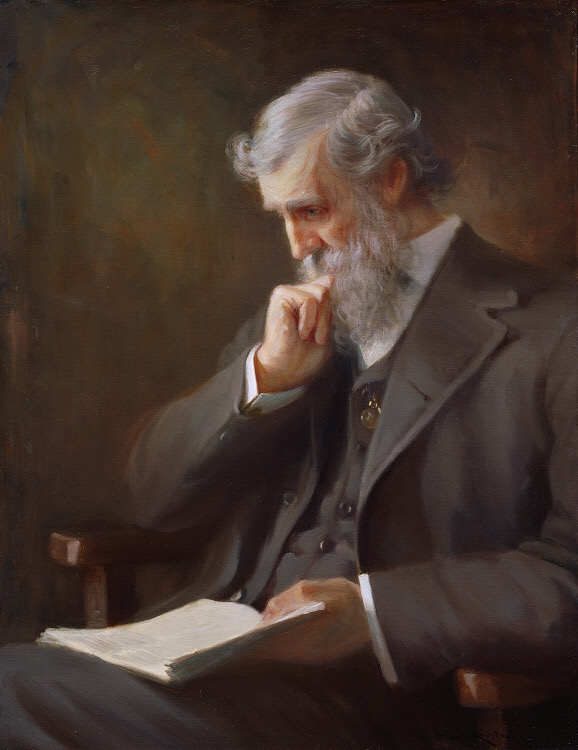
Sierra Club founder John Muir was extraordinary, not only for his devotion to preserving nature’s wilderness, but for his eloquence in articulating its grandeur. An example:
Wonderful how completely everything in wild nature fits into us, as if truly part and parent of us. The sun shines not on us but in us. The rivers flow not past, but through us, thrilling, tingling, vibrating every fiber and cell of the substance of our bodies, making them glide and sing. The trees wave and the flowers bloom in our bodies as well as our souls, and every bird song, wind song, and tremendous storm song of the rocks in the heart of the mountains is our song, our very own, and sings our love. The Song of God, sounding on forever (from John of the Mountains: The UnpublishedJournals of John Muir).
All told, he would publish 300 articles and 10 major books, not bad for someone who nearly lost his sight in a work accident.
One of his closest friends was President Theodore Roosevelt. In 1903, they would hike wilderness terrain together for two months. Inspired by Muir, Roosevelt designated 230 million acres of public land, including Yosemite and four other national parks and 18 national monuments, for preservation.
Earlier, in 1867, at age 29, Muir walked 1000 miles from Indiana to Florida, taking along only sugar and bread, buttressed by wild berries. (Muir never weighed more than 148 pounds. ) You can read an account of his journey: A Thousand Mile Walk to the Gulf (1916). Excerpt:
Though alligators and snakes naturally repel us, they are no mysterious evils. They dwell happily in these flowery wilds, are part of God’s family, unfallen, un-depraved and cared for with the same species of tenderness and love as is bestowed on angels in heaven or saints on earth.
John Muir was one of those rare people that cross our pathway in life’s journey, keenly sentient of life’s best values and eager to share. Of all the nature writers I’ve imbibed, I’ve not found his equal for rendering nature’s transcendent allure with lyrical cadence that informs, moves, and underscores its mystery and moods, culminating in an elixir for healing both body and soul.
I’m saddened to learn this morning that Kentucky’s privately owned and managed Bernheim Arboretum and Research Forest is under threat from the Louisville Power Gas and Electric utility (LPGE) and Kentucky Utilities (KU), which want to route a gas pipeline through its largely intact woodland of 16,137 acres/6530 hectares. They argue their need to meet the growing energy demands of Bullitt County residents and are claiming eminent domain.
Like many self-interested utilities across the national landscape, they haven’t gotten the message. We don’t need more fossil fuel extraction and pipelines. What we do urgently need are renewable fuels. Unfortunately, Kentucky’s a red state, where environmentalists might as well come from Mars.
Home to 2100 species, some found nowhere else, the impact on the Bernheim Forest would menace habitat, migration routes, and streams that have enjoyed protection from its inception, bequeathed as a gift in 1929 by grateful German immigrant Isaac W. Bernheim.
The pipeline would transverse a corridor purchased in 2018 from funds provided by the Kentucky Heritage Land Conservation Fund and the US Fish and Wildlife Service’s Imperiled Bat Conservation Fund, with the stipulation it be preserved in perpetuity.
Located about sixty miles from our house, I’ve visited it several times in my younger years, relishing several of its more than forty miles of hiking and biking trails. I remember well its designated groves of native Kentucky flora.
Stop off at the friendly Visitor Center for maps or download them from its site: bernheim.org. I recommend the 1.5 miles as Arboretum Loop as your introduction to Bernheim, a place you can visit repeatedly, yet find something new.
For experienced hikers up to the challenge, there’s the 13.75 Millennium Trail that will you take you 6-7 hours to navigate. It’s rough, true wilderness terrain. I had lost touch with the paradisiacal landscape, moving to New Mexico. Now I’m back, and I’ve joined its several hundred mentors in preserving its legacy.
Each day, it seems I learn of new challenges in the continuing assaults of fossil fuel and industrial interests on the environment. In Germany, despite its touted environmental safe-guards, billionaire Elon Musk has prevailed in a court decision, allowing the destruction of a remaining 205 acre forest near Berlin to build a giant Tesla factory employing 10,000 workers, despite concerns of conservationists and local residents. This comes in addition to a previous 75 acres/30 hectares of forest already cut.
Here at home, the Interior Department has singled its likely approval of the Alaska Willow Project, a ConocoPhillips endeavor to produce up to 629 million total barrels of oil over the next thirty years, equivalent to 278,000 metric tons of carbon dioxide over the project’s lifespan. (Biden had promised he’d be an environment president.) The consequences in an area warming four times faster than elsewhere will be devastating for already vanishing polar bears, caribou, walruses and an indigenous way of life.
The Bernheim Forest, in sum, is another chapter in our inveterate struggle for a green planet. Utilities need to respect wilderness preserves, not see them as green spaces to be exploited. A local court decision is anticipated by March. The case, now four years in litigation, will likely move to a higher jurisdiction regardless of the decision.
I’ve had this fever to devour books since I was a child. It began when my brother, David, returned from the army and gave me HuckleberryFinn to read. I was eight.
There was this small news store on Philadelphia’s busy Girard Avenue in Fishtown. I don’t remember how I discovered it, but I’d often stop there on the way back from elementary school or in summer time, when I roamed the city as a street urchin, sometimes poking my nose where it didn’t belong.
They had this big box filled with what were called ClassicsIllustrated, which featured comic-style adaptations of literary classics. Founded by the Kanter family in 1941, ClassicIllustrated made it into the 21st century.
I’d fish out comics featuring works like SwissFamilyRobinson, Moby Dick,Kidnapped, Mutiny on the Bounty, Oliver Twist. They went for no more than a nickel and there were lots of them.
I enjoyed them so much, I didn’t want them to end. This led me to the Montgomery Street library, where I would read their originals. By age 12, I had read scores of literary works. By the way, that library still exists.
Of all the writers I’ve read over the years, Tolstoy stands out head and shoulders above all others, influencing me profoundly. By age 13, I had read Warand Peace and at 15, Anna Karenina.
Tolstoy taught me empathy for the poor, disavowal of violence, restraint from eating meat, to live simply and love my fellows.
Tolstoy’s great quest was to resolve life’s riddle: How should we live?
His quest became mine,
I loved his parabolic short stories. I think of The Death of Ivan Ilyich as among the most profound short stories I’ve ever read and taught it for many years.
Tolstoy’s writing creeps up on you. Though simply written, for Tolstoy shunned affectation, it’s the pulsating nuance generated by a passionate insistence that holds you to the end. Make no mistake. He aims to convert you.
Then there is his last novel, Resurrection, moving and powerful, a panorama of Russian life at the end of the nineteenth century. On the attack, he assails the injustices of a repressive, oligarchic society and the hypocrisy of its bulwark, the Russian Orthodox Church.
I wanted to read him in the original, so I studied Russian.
As a college prof, I taught seminars in Russian classics.
In 2001, I went to Russia and visited his lifelong residence at Yasnaya Polyana near Tula, 125 miles southeast of Moscow. I stood in silent tribute at his grave.
If there’s a Tolstoy book you should read sooner than later, my recommendation is The Kingdom of God is Within You.
Mahatma Gandhi, on reading it, exclaimed that he felt “overwhelmed”: “All the books given me … seemed to pale into insignificance.”
Tolstoy and Gandhi exchanged letters till Tolstoy’s death in 1910. Gandhi had also read Tolstoy’s hand-circulated “A Letter to a Hindu,” with its advocacy of love, not force, as the means to freeing India from British rule. We know the rest of the story.
I’m not interested in hagiography. Tolstoy had feet of clay. There existed his stormy marriage to Sofia and his moral intensity in combat with carnal appetites. He endowed his protagonist Anna Karenina with liabilities he despised in himself, annulling her quest for self-realization. In the novel, it’s Levin who Tolstoy aspires to be.
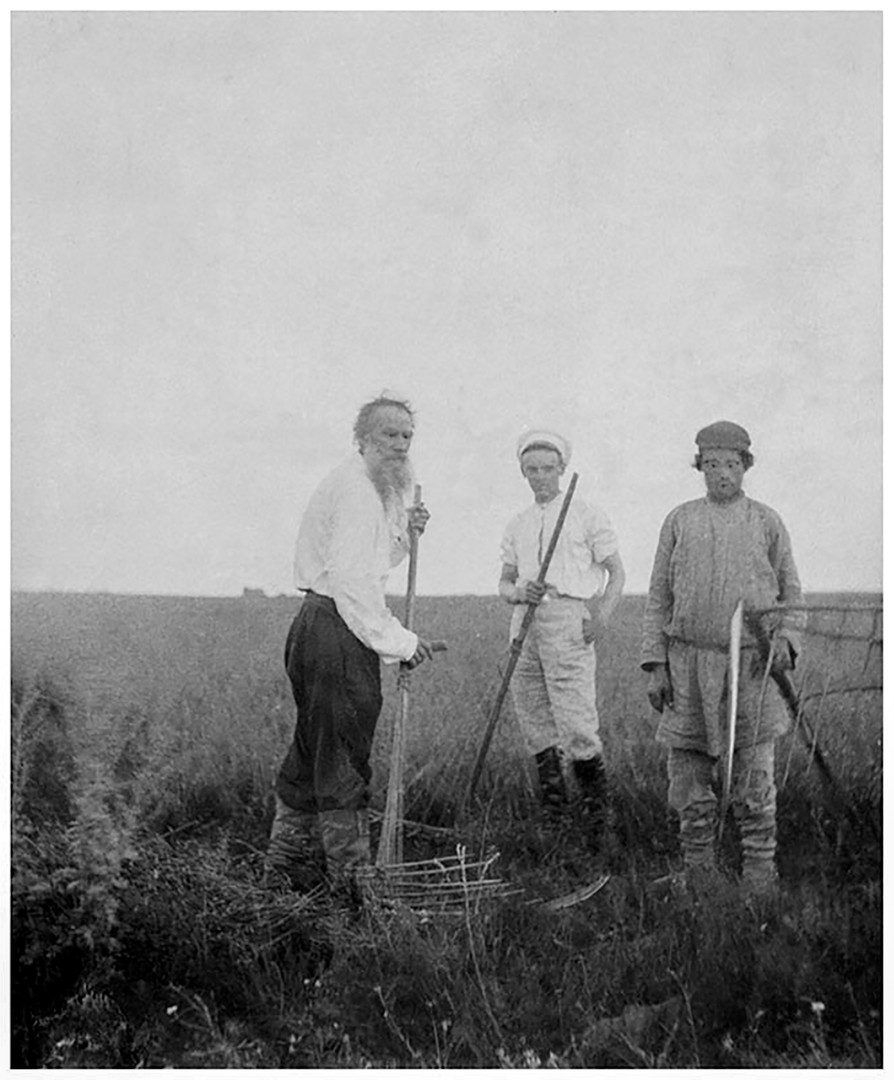
When the Bolshevik revolutionaries violently seized power in 1917, the five year Russian Civil War began. The Bolsheviks, coming upon the Yasnaya Polyana estate, did not blaze it to non-existence as was their wanton elsewhere. Tolstoy had freed his serfs long before the Czar. Dressing in peasant garb, he labored among them, and distributed his wealth.
When German troops approached the estate in their invasion of Russia, the Soviets loaded Tolstoy’s furnishings and manuscripts on a train into the Urals, safe-guarding them for posterity.
Today, Russia continues to revere Tolstoy, for he’s the Russian soul writ large. I never understood the deep spirituality of the Russian psyche until I was on Russian soil. You see it in their art: Bryullov, Kandinski, Aivazovsky. You hear it in their music: Tchaikovsky. Rimsky-Korsakov, Rachmaninov. You imbibe it not only through Tolstoy, but in Pushkin, Dostoevsky, and Chekhov. In Russia, poets are celebrities.
Russia is neither European nor Asian. It is itself.
Embraced by the universal human condition, Tolstoy nonetheless intensely sought to free himself from its shackles in pursuit of love, social equity, and non-violence: “The sole meaning of life is to serve humanity.”
I’m always on the lookout for writers of unique talent with mastery of syntax, keen intellect, the ability to change minds, prose abounding in both beauty and resonance. They linger with you. They plant a seed.
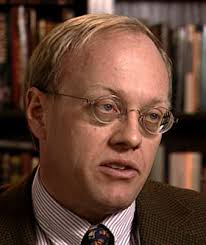
Chris Hedges is one of these. Formerly with the New York Times (1990-2005), he currently writes a column for the ScheerPost, known for its thoughtful reporting and in-depth analysis.
Hedges was a 2002 recipient of a Pulitzer Prize for Explanatory Reporting, profiling the threat of the global terrorism network in the aftermath of 9/11.
He’s also served as a battlefield correspondent during the Bosnian and Kuwait interventions. It was Hedges who revealed the Srebrenica massacre in 1995.
This morning I read his extended piece “Ukraine: The War That Went Wrong” (January 29, 2023). Sobering, it should serve as a cautionary warning to an escalating conflict that shows signs of getting out-of-hand.
What I like is his even handedness. Non-partisan, he tells it as he sees it. Both Democrats and Republicans have much to answer for. America has been, sadly, an imperialist power, provoking conflicts with no resolution. Like once formidable Britain, its dominance continues to wane.
Hedges graduated as an English major from Colgate University, where he helped found a LGBT group, though a heterosexual. What motivates him is social justice for the marginalized.
Walking the talk, while a ministerial student at Harvard Divinity School, he chose to live in Boston’s inner city, Roxbury, pastoring a small church.
He took a leave of absence from his studies one year before graduating to learn Spanish in Bolivia. To widen his outreach, he turned to journalism, honing his craft by studying George Orwell’s political writings, subsequently writing freelance pieces for the WashingtonPost.
He graduated from Harvard Divinity School in 1983.
Reporting from Iraq during the Shiite uprising, he was taken prisoner, before being released a week later. Meanwhile, Saddam Hussein offered a bounty to anyone killing him. Hedges was an eye-witness of Hussein’s massacre of several thousand Iraqi Kurds.
Hedges was awarded the Amnesty International Global Award for Human Rights Journalism in 2002.
Hedges has suffered for his beliefs. He vehemently opposed the U.S. intervention in Iraq, leading to a NYT formal reprimand for “public remarks that could undermine public trust in the paper’s impartiality.” Being the man he is, Hedges resigned: “…I have maintained what is most valuable to me, which is my integrity and my voice.”
Ordained a Presbyterian minister in 2014, he’s been teaching classes sponsored by Rutgers and Princeton in New Jersey prisons for ten years in addition to his journalism commitments.
He has authored six books.
Recently, I read his thoughtful piece on Marcel Proust, whom I regard as among our greatest literary talents. Hedges is no nerd. He loves the humanities and is a polished reader in Latin and Greek. Here’s a sample from his essay:
Art – literature, poetry, dance, theater, music, architecture, painting, sculpture – give the fragments of our lives coherence. Art gives expression to the intangible, nonrational forces of love, beauty, grief, mortality and the search for meaning. Without art, without imagination, our collective and individual pasts are disparate, devoid of context. Art opens us to awe and mystery. It wrestles with the transcendent.
Get all you can of Chris Hughes, a truly good man.
I don’t know if he still walks the planet. He’d be at least 85. I tried looking him up on the Internet, but there were hundreds with his name.
He was just a young prof teaching an evening course, IntroductiontoLiterature, at Eastern Michigan University. He would change my life.
The course featured OedipusRex, GulliversTravels, TheGreatGatsby, AFarewelltoArms; short stories by Mansfield, Hemingway, Faulkner, Fitzgerald and Jackson.
He had a unique way of teaching, like a language teacher, parsing a verb cluster, focusing on verbal inflection. Literature became electric, pulsating with nuance.
It was beautiful! It was inspiring.
He taught me to see behind the literal—that good writers, like their poet kin, weave multiplicity; that the literal isn’t the text. It’s what lies underneath. Hemingway critics dubbed it “the iceberg technique,” three quarters hidden.
Words were never simple things. They were latent with connotation.
He taught me the subtlety of irony, the discrepancy between statement and meaning, expectation and event, appearance and reality; the role of symbol in undergirding theme and prognosticating outcome.
In short, he taught me how to read: Good readers were translators. Literature exhibits its own grammar of codes and rules, imposing a specific exegesis.
He and I clicked. He had wanted me to take a creative writing course with him, but I had other priorities then.
He urged me to pursue a Ph. D. and join the profession.
Two years later, I began the long journey that would define my life.
Being an English prof won’t get you riches, but making hoards of money was never my life acumen. Ironically, the money pursuit may make us poorer. Saul Bellow, my favorite novelist, conveyed my aversion to the Faustian wager aptly in SeizetheDay: “Uch! How they love money, thought Wilhelm. They adore money! Holy money! Beautiful money! It was getting so that people were feeble-minded about everything except money. While if you didn’t have it you were a dummy, a dummy!”
I owe considerably to a young zealous professor with Keatsian fervor for the aesthetic dominion, who gave me entrance to “the milk of Paradise” (Coleridge, “Kubla Khan”).
Australian Bob Brown is a humble man who’s accomplished extraordinary things, not for himself, but for his fellow earthlings. His goodness makes the heart glad, inspires, and assures: that each of us, where we are, doing what we’re able, can foster needed change.
Brown had been a physician for twelve years, moving from the Sydney area to Tasmania out of love for wilderness. There, he would become active in the state’s environmental movement, subsequently founding The Wilderness Society and serving as its director for five years, a commitment leading to his giving up his medical practice.
Such dedication characterizes Brown, unstinting in his endeavors to promote a global democracy and green economy, single payer healthcare, human rights, and environmental welfare.
In 1982-3, The Wilderness Society helped organize resistance to the construction of a hydroelectric dam on the Franklin River in a large area of wilderness. 1500 showed up to blockade bulldozers. 600 were arrested, including Brown. He would spend nineteen days in prison. The good part: the day after his release, he was elected into Tasmania’s parliament.
Parliament, however, proved an unfriendly place, with only two other members voting to halt dam construction, despite 20,000 protestors on the streets of Hobart, the capital. In 1983, the issue moved to the Australian High Court, which ruled to halt the construction in a 4-3 vote.
Today, the wild river area attracts 200,000 visitors annually and has created thousands of jobs. The assertive protest efforts confirmed Brown’s belief that small, individual efforts at reform aren’t sufficient. Mass, collective protest is necessary to ward off powerful pecuniary interests.
In 1986, Brown was shot at and assaulted for protesting logging at Tasmania’s Farm House Creek.
In 1995, he was imprisoned twice for protesting logging in Tasmania’s Tarkine Wilderness.
In 2006, as a member of Tasmania’s Parliament, he initiated legal action to protect Tasmania’s Wielangta forest.
Additionally, he has authored bills advocating Death with Dignity, a nuclear free Tasmania, gay law reform, and lowering parliamentary salaries.
With the help of fellow Green members of Parliament (he was one of the Australia Green Party founders), the size of Tasmania’s Wilderness World Heritage Area has doubled to 1.4 million hectares.
In 2011, as the elected leader of the Greens, first in the world legislation was passed, mandating the reduction of greenhouse gas emission and the adoption of renewable energy resources.
In June 2912, Brown resigned from the Senate to found the Bob Brown Organization, a non-profit fund to assist Australian environmental campaigns and activists (bobbrown.org.au).
Now approaching 79, Brown is sanguine about his mortality: “I am an optimist. I’m also an opsimath. I learn as I get older. And I have never been happier in my life. Hurtling to death, I am alive and loving being Green.”
May Brown’s successful efforts kindle a fire in all of us to vehemently contest, whenever and wherever, those egocentric forces of greed that impede social equity, poverty’s elimination, a peaceful earth, and an abiding wilderness in which species achieve their destiny.
I’ve long revered Robinson Jeffers’ poetry, ahead of its time in addressing humanity’s pillaging of nature and its consequence.
Formerly one of our most esteemed poets, even making the cover of TimeMagazine (1932), Jeffers fell out of favor with the entrance of America into WW Il. Another outplay of human interests gone amuck, he wanted no part in it. It violated his concept of “inhumanism,” the subordinating of anthropocentric interests to nature’s primacy. By 1965, much of his work was out of print.
That is no shame. Other American poets, like Dickinson and Whitman, out of joint with their times, have suffered banishment to benign forgetfulness.
As he later explained in his 1948 preface to the Double-Axe and Other Poems, “Inhumanism is the devaluation of human-centered illusions, the turning outward from man to what is boundlessly greater. The attitude is neither misanthropic nor pessimistic, nor irreligious.”
I’m not unaware that his poetry has aroused controversy with its misanthropic tenor, long narrative poems replete with violence and latent pessimism about humanity’s future.
With the 2022 UN supported IPCC study just out, conducted by more than 500 scientists from 40 countries, and running 8,000 pages, documenting climate change acceleration and biodiversity loss, Jeffers deserves the reappraisal of his poetry now underway.
Jeffers’ antipathy towards humanity is expressed in his poem, “Original Sin”:
As for me, I would rather be a worm in a wild apple than a son of man. But we are what we are; and we might remember Not to hate any person, for all are vicious; And not to be astonished at any evil, all are deserved; And not fear death: it is the only way to be cleansed
Much of his verse is rooted in Darwinian cataclysm. No Wordsworth, Jeffers wasn’t myopic about nature. He accepted its relentless tooth and claw interchange. Man, however, is the ultimate predator, which explains his hostility: “I’d sooner, except for the penalties, kill a man than a hawk” (“Hurt Hawks”).
Jeffers will not lament mankind’s ultimate passing:
I’m never sorry to think that here’s a planet Will go on like this glen, perfectly whole and content, after mankind is Scummed from the kettle.
Nature deserves reverence. In his poem, “Nova,” he writes,
…we know that the enormous invulnerable beauty of things Is the face of God, to live gladly in its presence, and die without grief or fear knowing it survives us”
In “The Answer,” he pens that
Integrity is wholeness, the greatest beauty is Organic wholeness, the wholeness of life and things, the divine beauty of the universe. Love that, not man
Man has violated that wholeness. In “Animals,” one of my favorites, Jeffers movingly nuances man’s estrangement from his fellow creatures:
At dawn a knot of sea-lions lies off the shore In the slow swell between the rock and the cliff, Sharp flippers lifted, or great-eyed heads, as they roll in the sea, Bigger than draft-horses, and barking like dogs Their all-night song. It makes me wonder a little That life near kin to human, intelligent, hot blooded, idle and singing, can float at ease In the ice-cold midwinter water.
Jeffers’ poetry isn’t always easy to understand. Immensely learned, he can be deeply philosophic, much of his verse influenced by his wide reading in Lucretius, Nietzsche, Freud, Jung, Spengler, Vico, myth and anthropology.
Gifted, Jeffers read classical Greek and Latin at age 5, and as a teen, was fluent in French, German and Italian. Along with his brother, he had been educated in private schools in Geneva, Lausanne, Zurich, and Leipzig,
Recognized for his intellectual brilliance, he was admitted to Occidental College with junior standing, though only sixteen, graduating two years later. He went on to medical and forestry schools,dropping out to pursue his love for literature.
He settled with his beloved wife, Una, in Big Sur’s rugged landscape where the Santa Lucia mountains in Monterey County rise suddenly, adjacent to the Pacific ocean and not far from Carmel, a lush landscape of small farms and virgin redwood forest. I think of it as one of the most beautiful landscapes on earth. Jeffers described it as “the noblest thing I have ever seen.”
Big Sur
Relishing its beauty and isolation, he built his own house, now open to visitors, out of stone wrestled up with his own hands from the beach below, and called it TorHouse. It includes HawkTower, where he wrote his poems each morning by a window offering mountain vistas. From it, absent of mist, visitors can glimpse many of the 2,000 cypress and eucalyptus trees he planted and hand-watered. The grounds include a well-maintained cottage garden.
TorHouse merits visiting. The docent quality may vary, but here Jeffers is rekindled, few places so associated with a writer as TorHouse. George Gershwin, Martha Graham, and Langston Hughes would be among those paying homage. It’s in the dining room, laid out like an English pub, that he slipped into eternity.
Jeffers settled in Big Sur in 1914. Nearby Carmel had only 350 inhabitants.
In his forward to SelectedPoetry, he relished the afforded isolation, “purged of its ephemeral accretions. Men were riding after cattle, or plowing the headland, hovered by white sea-gulls, as they have done for thousands of years, and will do for thousands of years to come.”
Jeffers inspired novelist Henry Miller to settle nearby, where he would remain until Jeffers’ death in 1962. Others, like Ken Kesey and Hunter Thompson, would follow. Jack Kerouac’s DharmaBums has its partial setting in Big Sur.
Jeffers wasn’t a rabid romantic. He knew intrusion would prove inevitable, expressing his resentment in his acclaimed pastoral lyric, “Carmel Point.”
The extraordinary patience of things! This beautiful place defaced with a crop of suburban houses— How beautiful when we first beheld it, Unbroken field of poppy and lupin walled with clean cliffs; No intrusion but two or three horses pasturing, Or a few milch cows rubbing their flanks on the outcrop rockheads— Now the spoiler has come: does it care? Not faintly. It has all time. It knows the people are a tide That swells and in time will ebb, and all Their works dissolve. Meanwhile the image of the pristine beauty Lives in the very grain of the granite, Safe as the endless ocean that climbs our cliff.—As for us: We must uncenter our minds from ourselves; We must unhumanize our views a little, and become confident As the rock and ocean that we were made from.
Poet Robert Hass deems Jeffers “the first American poet to grasp the devastating extent of the changes human technologies and populations were wreaking on the rest of the earth’s biological life” (“Introduction,” Rock and HawkA Selection of Shorter Poems by Robinson Jeffers).
Renowned physicist Freeman Dyson exclaims in TheNewYorkReviewofBooks that “Robinson Jeffers was no scientist, but he expressed better than any other poet the scientist’s vision. Ironic, detached, contemptuous like Einstein of national pride and cultural taboos, he stood in awe of nature alone. He stood alone in uncompromising opposition to the follies of the Second World War. His poems during those years of patriotic frenzy were unpublishable….I discovered Jeffers thirty years later, when the sadness and the passion of the war had become a distant memory. Fortunately, his works are now in print and you can read them for yourselves” (May 25, 1995).
Can I ever forget his magisterial “De Rerum Virtute,” alluding to Lucretius “De rerum natura”?
All things are full of God Winter and summer, day and night, war and peace are God …
One light is left us, the beauty of things The immense beauty of the world, not the human world
Jeffers’ reputation may have suffered time’s undulations—a change in taste, or political rebuttal, or rebellion against his insistent passion and human dislike, but for environmentalists, he remains its patron saint, and I know that I, for one, adore him.
If you read yesterday’s Brimmings, you know about the challenge ChatGPT represents across many fronts, how it’s already impacting daily life, and how it may affect your future. Taking the Internet by storm, it now has 100 million subscribers. Rumors abound that Microsoft will soon invest $10bn in openchat GPT.
Like many, I sensed from the outset that ChatGPT would pose a threat in the classroom, encouraging lazy minds to take shortcuts in completing assignments. In the past, educators had tech apps capable of monitoring suspected plagiarism. I’ve used them effectively in my own college teaching. At the moment, that’s old school. We really don’t have a deterrent these days, say many educators with the onset of ChatGPT.
Now comes breaking news that the New York City Board of Education has banned ChatGPT from department devices or Internet networks.
But is this much touted new tech really the threat many say it is? I decided to find out for myself by trying out the software. I have to caution you that the money vultures are out there in abundance, so guard your wallet. Through much effort, I did find a site that’s free. And bonus, easy to use.
Since I was a college English prof till my retirement, it seemed appropriate to begin with asking in the topic box why I should read George Eliot’s Middlemarch. The response came within seconds:
Sure, I can help you write an essay on why to read Middlemarch. Middlemarch, written by George Eliot and first published in 1871-72, is considered one of the greatest novels of the 19th century. The novel follows many characters in a small English town called Middlemarch and explores how their lives intersect and their stories become intertwined. It has been praised for its complex characters and intricate plot structure, which allow for a deep exploration of themes such as morality, beauty, power, and corruption. In addition, Middlemarch is also known for its sharp and witty social commentary as well as its profound analysis of human nature. It is a must-read for anyone interested in literature or wanting to gain a better insight into humanity. Reading Middlemarch will allow readers to explore a wide range of topics, such as faith, love, politics, and ambition. It will provide a new perspective and understanding of the human experience, and its timelessness allows it to remain relevant today. Whether you are an avid reader or someone looking to start their journey with literature, Middlemarch is sure to be a rewarding experience that will leave you richer in understanding and appreciation.
Not bad, but not really good enough, consisting of several generalizations, when what we need is flesh on the bones. In short, more specifics.
Thinking maybe “the intricate plot” bit might warrant more development and a topic in itself, I then asked ChatGPT to discuss the novel’s complex plot structure . Dutifully, I got this immediate response:
In George Eliot’s novel Middlemarch, plot complexity is paramount. The intertwining of multiple stories and the multiple points of view create a complex web of relationships, tensions, and conflicts that make the novel an interesting and engaging read.
The novel focuses on the lives of the inhabitants of a small English town, Middlemarch, and centers on the developing relationship between Dorothea Brooks and Edward Casaubon. The complexity of their relationship is what drives much of the narrative as we see them struggle to reconcile their different social backgrounds and personal goals. The characters in the novel also have their own individual stories that contribute to the overall complexity of the plot: Rosamund Vincy’s thwarted romance, Fred Vincy’s moral dilemmas, Will Ladislaw’s struggles with identity and Lydgate’s prideful quest for professional success. All of these threads intertwine and eventually come to a head in the denouement of the novel.
Eliot uses her characters’ struggles to explore the complexities of human emotions and relationships, showing how seemingly small decisions can lead to large consequences. She creates a narrative that is both intricate and believable, where characters must confront difficult moral choices and grapple with their own flaws. Through this, Eliot is able to convey a powerful message while also creating an engaging story that readers can connect to.
Overall, Eliot’s use of plot complexity in Middlemarch makes it an enthralling read that is sure to captivate readers. By combining a variety of characters and storylines, she creates a narrative that is both complex and believable, ultimately making it an unforgettable read.
Obviously, this is more specific to what I asked, though still requiring development. A good student will resort to an appropriate database for further yield, perhaps along the lines of character comparison and contrast.
At this juncture, I don’t see ChatGPT as a horrendous menace in academia. You may remember that google search was viewed similarly when it initially made its appearance. Now we see it as a tool. I view ChatGPT likewise.
Students utilizing ChatGPT will still need to document their sources properly. Plagiarists will still get caught, lacking the voice element that normally identifies their writing. A good many students, sadly, can’t even formulate a proper sentence, develop a thesis governed by coherence, etc. Sudden perfection? Hey, not happening!
There’s also the deterrent of expense. Many of these bots require an annual fee up to $100 annually or $8.00 weekly. Some charge per word.
ChatGPT can be humorously silly in its results. In one scenario, I asked for specifics on myself. I got back that I was founder and CEO of an international software company located in Montreal.
What I dislike is the mindset that’s too commonly out there, the proclivity to taking the shortcut rather than rolling up the sleeves to do the necessary research consolidating the thesis. As one student tweeted: “Wow ChatGPT just wrote a 20 paragraph final essay for me. Now I don’t have to watch the 2 hour movie and write the essay myself.”
More than ever, we need minds able to weigh the best ideas in the agora of open debate as we confront challenges to human survival itself. There aren’t any shortcuts to this end. Recent findings on neuroplasticity inform us that consequent with learning, experience and memory formation, new neural pathways get strengthened, whereas those infrequently used wither and die (simplypsychology.org). The brain, just like the body, requires exercise.
The good life is that of assertion, not passivity, of doing and becoming, fundamental to our achieving identity and, with it, purpose and happiness. There are no shortcuts.







 Brimmings: up from the well