Jane Goodall’s “Reason For Hope: A Spiritual Journey”

Finished reading Jane Goodall’s Reason For Hope: A Spiritual Journey, minutes ago, a compelling, yet difficult read, as Goodall bares not only triumphs, but personal tragedies in her long life.

Renowned for championing chimpanzees, our closest relative and, now, an endangered species, at 89 she travels widely, raising funds and informing audiences of the myriad challenges of entrenched poverty, species loss, and climate change. In 1950, 2 million chimpanzees roamed Africa’s then teeming wilderness. That’s dwindled to just 150,000 currently.

A compassionate woman who empathizes keenly with all who suffer, whether humans or animals, she’s not without hope that the human capacity for good as well as evil will ultimately triumph, saving not only mankind, but a beleagured Mother Earth. Above all, abides Jane’s vigorous faith in a greater Consciousness that pervades our universe and seeks our good.

Salient passages:

“But I have tried to write my story honestly—else why write the book at all?”

“It is probably the case that inappropriate or morally wrong behaviors are more often changed by the influence of outsiders, looking with different eyes, from different backgrounds.”

“In particular I became intensely aware of the being-ness of trees. The feel of rough sun-warmed bark of an ancient forest giant, or the cool, smooth skin of a young and eager sapling, gave me a strange, intuitive sense of the sap as it was sucked up by unseen roots and drawn up to the very tips of the branches, high overhead.”

“I saw chimps use and modify other objects as tools, such as crumpled leaves to sop rainwater from a hollow in a tree. Stones could be missiles; some of the males threw with good aim—as I sat there, keeping vigil, I thought, as I have thought so often since, what an amazing privilegeit was—to be utterly accepted thus by a wild, freeanimal. It is a privilege I shall never take for granted.”

“I found that my whole attitude to eating flesh abruptly changed. When I looked at a piece of meat on my plate I saw it as part of a once living creature, killed for me, and it seemed to symbolize fear, pain, and death—not exactly appetizing. So I stopped eating meat. For me, one of the delightful side effects of becoming a vegetarian was the change in my own health.”

“And people are beginning to suffer; in some places women must dig up the roots of trees long since cut down to get the firewood they need for cooking. And all this change is because the numbers of people have increased dramatically—mainly due to the explosive population growth, but also due to repeated influxes of refugees from troubled Burundi in the north, and more recently from eastern Congo. And this scenario is repeated again and again across the African continent and other developing countries: increased population growth, diminishing resources, and the destruction of nature, resulting in poverty and human suffering. Yes, we are destroying our planet. The forests are going, the soil is eroding, the water tables are drying, the deserts are increasing. There is famine, disease, poverty, and ignorance. There is human cruelty, greed, jealousy, vindictiveness, and corruption.“

“Each one of us matters, has a role to play, and makes a difference. Each one of us must take responsibility for our own lives, and above all, show respect and love for living things around us, especially each other. Together we must reestablish our connections with the natural world and with the Spiritual Power that is around us. And then we can move, triumphantly, joyously, into the final stage of human evolution—spiritual evolution.”

—rj

“I Grant You Refuge”: Hiba Aba Nada’s Final Poem

Palestinian poet, novelist, and educator Hiba Aba Nada, age 32, wrote this poem ten days before her death in her home on October 20, 2023 from an Israeli bombing attack in south Gaza that killed many others. In the poem, God proffers an afterlife of refuge for the besieged and dying. In the closing verse, He assures the martyrs’ ultimate triumph:

1.
I grant you refuge
in invocation and prayer.
I bless the neighborhood and the minaret
to guard them
from the rocket

from the moment
it is a general’s command
until it becomes
a raid.

I grant you and the little ones refuge,
the little ones who
change the rocket’s course
before it lands
with their smiles.

2.
I grant you and the little ones refuge,
the little ones now asleep like chicks in a nest.

They don’t walk in their sleep toward dreams.
They know death lurks outside the house.

Their mothers’ tears are now doves
following them, trailing behind
every coffin.

3.
I grant the father refuge,
the little ones’ father who holds the house upright
when it tilts after the bombs.
He implores the moment of death:
“Have mercy. Spare me a little while.
For their sake, I’ve learned to love my life.
Grant them a death
as beautiful as they are.”

4.
I grant you refuge
from hurt and death,
refuge in the glory of our siege,
here in the belly of the whale.

Our streets exalt God with every bomb.
They pray for the mosques and the houses.
And every time the bombing begins in the North,
our supplications rise in the South.

5.
I grant you refuge
from hurt and suffering.

With words of sacred scripture
I shield the oranges from the sting of phosphorous
and the shades of cloud from the smog.

I grant you refuge in knowing
that the dust will clear,
and they who fell in love and died together
will one day laugh.


The Plight of Palestinians: Repressed and Forgotten

While Americans retire nightly to their flannel sheets and fluffy pillows, their stomachs well fed, two million Palestinians have no where to flee, their homes flattened, their food, water, and energy resources curtailed. They sleep on sidewalks, or sixty in a room. They suffer cold. Whole families wiped out, yet Israeli bombing and gunfire continues. Israel refuses a pause. Ten thousand dead, many of them children.

It’s Israel’s history, Palestinians the Other, not seen as fellow human beings having legitimate grievances.

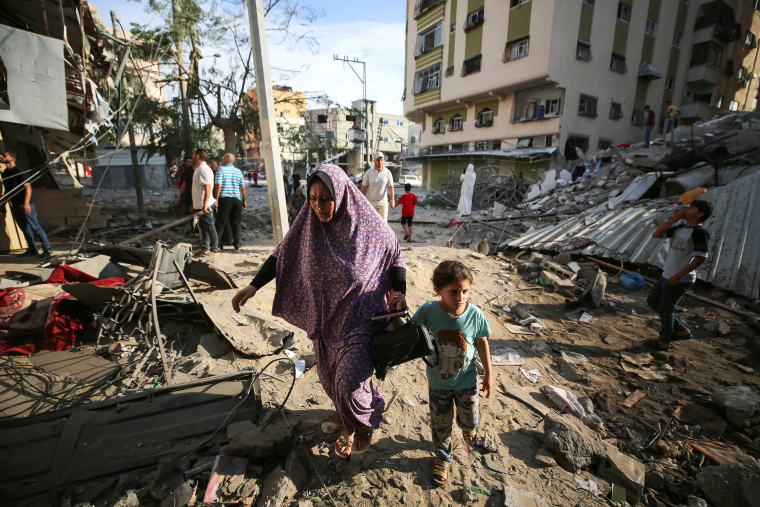
In the ongoing invasion of Gaza by Israel’s military, two aerial attacks, two days in a row, were launched on Jabaliya, a camp sheltering 116,000 refugees squeezed into a 1.4 square kilometer area, and one of eight refugee camps in Gaza.

Collectively, they shelter displaced families and their descendants from the 1948 war that gave rise to the state of Israel. Expelled, they’ve been denied resettlement in their native land.

Jabaliya features a high number of UN facilities, including 26 schools, a food distribution center, two health centers, a library, a sanitation facility, and seven wells. It didn’t stop the Israelis. They struck in day light, mothers pursuing their laundry, children playing soccer, men at their jobs.

Bombs meant for Hamas tunnels left deep-seated craters, collapsed buildings, smoking rubble, dismembered limbs, scattered flesh, the screams of the wounded, some buried beneath the rubble.

Israeli bombs took out the Al-Fakhoura School, used as a shelter for thousands of homeless Palestinians in the camp, all of this part of incessant bombing that struck still another school in Northern Gaza, air attacks in the vicinity of three hospitals, and on two ambulances.

Even before the invasion, the camp had periodically suffered electricity outages and 90% water contamination.

According to Gaza’s Ministry of Health, run by Hamas, 195 died and 777 were injured in the two attacks. We may not trust Hamas on the figures, but other authorities think the total death toll may be even higher when bodies are fully recovered.

It’s senseless to go after suspected Hamas tunnels underlying the camp’s infrastructure, as no crater can penetrate deep enough to take out tunnels reenforced with concrete some 200 feet below.

Overall, Gaza has seen its death toll exceed 10,000 dead, many of them women and children, as a consequence of indiscriminate bombings of the civilian infrastructure.

As I write, Israel continues to resist mounting international calls, including those of the US, for a ceasefire. They demand hostages be released first.

Amid its carnage, Israel has held back on humanitarian aid, cut off food supplies, energy and water.

Consequently, Palestinians face the near certainty of widespread famine, disease, and death.

This isn’t the first time Israel bombed the camp with deadly result. During the Gaza War (2014), it bombed a UN school in the camp, killing 20 people.

More recently, unreported in US media, six earlier attacks on the camp occurred before the two major deadly attacks. They include attacks on October 10, 12, 19, and 21.

All of this becomes eerily reminiscent of the Sabra and Shatila massacres of 1982 during Lebanon’s Civil War when up to 3,500 civilians—mostly Palestinians and Lebanese—were slaughtered in 24 hours by Christian Phalangist military aligned with Israel.

Sabra was a neighborhood of Palestinian settlement; Shatila, a refugee camp. The Israel Defense Forces, surrounding Shatila , ordered its allies to clear out the PLO. Though they were receiving reports of the massacres, they didn’t intervene.

A subsequent inquiry under UN auspices concluded in February 1983 that the IDF forces, as the major occupying element, had responsibility for preventing the massacres of Sabra and Shatila. It termed it “a form of genocide.”

An Israeli investigation came to a similar conclusion, holding the IDF responsible for knowing the massacres were taking place, but not intervening. This forced the resignation of Defense Minister Ariel Sharon

For too long, successive Israeli governments have ignored the legitimate rights of Palestinians to a sovereign state, with East Jerusalem as its capital.

The United States has abetted Israeli intransigence with massive funding and weaponry, much of it being used in the present conflict.

In short, it’s complicit in the excesses being committed.

While Hamas committed abominable acts against Israeli civilians, resulting in 1400 deaths with its incursion of October 7, it doesn’t justify Israel’s disproportionate response, nor ongoing West Bank settler violence against Palestinian civilians, more than 100 of them recently killed.

Yes, Gaza elected Hamas in 2006 to represent them, but there haven’t been any elections since. Do all Gazans support Hamas? Probably not, given the suffering Hamas has inflicted on Gazans.

All of this carnage is rooted in Britain’s Balfour Declaration of 1917, sanctioning a homeland for Israel. Did anyone ask its Ottoman citizenry, the vast majority, Turk and Arab? Few Jews lived in the area that would become Israel.

In 1948, 750,000 Palestinians were expelled from their homeland and forbidden a return, a vengeful response of incalculable cruelty.

The irony is that many Jews, who themselves have suffered historical displacement and genocide, have become perpetrators of its reiteration.

I would remind dissenters that attacks on civilians and civilian infrastructure are violations of international humanitarian and human rights law. In short, they are war crimes.

–rj

Jane Goodall: My Hero

Every now and then, I like to honor in Brimmings those I cherish as heroes. They stand apart in their daring, accomplishments and, above all, in their goodness. Jane Goodall comes to mind.

She’s 87 now, passionate as ever about the fate of our beleaguered planet, spending much of her time these days lecturing widely across Europe, North America, and Asia, to raise funds for her beloved chimpanzees of Tanzania’s Gombe National Park and the subsistence farmers who crowd its borders, encouraging her audiences to find ways in their daily life to heal the earth and the consequences if they don’t.

As a child, her love for animals came early, on one occasion as a 4-year old, taking earthworms to bed. At age 11, she came upon the Tarzan books and it changed everything. “I decided that when I grew up, I would go to Africa, live with animals and write books about them.”

But women didn’t do things like that. They belonged in the home, taking care of their men.

Besides, her family lacked the resources to send her to university.

Not to be deterred, she saved up her money from her secretary job in London and in 1957, at age 23, set out for Kenya to stay with a friend. Soon she was working as a secretary in Nairobi, heard about famed archaeologist and palaeontologist Lewis Leakey, and paid him a visit. Impressed with her knowledge of animals, Leakey hired her as his assistant and soon she was digging for fossils in Olduvai Gorge on the Serengeti Plains.

Then came the day Leakey asked if she’d like to research chimpanzees in Gombe National Park, and she said yes.

The problem remained that she was a woman, didn’t have a degree, and lacked funding. A year later, a wealthy American businessman supplied the funding, telling Leakey, “OK, here’s money for six months, we’ll see how this young lady does.”

It would begin a sojourn of 60 years among the chimpanzees, and still counting. She discovered they can use tools and have a defined social structure: “I am amazed to know how chimpanzees are very much like humans. Biologically, the DNA of chimps and humans differs by only just over 1 per cent. The blood of a chimpanzee is so like ours that you could have a blood transfusion if you matched the blood group. Chimpanzees can learn American Sign Language (ASL). They can learn about 400 of the signs of ASL, and they can use them to communicate with each other – although they prefer to use their own postures and gestures.”

I used to think of chimps as peaceful creatures, munching bananas as the day is long. Alas, as Goodall discovered, they’re like us in their tribalism, attacking other chimp communities. Keen predators, they aren’t hesitant to feast on bonobo monkeys, small antelopes, and wild hogs:

“It was a shock to me when I first realized that chimpanzees, like us, had a dark side to their nature; in interactions between neighbouring groups and communities in particular, there can be violent behaviour. Groups of males patrolling the boundary of their territory may give chase if they see strangers from a neighbouring group, and they may attack, leaving victims to die of wounds inflicted. But we can take comfort from the fact that they also show love and compassion. They can show true altruism.“

Sadly, these creatures, so much like ourselves, with intellect, distinct personalities, and emotions, are becoming extinct: “They’re disappearing because of the destruction of their habitat and ever-growing human populations. They’re disappearing because they are being hunted for food – not to feed hungry people, but because of the commercial hunting of wild animals, which is facilitated by the intrusion of new roads created by logging companies.”

Realizing that something must be done to lessen the human footprint, she and others founded Roots and Shoots to involve third world communities in the environment’s preservation, enhancing their economies and welfare with jobs, schools, medical clinics, and teaching crop rotation.

While poorer populations can destroy a habitat through intrusion in a desperate attempt to find new land for food production, slashing and burning their way through primeval forest, the bulk of environmental destruction comes from the materialism of rich nations, eating more meat, dependency on fossil fuels, factory farming with its consequent pollution, misuse of water resources, planes and cars spewing CO2 into the atmosphere, warming the seas, melting the glaciers, raising the tides.

I like it that Goodall is keen on limiting population growth to lessen the ubiquitous human footprint that threatens wildlife and is largely responsible for species decline and extinction, unlike other environmental and organizations such as the Sierra Club, reluctant to take up the issue because of its potential racial overtones.

We hear a lot about poaching, but exploding population growth in Africa poses devastating consequences, not only for indigenous fauna and flora, but for humans as well in the context of climate change and diminished resources. A UN study, for example, projects Nigeria’s current population of 200 million will double to 401 million just by 2050 and 721 million by century end.

Tanzania, home of Gombe National Park and Goodall’s research, has a current population of 68 million. By 2100, its population will swell to a projected 283 million: Goodall knows this: “We cannot hide away from human population growth, because it underlies so many of the other problems. All these things we talk about wouldn’t be a problem if the world was the size of the population that there was 500 years ago.”

I admire her boldness, whether addressing population growth, human aggression, meat eating, habitat loss, and climate change. There’s something alluring about those like Goodall who don’t mince words, daring what our anxieties disallow.

Goodall, nevertheless, remains optimistic: “Every one of us makes a difference every day. And if we would just spend a little bit of time thinking about the consequences of the choices we make each day – what we buy, what we wear, what we eat – there is so much we can do. Collectively, that will start to make bigger changes as more people understand that their own life does make a difference.”

While Goodall is renowned for her decades-long study of chimpanzees, I would contend her greatest contribution lies with her inclusion of the needs of local populations in minimizing habitat loss and species decline, revolutionizing conservation.

Dr. Goodall, a pioneering woman defying cultural boundaries, is my hero, brave, determined, assertive, living alone in the jungle for 60 years, a friend of animals, a champion of Mother Earth, always with passion and never without hope.

–rj

Compassion: What It Really Means and How to Cultivate It

In a needy, often dark world, there thankfully exist compassionate people, going the last mile, thinking always of others, their sufferings and needs.

I think of Doctors Without Borders, for example, a French organization of physicians and nurses, working not only in Third World Countries, but often in war zones such as Somalia, South Sudan, and Gaza at considerable risk, their starting pay, a mere $2600 a month.

This ability to feel another’s pain and taking it on, where does it come from? I know that personal suffering can trigger it, perhaps a bad childhood, an abusive relationship, a betrayal by one we trusted, the death of a close friend or relative, unemployment, poverty, or personal illness.

Some just seem endowed with it from birth. I think of the poet Percy Bysshe Shelley and his wife Mary, author of Frankenstein, keenly sensitive to the social ills of their time; Tolstoy, rich and famous, but disclaiming it all, in sympathy with the poor; John Stuart Mill, champion of the minority’s right to be heard.

Empathy’s great, putting yourself in the shoes of another, but I think of compassion as going beyond sympathy as with these individuals committed to helping others.

I would offer what’s been called emotional intelligence” (EQ) as a principal starting point in generating compassion. Pioneered by psychologist and behavioral science journalist Dr. Daniel Goleman in his 1995 book, Emotional Intelligence: Why it May be More Important Than IQ, it offers potential for amelioration of intrapersonal relationships across a wide spectrum.

Its hallmarks are several:

An ability to intuit what others are feeling.

A calmness in contexts of stress.

An ability to accept change.

An ability to defuse highly charged situations

An awareness of your own feelings.

We often conceive IQ as a denominator of ultimate academic and professional success, but I’d posit emotional intelligence as far more consequential for your happiness in everyday life.

Like to know if you possess this wonderful attribute? Well, the good news is that there are tests to measure it.

But don’t fret if you fall short. You can cultivate it, something I’ve been trying to do.

Some of these measuring tools are popular self-response tests. You’re asked to respond to conflict scenarios and select from multiple choices you’re likely response. This takes a lot of honesty, however.

More formally, a psychological test, [the Mayer-Salovey-Caruso Emotional Intelligence Test (MSCEIT)], has you do performance tasks assessing your ability to perceive, identify, understand, and manage emotions. These comprise the generally recognized four aspects of emotional intelligence. I confess I’ve work to do.

A salient element of emotional intelligence is learning to listen and getting at the cause behind someone’s feelings. Not interrupting them is crucial, signaling not only politeness, but your regard for them and taking their narrative seriously.

Emotional intelligence has helped me especially in contexts of social tension. Seeing things from the African-American perspective, for example, has afforded me an understanding of black rage: enslaved, lynched, denied the vote, profiled by police, overly imprisoned, discriminated against in housing and employment, their rage and distrust of white authority is symptomatic. Those with high EQ don’t react with condemnation. They address the milieu of that disconnect.

In summary, EQ people think things out before they react.

They’re sensitive to their own feelings and willing to objectively assess their origin.

In considering the perspectives and emotions of others, they understand motivating factors behind their behavior, moving to address them.

If you ask me for contemporary models of EQ, I would include former president Jimmy Carter, superb negotiator associated with Habitat for Humanity; Nelson Mandela, imprisoned 27 years, but advocate of reconciliation; Jane Goodall, redefining our relationship with animals and spokesperson for both the environment and the African poor. Each of these individuals, teeming with awareness, translated their EQ into activism. Beyond empathy, it’s compassion.

As Indian sage Amit Ray has eloquently expressed it, “Compassion is all inclusive. It knows no boundaries. Compassion comes with awareness, and awareness breaks all narrow territories.”

By the way, if people tell you you’re too sensitive or emotional, it just may be you have high EQ. I think that’s a good thing!

—rj

I’m Not Who I Was: Welcoming Change

I’ve lived a long life of varied hue, ultimately shaping me into who I am and, hopefully, a better self. As I’d tell my college students, one of the worst things that can happen to you is to wake up old and find you’ve never changed.

Life happenings, with their undulating insistence, have impacted me greatly, teaching me that human suffering is a life constant and that desire can effect unhappiness, for life inevitably brings loss and the anticipated often yields dissatisfaction. We live with temporality and must seize the day, for the past is but memory, impalpable and subject to nostalgia’s distortions. At best, we can learn from it, avoid repeating its errors, and relish its positives. As for our future, we create it daily, advancing toward a retreating horizon with every step.

Exposure to other viewpoints has been a salient catalyst to who I’ve become. Much of it has come from wide travel. Most of us travel to explore different vistas. The good traveler lingers among the people, exchanging viewpoints, sipping their way of life. I have done that, spending lengthy sojourns in places like France, Germany, Mexico, India, Japan, and Korea. I know Britain, Ireland, and Italy well, have traveled to Spain and Russia.

I think everyone should visit a developing country, see impoverished people for who they are, people like ourselves, wanting the essentials, or as the Lord’s Prayer renders it, “Give us this day our daily bread.” We might return more sympathetic to the plight of the displaced, now some 60 million. I think of India, a nation of 1.4 billion, 80 million of whom are impoverished, the begging multitudes, the poor with whom I shared my victuals, my Hindu guide and his young Muslim helper as we ventured across Kerala’s jungle landscape, for whom one bowl of rice daily was sufficient. It was the hardest farewell I’ve had to make. We are leaves on one tree. We need each other. India changed me profoundly.

Education, ten grinding years of it beyond high school, also promoted growth, exposing me to a plethora of viewpoints, which in my conservative innocence I initially resisted. Little did I know that the seeds had been planted and that I would ultimately invest my life with the liberating values I had fervently opposed.

It happened in the context of Vietnam, racial turbulence, revolutionaries, some of whom I met. As an English major, I learned the magic of a good sentence, the elements of sound reasoning, the way of words, enhancing context through metaphor, the tension of irony lending resonance, the beauty of poetry—Keats, Shelley, Hopkins, Dickinson,Yeats, Auden— the wisdom of intellects like John Stuart Mill, “the saint of rationalism,” who initiated my fierce resistance to censorship and book banning. I wouldn’t trade any of this.

There was also the young Franklin Case, my greatest teacher, who lit the fire and launched my career. He’s gone now, but I remain forever grateful. Through him, I learned how to plumb literature’s hidden depths. He gave me Mansfield, Hemingway and Fitzgerald.

Additionally, wide reading, whether fiction or non-fiction, has affected me greatly, exposing me to diverse viewpoints. A lot of this came from teaching canonical writers, such as Vergil, Dante, Swift, Voltaire, Joyce, Tolstoy, Chekov and Faulkner.

When I was eight, my brother returning from war in Europe, gifted me with Huckleberry Finn. I was on my way. By fifteen, I had read many of the classics, including through the Bible twice and Tolstoy’s sprawling War and Peace. Tolstoy is my favorite writer and I visited his homestead at Yasnaya Polyana near Tula. Pervading everything he wrote, Tolstoy asked, How ought we to live? Aware of his shortcomings, the character Levin in Anna Karenina mirrors who he wanted to be.

At 17, I was stationed in South Korea as an airman at Osan AFB, thirty miles below Seoul. The Korean armistice had been four years earlier, but the aftermath of war was everywhere with people sheltering underground, tin sheets as a roof, and children, poorly clothed, begging for food.

There wasn’t much to do for recreation during that dreary thirteen months, but the base did have a theater where you could see a recent movie for 25 cents. The base also had a humble Quonset hut, housing a modest library collection. Among the books was Thomas Wolfe’s Look Homeward Angel, which I took a liking to. Subsequently, I would read everything he wrote. I identified with protagonist Eugene Gant in his aspiration to escape the confines of Appalachia. My father was a violent alcoholic. We had no family life and my mother fled before I was eight. That’s how I ended up in the Air Force.

I should mention that ultimately I did a Ph. D. at the University of North Carolina at Chapel Hill, Wolfe’s undergraduate alma mater (Pulpit Hill in LHA). My first day on campus I met a retired professor. He had been one of Wolf’s teachers and sponsor of his fraternity. They became friends and he traveled with Wolfe to Germany.

Books taught me I wasn’t alone, gave me choices, heightened my sensitivity and provided solace. I’ve perhaps read several thousand books. They remain with me as friends and I keep reading. On New Year’s Day, I publish in this blog a contemporary list of the very best reads. Books accelerated my growth.

In sum, it’s not always easy for us to be open to change, especially when you’re from a dysfunctional family. I beat-up myself, deeming myself unworthy. Books inspired me, taught me never to give up hope. As Browning famously put it, “A man’s reach should exceed his grasp.”

One day, I woke up. I liked who I had become. I had found my way.

—rj

Expired: The UN’s Resolution Prohibiting Exporting of Iranian Missiles and Drones

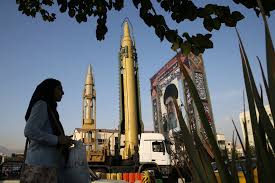
The Caspian Sea linking Iran and Russia may seem to be a quiet body of water, but the reality is that it has become Iran’s busy artery for exporting weaponry to Russia in violation of the United Nations Security Council’s 2015 prohibition on missile and uninhabited aerial vehicles (UAV) transfer, known as Resolution 2231.

Lloyd’s List Intelligence has indicated a recent uptick in Caspian shipping between Russia and Iran, some ships going dark. Additionally, CNN has tracking data, showing 85 Iranian cargo plane trips to Moscow airports between May 2022 and March 2023.

In any case, Iran has been violating the Resolution for several years, supplying drones to Houthi rebels in Yemen, who’ve employed them to attack Saudi Arabia and, this week, American naval vessels in the Persian Gulf.

Additionally, we know from intelligence sources that they’ve been supplying lethal drones to the Russians since the summer of 2022, who have been employing them on a near daily basis in Ukraine.

Both Iran and Russia vociferously deny violating Resolution 2231. They needn’t worry. It expired on October 18, 2023.

Unfortunately, the Biden administration has been amiss in soft-pedaling Iran’s intransigence in a concerted effort to renew the 2015 Nuclear Arms Limitations Treaty with Iran. Though the US has pledged to monitor the illegal weaponry trade, employing sanctions if needed, Biden approved the return of $6 bn of frozen Iranian funds from South Korean banks as part of a prisoner exchange deal in August.

Qatar will administer Iranian access, to be used only for humanitarian purposes. This will free, however, Iranian budget money elsewhere for terrorist groups such as Hezbollah.

Hamas’ brutal attack on Israeli civilians was augmented by hundreds of Iranian supplied rocket salvos into the Israeli infrastructure, including Tel Aviv. Meanwhile, Hezbollah in Lebanon have been firing missiles into northern Israeli settlements and attacking American forces in Syria and Iraq.

Iran possesses a sophisticated arsenal of some 2000-3000 missiles that include short-and medium-range ballistic missiles, a long-range cruise missile, and long-range rockets. Its medium ballistic missiles could conceivably be armed with a nuclear payload, should Iran continue its advance to a nuclear bomb.

We know, too, that the Iranians have been working on a ballistic anti-ship missile to be potentially used against American aircraft carriers.

Will they ultimately effect a nuclear capacity to hit the US mainland as North Korea has done? Or before then, will Israel, under grave nuclear threat, launch a first strike of its own on Iran’s myriad underground bunkers, plunging the world into a nightmare scenario?

–rj

The Truth Must be Told: The Tragedy of Gaza


As we all know, several thousand Gaza Hamas fighters bulldozed their way through an Israeli security fence on October 7, 2023, and committed some of the most barbaric crimes against humanity not seen since Cambodia, Rwanda, and the Holocaust.

More than 1400 Israelis died, most of them civilians, some slaughtered in nearby fields while celebrating the ending of Sukkot, an annual fall event in the Jewish calendar; others, in their beds on nearby kibbutzim. Reports are that Hamas insurgents raped, pillaged, and slaughtered even children, including babies. More than 200 civilians and soldiers were taken hostage, including citizens of other countries. Israeli wounded stands at 4600.

The Israeli response has been unceasingly withering in Gaza, Prime Minister Netanyahu declaring war on Hamas, calling up 300,000 reservists, bombing Gaza’s civilian infrastructure daily, and ordering one million Gaza civilians to evacuate to southern Gaza.

A land invasion of Gaza by Israel Defense Forces (IDF) is anticipated. They will face up to 50,000 Hamas fighters, dispersed in a labyrinthian tunnel weave, threatening a Stalingrad consequence of casualties in house-to-house fighting. American pressure has slowed any launching of an immediate invasion, but not halted the daily bombing, killing 700 civilians in the last twenty-four hours, half of them women and children.

Hezbollah, to the north in Lebanon, have been firing rockets into nearby Israeli border towns, forcing their evacuation and possibly opening a second front in a dangerously escalating Middle East conflict. Iran has pledged to intervene if Israel launches a land invasion of Gaza.

In the meantime, the death toll of Gaza civilians now exceeds 5,000, including more than 2000 children, the cut off of food, water, and energy to Gaza, the forestalling of shipments of humanitarian aid from Egypt, which threatens the closure of hospitals treating thousands of wounded civilians. Mass starvation and disease looms as an aftermath, Israel insisting that hostages be released, despite international calls for restraint and observance of humanitarian values.

Recently, a Christian hospital in Gaza came under rocket attack, killing 500 people among those taking shelter. International intelligence indicates it was an errant Hamas rocket that caused this tragedy. Nonetheless, the World Health Organization has documented 171 Israeli attacks on health care in the occupied Palestinian territory,” killing 473 health workers.

As I write, unrest continues on the West Bank, with some 100 Arab protestors killed. A pending historic security alliance has been withdrawn by the Saudis and Israel’s peaceful relationship with Jordan has been strained. Settler crimes against West Bank farmers have been chronicled over the years, with killing of livestock, destruction of olive groves, and slaying of those who resist.

The U.S. response has been typical, Biden ordering two aircraft carriers into the gulf and threatening to intervene should Hezbollah open a second front.
It has called for a two state settlement for many years, yet overlooked Israeli intransigence. It gives $3 billion in aid annually to Israel and recently concluded a $37 billion loan agreement in military aid. Israel will have access to the F-35, the world’s most advanced fighter jet.

At home, dissenters are regaled as antisemitic. Many, including Democrats, have called for disbandment of Palestinian student campus organizations and denounced the growing Leftist faction in the Democratic Party that includes Bernie Sanders. Frenzied Republicans, increasingly resistant to continuing aid to Ukraine, have no difficulty supporting huge expenditures to Israel. Lindsey Graham says, “Do whatever the hell you have to do to defend yourself. Level the place!”

There is, in short, a context for Arab and Palestinian resentment and outburst.
We seem to have learned nothing from the rage that lay behind the 9/11 horror. We began two long wars, fought by America’s poor White and Blacks. We lost both. Did Vietnam teach us nothing?

Do we lust for another war? Have we forgotten George Washington’s warning to avoid “entangling alliances”? “The nation which indulges toward another an habitual hatred or an habitual fondness is in some degree a slave” (Farewell Address).

UN secretary-general António Guterres speaks for me: “Hamas did not happen in a vacuum. The Palestinian people have been subjected to 56 years of suffocating occupation.” He likewise condemned Hamas: “No injustice to the Palestinians justifies the appalling attacks by Hamas.”

The Israeli response to Guterres? “Due to his remarks we will refuse to issue visas to UN representatives” (Gilad Erdan, Israel ambassador to the UN). “The time has come to teach them a lesson. Guterres should resign.”

Hamas was elected to power in 2006. There have been no elections since. Does “Israel’s right to defend itself” (Biden) justify its war on Gaza civilians, half of whom are children?

Ultimately an apartheid Israel will reap its own folly. Israel’s growing Arab population will soon outnumber Israelis. It will become a South Africa before Nelson Mandela’s victorious crusade for a liberated biracial nation enjoying equity.

-rj

America’s Emissary: Walt Whitman

I’ve never formally studied Walt Whitman’s poetry, despite a graduate degree in English. That’s because I made Victorian Literature my major interest, with modern American and British Literature secondary. Still, I’ve read his landmark Leaves of Grass many times, America’s psalmody in its pioneering free verse; in its robustness, an encomium of America were it doing more than lip service to the American dream.

It says much about Whitman, out-of-joint with his generation much like contemporary Emily Dickinson, uncomfortable with the cultural shibboleths of middle class Amherst. Perhaps influenced by his father’s radical views on politics and religion, Whitman emerges an essential element of America’s constant of progressive rebellion, resistant to mercenary interests that gave us slavery, wealth inequality, desecration of nature, racial injustice, and imperialism.

If you’re looking for a summation of Leaves of Grass, nothing excels his “Credo” in the poem’s Preface. Conscious of America’s failure to live up to its promise, “Credo” exemplifies its gulf and champions its realization:

“This is what you shall do; Love the earth and sun and the animals, despise riches, give alms to everyone that asks, stand up for the stupid and crazy, devote your income and labor to others, hate tyrants, argue not concerning God, have patience and indulgence toward the people, take off your hat to nothing known or unknown or to any man or number of men, go freely with powerful uneducated persons and with the young and with the mothers of families, read these leaves in the open air every season of every year of your life, re-examine all you have been told at school or church or in any book, dismiss whatever insults your own soul, and your very flesh shall be a great poem and have the richest fluency not only in its words but in the silent lines of its lips and face and between the lashes of your eyes and in every motion and joint of your body.”

—rj

We Are Losing Earth on Our Watch: The Unfolding Crisis of a Warming Planet


I wanted to walk my two miles this morning, but stepping outside, blasted by the double whammy of humidity and a temperature already at 83 F and rising fast, I thought better of it.

It’s like this virtually everywhere these days. Our children, vacationing in Palm Desert, CA, relayed it reached 118 F there yesterday.

2016 was the hottest year on record. This year is likely to be hotter still.

Some suffer grievously. There’s Phoenix, AZ, with its 27 straight days of 110 F plus temperatures, its denizens reliant on air conditioning to get them through. I ponder the city’s fate were the electric grid to give way. Fifteen percent of Phoenix’s population lives in poverty, many on the streets, exacerbating the heat’s impact. Last year’s heat waves killed 425 residents of Maricopa County, 56 percent of them homeless.

Duluth, MN, looks better everyday. It doesn’t surprise me that a growing number of families, sensing what’s likely to get a lot worse, are moving to this Lake Superior city known for its cool days even as the Twin Cities, to the South, bake. North Dakota, anyone?

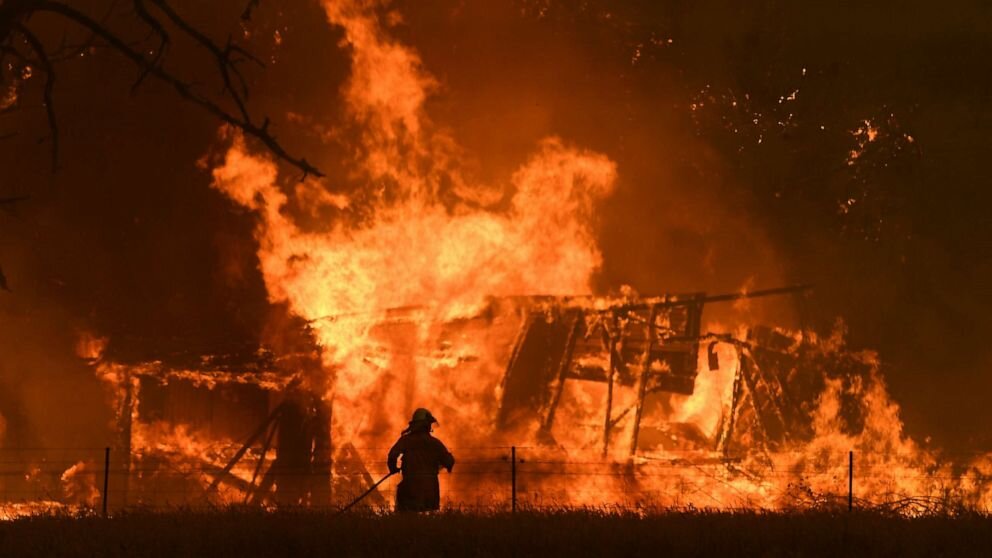
Along with record-breaking heat, come the inevitable forest fires. Everyone’s holding their breath in California, despite its recent heavy downpours and filling of depleted reservoirs, as soaring temperatures eclipse records.

Canada has fared badly, many fires still burning as plumes of toxic fumes drift southward to the US. 4200 fires, a record number, have occurred this year in Canada.

You’ve heard about the raging heat and accompanying fires in Italy, Greece, Algeria, and Crete fueled by spiraling heat waves, with many killed, thousands displaced, livelihoods gone, and animal habitats decimated.

It’s so much worse among developing countries, climate change not only bringing higher temperatures, but change in rainfall patterns, resulting in widespread famine and malnutrition as crops wilt in parched fields and cattle perish for lack of feed and water. This is especially true of Africa’s Central Sahel (Burkina Faso, Mali, and Niger), where temperatures are rising 1.5 faster than in the rest of the world. Privileged Western nations in their addiction to fossil fuels bear heavy responsibility for their plight. Unless we mend our ways, their desperation may be tomorrow’s world for our children, our spiraling heat waves and droughts the preface of things to come.


All of this isn’t unanticipated, as our sophisticated attribution science has consistently confirmed the likelihood of a warming world. It’s just that it’s happening sooner and with greater intensity than projected.

But let’s not simply blame this year’s El Niño, which does make for hotter weather. We humans have been engaged in a reckless plundering of our planet’s resources since the beginning of the industrial revolution in the late 18th century, accompanied by increasing reliance on fossil fuels, the consequence that we’re now 1.2 C warmer than in pre-industrial times.

75 percent of global greenhouse gases and 90 percent of carbon dioxide emissions come from burning fossil fuels. They trap heat and with their exponential increase now pose humanity’s greatest challenge in their dire consequences for life on earth.

Under the 2015, Paris Agreement, we’ve pledged a concerted effort to hold at 1.5 C.

That’s unlikely. The World Meteorological Organization (WMO) forecasts its breach as early as 2027, despite climatologists’ warning that any rise above that level would unleash irreversible catastrophic consequences.

Meanwhile, the fossil industry yesterday released its 2022 earnings report, announcing $200b in profits, surely an obscenity, given their primary contribution to the existential crisis that confronts us.

Shell says it will issue $3b to stock investors over the next three years through stock buybacks.

ExxonMobil, BP, and Shell not only boasted record profits, but gleefully announced they’ll be rolling back earlier plans to invest in low emissions ventures. It’s follow-the-money.

Concurrently, GOP congressional members lie-in-wait to ambush existing climate change mitigation efforts, should Trump—God help us—be reelected.

It’s urgent that Biden declare a climate emergency, joining the UK, New Zealand, and Japan. There’s much we could do under such a declaration to halt the fossil industry tycoons who prioritize profit over the welfare of the human community and our beleaguered earth, but don’t bet on it.

Unfortunately, he’s initiated policies contrary to his campaign pledge to fight fossil fuel emissions, pushing new pipelines, lifting taxes on gasoline and half-emptying the Strategic Petroleum Reserve to cushion consumers at the pump, removed sanctions on American involvement in Venezuelan oil, obsequiously begged the Saudis to increase oil production, opened northern Alaska wilderness to massive oil drilling, sold oil and gas leases in the Gulf of Mexico. All of this from a candidate pursuing the presidency, pledging to young people, “no more drilling on federal lands, period, period!”

Climate expert Peter Kalmus sums up our dilemma bluntly: “Mark my words: it’s all still just getting started. So long as we burn fossil fuels, far, far worse is on the way; and I take zero satisfaction in knowing that this will be proven right, too, with a certainty as non-negotiable and merciless as the physics behind fossil-fueled global heating. Instead, I only feel fury at those in power, and bottomless grief for all that I love. We are losing Earth on our watch. The Amazon rainforest may already be past its tipping point. Coral reefs as we know them will be gone from our planet by mid-century, and possibly much earlier given this surge in sea-surface temperatures. These are cosmic losses. And as a father, I grieve for my children.”

And I, along with many of you, grieve with him.

—rj