
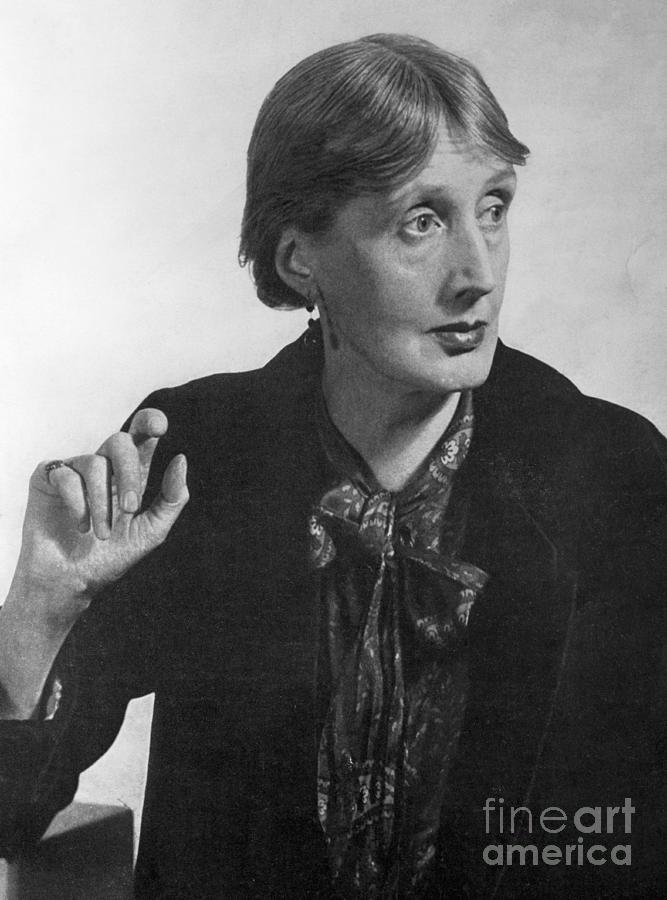
I’m almost done reading Virginia’s Woolf’s Diary, 1918-1941. She means much to me ever since Howard Harper, a Woolf authority at UNC, introduced her to me.
Such a scintillating intellect. Writing didn’t come easily to her, frequented with anxiety, sensitivity to criticism, writer’s block, and bouts of depression. Without husband Leonard, I doubt she’d have pulled off her prodigious achievement.
The Diary serves largely as her workbook of creative struggle—getting things right, the interplay of new formulations, the unleashing of her interiority.
The Diary catalogues books she’s reading and plans to read. It teems with recall of literary and artist luminaries she knew intimately, many associated with the Bloomsbury Group to which she belonged—Strachey, Forster, Keynes, and her sister Vanessa Bell among them. Henry James, George Meredith and T. S. Eliot were frequent household guests.
She’s opinionated about several of her rivals, Joyce for instance. She adored Proust: “My great adventure is really Proust. Well—what remains to be written after that? You can’t go further than that.” And, of course, there were Shakespeare, Dostoevsky, Tolstoy, and not least, Dante, to whom she turned often.
She read Homer, Plato, Aristotle, Sophocles, and Euripides in the original Greek and continued so throughout her life. I have her essay, “On Not Knowing Greek.”
Woolf spoke French fluently and read Proust, Gide, Flaubert and Maupassant in French. I hadn’t known until reading the Diary that she read Dante’s The Divine Comedy in Italian.
Largely self-educated apart from courses in the classics taken at the Women’s Department of King’s College (Women were excluded from Oxford and Cambridge), her intellectual achievements are extraordinary.
I introduced my students in Modern Novel to her “A Room of Their Own,” a feminist classic elaborating the interiority of female consciousness and exposing the barriers silencing women’s voices. And then, there was Mrs. Dalloway and To a Light House, now canon staples of English literature.
Nonetheless, in reading the Diary I found myriad passages that grieve me. She could be elitist, contemptuous of the working class; condescending towards blacks; antisemitic: “I do not like the Jewish voice: I do not like the Jewish laugh”; she felt uncomfortable in the company of the disabled.
In many ways, her views were not atypical of the mindset of the snobbish British upper class in the days of Empire.
Despite these faults, I try always to separate the artistry from the life; otherwise, there would be few artists to pursue, given the human proclivity to misbehave.
And so, over the years, I keep coming back to Woolf—her ability to recreate the inner life, to make universal the world of the quotidian; the beauty of her lyrical prose, her experimentations with narrative, her wrestlings with life’s frequent inequities.
Discover more from Brimmings: up from the well
Subscribe to get the latest posts sent to your email.

 Brimmings: up from the well