
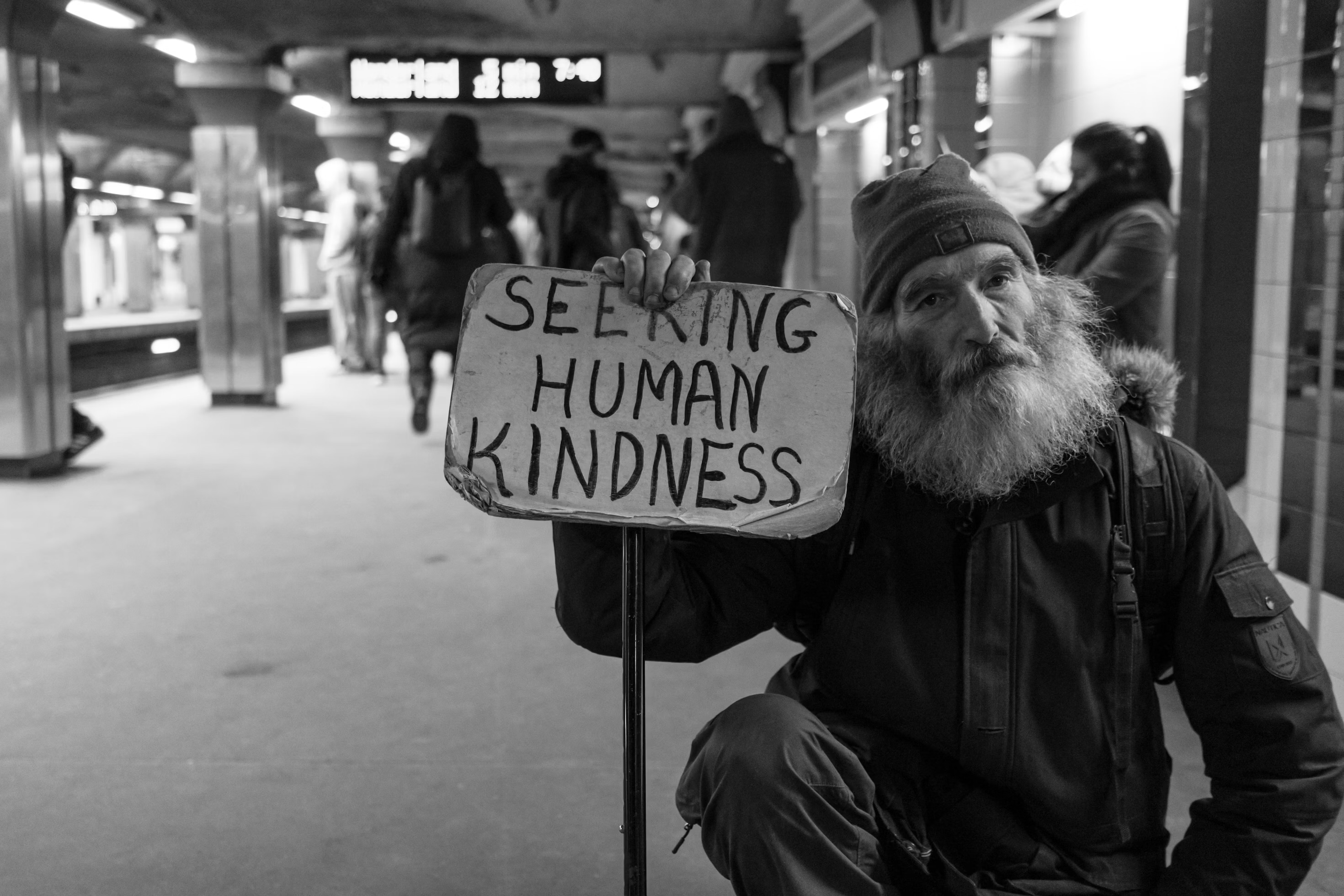
The Discipline of Kindness

Anger has become one of the easiest responses to modern life.

What troubles me most is not anger itself, but how easily my emotions can be manipulated—by discourtesy, by noise, by global politics, by the ambient insensitivity of others. That reactive state isn’t who I really am, yet it’s one I’m repeatedly invited into.

I want to be kind, not reactionary; deliberate, not pushed into negativity. I want to remain self-governing. As Marcus Aurelius put it, “Be tolerant with others and strict with yourself.”

Years ago, I came upon a short piece in Reader’s Digest titled “Do I Act or React?” I read it at exactly the right moment. Why should a discourteous store employee spoil my day? Or a waiter serving me something I never ordered? Or a driver that cuts me off?

These moments are trivial in isolation, yet corrosive in accumulation. As the Stoic writer Ryan Holiday reminds us, “Jerks abound everywhere. That’s their business, not yours.”

My wife once shared an encounter she had with a rude bank teller. Instead of meeting rudeness with rudeness, she simply said, “I hope your day gets better.” It was disarming—not passive, not superior, just humane. Too often, we carry our moods like open containers, spilling them onto others without noticing.

The distinguished novelist and essayist George Saunders suggests that literature can help us cultivate tolerance—not all at once, but incrementally, and therefore cumulatively. A practicing Buddhist, Saunders believes that reading fiction trains us in three essential truths:

You’re not permanent.
You’re not the most important thing.
You’re not separate.

Literature slows judgment. It places us inside other consciousnesses. It rehearses moral humility. In doing so, it loosens the grip of the ego—the very thing that insists on being offended.

Kindness, after all, isn’t mere niceness, which can look away from cruelty. Kindness sees clearly. It chooses understanding over reflex, restraint over retaliation.

So many of our perceived hurts come down to our desire to control others: their tone, their behavior, their awareness of us. When that control fails—as it inevitably does—we suffer. The antidote is not indifference, but proportion. We need to take ourselves less seriously.

Saunders doesn’t offer a list of recommended books, though he has often spoken admiringly of Grace Paley.

I return often to Marcus Aurelius’ Meditations, a slender volume that rewards endless rereading.

One line, in particular, feels endlessly applicable:

“Is a world without shameless people possible? No. So this person you’ve just met is one of them. Get over it.”

Not resignation—clarity. Not bitterness—freedom.
RJ’s Morning Musings

Mornings are best for me, sun filling every recess, my thoughts teeming into overflow. I am one with the universe and find peace in the stillness it confers. And so let me share with you my morning musings:


Good writing doesn’t come easily, but not daring it stifles who we are and wish to be, for it’s with words we share ourselves, inspire others, find ourselves, and discover we’re not alone.

Ancestral, marauding voices of nurturing hover like ghosts in the thoroughfares of the present, haunting our happiness. Only when we rebel and cease our clinging can we be free, and discovering freedom, make friends with ourselves.

Good poetry observes Dickinson’s dictum to “tell the truth, but tell it slant,” for artifice sows the sensory and when we show and do not tell, we plough the soul.

Think of good poetry as a bouquet and you’ll not go wrong, a unity of balance, imagery and shape, coalescing into what pleases and is, therefore, beautiful.

Good poetry mines deeply, unafraid to tap crevices in obdurate darkness, cutting away the unessential, with right tools pursuing every line, digging earnestly, buoyed by passion and not a little of intelligence.

I am in love with the stillness of every sunrise, elbowing the darkness and wakening the earth; its gift of new beginning, putting away yesterday’s might-have beens; the grace of another day to forgive and to love and be thankful.

A good poem likes to think, but avoiding prose, sings its truth with beauty dressed in feeling.

—+

Why is it I must pass things by without seeing a thing once? This sky, for instance, pageantry of mercurial mood, of cloud, wind, storm and calm, pink dawns and flaming sunsets, pitch fork lightning and rolling thunder, starry nights and lunar mystery—the majesty of it—our imperial dome, to which we owe the breath of life.


If that lunar beacon we call the moon borrows its silvery brilliance from reflected light, so on earth we’d do well to debit blessings often owed to others.

Poetry has an uncanny way of happening, reviving the sensory, meant for survival, not truth dulled by habit, thriving on vagary. Through metaphor, our exile ends, we find connection, and receive benediction.

In every dawn I am like a newly lit candle, my thoughts spilling everywhere. I rejoice in the cardinal’s song, emissary of a new day redolent with promise, the chance to meet up with blessings I had overlooked yesterday.

I admit to being passionate, sometimes to excess, sensitive to the disenfranchised, the voiceless, whether human or animal, strident in contesting a world that often plays unfairly and mutilates the Earth. I do not repent!

May I cherish each day’s renewed grace and seek virtue only, knowing I cannot own what was never mine to keep, and that what matters lies in the present, for the past I can remember, but not retrieve and tomorrow I may not wake to see.

Nothing wise hasn’t been said before, but the doing is hard, making it necessary to repeat.

Good writers, like all artists, celebrate their audience, and not themselves, recreating the human stream that succeeds when readers exclaim, “I’ve been there!“ All else is but an unlit candle.

Every quest begins with desire, but when desire lusts for possession, it commences our journey into sorrow.

I knew age had caught up with me when, yesterday, my doctor said, “Now if you were my father, I’d advise….”

As humans, we often filter what we perceive, influenced by our wishes and fears, born of past experience and, yes, the weight of culture and even our friends, fostering expectations as false as they are limiting. May I learn not always to believe what I sometimes think.

It’s how I draw the bow and not the target. It’s the journey, not the goal.

We are all story makers, each day our thoughts composing new chapters in life’s journey; but as in reading books, discerning between fantasy and truth, fiction and non-fiction, is essential to getting the story right and space for choosing action over inertia.

Yes, I admit to following a daily regimen that some may call being in a rut; but I much prefer its discipline, the empowerment it confers over my many infirmities, and the peace it affords in keeping chaos at bay and getting things done. I believe the passions must be made obedient to the mind. Or as Epictetus put it, “One person likes tending to his farm, another to his horse; I like to daily monitor my self-improvement.” Virtue doesn’t fall upon us out of the blue. We must toil at it.

I stumble in the darkness, the stars invisible, the earth’s silence my companion, but I do not tremble, for I know all things pass and the sun will surely rise and morning’s birds sing earth’s song.

Letting go yesterday to indulge today and sow tomorrow.

A good poem is its own immensity, tributaries of nuance coalescing into unity. It is neither more nor less. It is itself.

—rj