
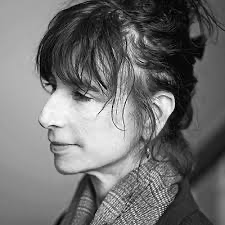
The writers I admire most never use a careless word. Their sentences are unimprovable —Judith Thurman, A Left-Handed Woman.
There exist those books we scarce can put down, riveting us with suspense, prose eloquence, and resonance of human experience.
Others, we struggle with, bored or chagrined by their non-relevance or absurdities. The usual counsel is to jettison them quickly.
Had I done so with Julia Thurman’s A Left-Handed Woman, a book largely focused on fashion couture, playground of wealthy indulgence, I’d have lost out immensely.
Collectively, Thurman’s adroitly articulated 39 essays, gathered mostly from fifty years of writing for The New Yorker, transcend her primary fashion genre, yielding portraitures mostly of heroic women finding autonomy in a patriarchal milieu, leading to my admiration for Thurman, awe at her salient intelligence, fine-tuned to meticulous observation and set-apart brilliance in prose mastery.
As Henry Finder, one of her editors at The New Yorker observes, “She’s not happy with a paragraph until it sings.”
Thurman’s acumen is indisputable, having achieved numerous awards that include a National Book Award for Non-fiction for her biography, Isak Dinesen: The Life of a Writer (1983), inspiring the hit movie, Out of Africa.
Her Secrets of the Flesh: A Life of Colette (1999), earned a finalist National Award for Nonfiction.
She is a recipient of the Ordre des Artes et Lettres by the French government for her contributions to French literature.
A Left-Handed Woman has won PEN’s award for essay excellence .
Nothing surprises me about Thurman. Is there anything she misses in her myriad subject matter teeming with wide-ranging vignettes on not only fashion designers such as Sara Berman, Isabel Toledo, Elsa Schiaparelli , Miuccia Prada Guo Pei and Ann Lowe, but disparate entities like Margaret Fuller, Emily Dickinson, Elena Ferrante, Lee Miller, Eva Zeisel, Amelia Earhart, Isa Genzken, Greta Stern, Alison Bechdel, Laura Elizabeth Ingalls Wilder, Rachel Cusk, Yasmina Reza, Vladimir and Vera Nabokov, and even Helen Gurley Brown and Cleopatra, among still others, their successes and, yes, the not infrequent intrusions of fate cascading fame and fortune to their doom.
While men do appear in her essays, they’re a distinct minority, sometimes perversely objectifying women as ancillaries of male prerogative:
Conversely, she writes of women, “I scoured literature for exceptions, and there were some. But nearly all of them had achieved distinction at a price their male counterparts didn’t have to pay. In that respect, one might say they were all left-handed: they defied the message they were not right.”
My favorite essays come toward the book’s close, featuring Simone de Beauvoir and in a surprising thematic shift, Thurman’s memoir of cave exploration, torch in hand, accompanying renowned French anthropologists at ancient Dordogne cave painting sites, Chauvet and Niaux.
I believe Thurman is right in crediting de Beauvoir with the genesis of the modern feminist movement with her seminal The Second Sex. As for her revels exploring caves and pedaling across French landscape, it’s truly a tour de force.
One last thing: Thurman is a self-taught fluent speaker of two languages beyond her native English that include French and Italian, highly engaged as she is in French and Italian literary and artistic culture.
She also achieved reading fluency in Danish as prerequisite to her research on Isak Dinesen.
Favorite passages:
“What we bring with us—embedded in our flesh and bugging it; embedded in art and animating it—is the mystery of how we become who we are.”
“There’s a hidden cavity in every story, a recess of meaning, and it’s often blocked by the rubble of your own false starts, or by an accretion of received ideas left behind by others. That updraft of freshness is typically an emotion you’ve buried.”
“The transcendence of shame is a prominent theme in the narrative of women’s lives. The shame of violation; the shame of appetite; the shame of anger; the shame of being unloved; the shame of otherness; the shame, perhaps above all, of drive.”
“Most of the time, a piece of prose lies on the page bristling with cleverness, yet inert, until I hit upon the precise sequence of words—the spell, if you like—that brings it to life. At that moment, language recovers its archaic power to free a trapped spirit.”
“She could love and desire intensely, but rarely at the same moment, and she could think and feel deeply, but not often in the same sentence.”
—rjoly
 Brimmings: up from the well