
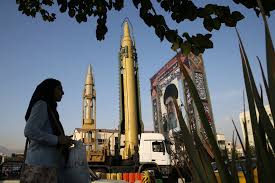
The Caspian Sea linking Iran and Russia may seem to be a quiet body of water, but the reality is that it has become Iran’s busy artery for exporting weaponry to Russia in violation of the United Nations Security Council’s 2015 prohibition on missile and uninhabited aerial vehicles (UAV) transfer, known as Resolution 2231.
Lloyd’s List Intelligence has indicated a recent uptick in Caspian shipping between Russia and Iran, some ships going dark. Additionally, CNN has tracking data, showing 85 Iranian cargo plane trips to Moscow airports between May 2022 and March 2023.
In any case, Iran has been violating the Resolution for several years, supplying drones to Houthi rebels in Yemen, who’ve employed them to attack Saudi Arabia and, this week, American naval vessels in the Persian Gulf.
Additionally, we know from intelligence sources that they’ve been supplying lethal drones to the Russians since the summer of 2022, who have been employing them on a near daily basis in Ukraine.
Both Iran and Russia vociferously deny violating Resolution 2231. They needn’t worry. It expired on October 18, 2023.
Unfortunately, the Biden administration has been amiss in soft-pedaling Iran’s intransigence in a concerted effort to renew the 2015 Nuclear Arms Limitations Treaty with Iran. Though the US has pledged to monitor the illegal weaponry trade, employing sanctions if needed, Biden approved the return of $6 bn of frozen Iranian funds from South Korean banks as part of a prisoner exchange deal in August.
Qatar will administer Iranian access, to be used only for humanitarian purposes. This will free, however, Iranian budget money elsewhere for terrorist groups such as Hezbollah.
Hamas’ brutal attack on Israeli civilians was augmented by hundreds of Iranian supplied rocket salvos into the Israeli infrastructure, including Tel Aviv. Meanwhile, Hezbollah in Lebanon have been firing missiles into northern Israeli settlements and attacking American forces in Syria and Iraq.
Iran possesses a sophisticated arsenal of some 2000-3000 missiles that include short-and medium-range ballistic missiles, a long-range cruise missile, and long-range rockets. Its medium ballistic missiles could conceivably be armed with a nuclear payload, should Iran continue its advance to a nuclear bomb.
We know, too, that the Iranians have been working on a ballistic anti-ship missile to be potentially used against American aircraft carriers.
Will they ultimately effect a nuclear capacity to hit the US mainland as North Korea has done? Or before then, will Israel, under grave nuclear threat, launch a first strike of its own on Iran’s myriad underground bunkers, plunging the world into a nightmare scenario?
–rj

 Brimmings: up from the well