On being an introvert in a noisy world


Do you really want to go to that party, or would you prefer a quiet evening at home?

Like a library over meeting new people?

Don’t like being the center of attention?

If may be you’re what’s known as an introvert.

It was psychiatrist Carl Jung who coined the terms introvert and extrovert for primary personality modes. In fact, he wrote a book about it, The Psychology of Types (1921), that made him famous.

Introverts shy from crowds; extroverts prefer them.

Introverts like alone-time; extroverts, where the action is.

Neither is superior to the other, both featuring strengths and liabilities.

How do these modes bottom out? Research suggests just a third of us are introverts.

That can make things difficult for introverts in a world that tends to pass them by.

I’ve done several personalty tests. No doubt about it, I’m classic introvert, the good and bad of it—shy, moody, distant, but also sensitive and caring, lover of all things beautiful like music, art, poetry, an intellectual read and, of course, nature’s solitude.

I prefer space.

It isn’t I don’t value companionship. I’ve cherished salient friendships across the years and, though it seems contradictory for an introvert, I experience nostalgia for friends who can never be retrieved, annulled by time’s entropy and mortality’s specter.

If you’re introverted, you’re likely in a good place.

Introverts often display not only keen sensitivity, but above average intelligence. If you believe the statistics, 70% of those excelling in art, music or math, i.e., the gifted, are introverts.

They include Bill Gates, Barack Obama, Elon Musk, Meryl Streep, and J.K Rowling.

Warren Buffett did a Dale Carnegie course to overcome his shyness.

Dr. Seuss, that master of children’s books, was afraid to meet the children who read his books for fear they’d be taken back by his quietness,

Is it nature or environment that fashions who we are?

Psychologists think it mostly genetic.

But it can get complicated.

Some of us, seeking balance, become omniverts, or combinations of both dispositions, depending on the situation we find ourselves in.

On the other hand, ambiverts, and that’s many of us, while displaying a personality mix, still lean one way or the other.

If you want a good read on being an introvert, I highly recommend Susan Cain’s Quiet: The Power of Introverts in a World That Can’t Stop Talking:

The highly sensitive tend to be philosophical or spiritual in their orientation, rather than materialistic or hedonistic. They dislike small talk. They often describe themselves as creative or intuitive. They dream vividly, and can often recall their dreams the next day. They love music, nature, art, physical beauty. They feel exceptionally strong emotions–sometimes acute bouts of joy, but also sorrow, melancholy, and fear.

That’s me and it may be you! And that’s not a bad thing at all.

–rj


Carl Sagan and My Incalculable Debt


I’ve always admired Carl Sagan, taken from us so early at age 62.

Renowned for his contributions to space exploration and the search for extraterrestrial life, his thirteen year running public TV series, Cosmos, garnered an international audience of 500 million.

A prodigious scholar, he wrote some 600 papers and twenty books.

He wasn’t a child of privilege. His family knew poverty firsthand.

Sagan taught at Harvard for five years as an assistant professor following his undergraduate and graduate studies at the University of Chicago, only to be denied tenure. They said his interests were too broad.

Cornell immediately offered him a teaching position, and he would teach there, loved by his students and esteemed by colleagues, until his death thirty years later. Following his death, Smithsonian Magazine declared him “irreplaceable.”

I liked him especially for his advocacy of skepticism and embrace of reason and scientific methodology.

There’s a biblical proverb I remember: “Let another man praise you, and not your own mouth; A stranger, and not your own lips” (Proverbs 27:2).

Sagan was never given to affectation or condescension, an anomaly among eminent professors from elite universities I’ve known across the years:

“I think I’m able to explain things because understanding wasn’t entirely easy for me. Some things that the most brilliant students were able to see instantly I had to work to understand. I can remember what I had to do to figure it out. The very brilliant ones figure it out so fast they never see the mechanics of understanding.”

Along with Voltaire, Hume, Mill, and Russell, I owe Sagan an incalculable debt in helping me find the truth of reason that has set me free from the cultural biases, of which all of us are heirs.

–rj

Time Musings

Can you hold time in your hand? Place it on your dresser? Put it in your wallet?

Can something impalpable exist?

And yet we measure by it—past, present, future.

While physicists debate its existence, intuitively we believe in it.

Like we do God.

We age by it. We are not what we once were.

Gardeners know its passage, from seed to birth, ripening to harvest.

Or as the Rubaiyat of Omar Khayyam renders it, “One thing is certain, and the Rest is Lies; The Flower that once has blown for ever dies.”

Perhaps we’d do better to conceive time as flow, or infinity’s rhythm, with neither beginning nor ending, our lives but a wink amid a stellar darkness of unending boundary, a universe among universes, yielding mystery and wonder to finite eyes.

Always Was, Is, and Shall Be.

If we truly believe in time, it behooves us to use it wisely, alter our history, relish awareness, and live in the present.

Or as Mark Twain, one of America’s genuine truth-sayers, put it, “There isn’t time, so brief is life, for bickerings, apologies, heartburnings, callings to account. There is only time for loving, and but an instant, so to speak, for that.”

–rj

A Great Feeling Comes

I’ve always found suffering difficult. I write not of myself but of others. From a child, I’ve been for the underdog. In America, in spite of its E pluribus unum imprint on our currency and a bloody civil war to end slavery, racism still lingers.

I remember being appalled as an eleven year old, gazing out of a train window as we sped toward Miami, the shacks, the impoverished black sharecroppers laboring in the South Carolina and Georgia cotton fields.

The South was still racially segregated, the legacy of post reconstruction days, later engrained by the United States Supreme Court in 1896.

Separate schools, separate accommodations, separate seating.

I was attending sixth grade in Coral Gables, Florida. All of us were white. Going and coming, I’d catch transportation at a bus terminal. Water fountains there were designated Whites Only, Colored Only.

I chose to drink from the fountain for the Colored.

A white man took me aside, directed me to the fountain for Whites. I rebelled.

I don’t know where this empathy came from. My urban family was racist. Our neighbors likewise.

My first encounters with blacks was in the military. In basic, my upper bunk mate was black. I had a close black buddy. Sadly, I lost him in an on base accident.

I’m still learning to listen to the grievances of my black brothers and sisters.

But back to the empathy element.

Driving home from my barber this morning, I saw this bedraggled man along the shoulder, pushing a cart, presumingly filled with his possessions, and accompanied by a dog.

How many thousands like him? And this in America.

Lately, I’ve been reading a biography of the eminent American psychologist and philosopher, William James. For years I kept a copy of his The Varieties of Religious Experience on my nightstand. I hadn’t known of his first love, Minnie Temple, a kindred spirit, intellectually his equal, a vivid conversationalist with strong opinions and inveterate rebel, eager for life, but doomed by tuberculosis, like Keats, at age 25.


In her last letter to William, which he kept all his life behind a photograph of her at 16, her hair cut short in an act of social defiance, she wrote:

“The more I live the more I feel that there must be some comfort somewhere for the mass of people, suffering and sad, outside of that which Stoicism gives—a thousand times when I see a poor person in trouble, it almost breaks my heart that I can’t say something to comfort them. It is on the tip of my tongue to say it and I can’t—for I have always felt myself the unutterable sadness and mystery that envelop us all—.”

This is how I feel each day.

This is how I felt when I saw that man this morning with his canine friend. Where will he sleep tonight, find food?

I think often of the homeless,

the warehoused forgotten in nursing homes,

the millions, lonely and estranged,

those terminally ill, often in pain,

the daily dying in Ukraine, Sudan, Gaza.

Even though it often yields no solace, I’m unwilling to wish empathy away.

–rj

Opening Paragraphs Matter

The opening paragraph is among literature’s most important gestures, or like the fly fisher’s fly line and crafted lure, imperative to netting her catch, in this case, the reader.

Exemplars of this refined craft are many: the opening of Tolstoy’s Anna Karenina, or Orwell’s 1984, and not least, Dickens’ Tale of Two Cities, spring to mind. I’m sure you have your own favorite.

Surprisingly, my favorite opening comes from Rachel Carson’s Silent Spring, a non-fiction classic latent in its prelapsarian beauty, resonance and relevance, an America of pristine promise in its unspoiled abundance. She caught me in her cast:

There was once a town in the heart of America where all life seemed to live in harmony with its surroundings. The town lay in the midst of a checkerboard of prosperous farms, with fields of grain and hillsides of orchards where, in spring, white clouds of bloom drifted above the green fields. In autumn, oak and maple and birch set up a blaze of color that flamed and flickered across a backdrop of pines. Then foxes barked in the hills and deer silently crossed the fields, half hidden in the mists of the fall mornings. 

If I were still teaching a college composition course, I’d likely point out the opening’s rich, visual detail. When it comes to description, abstractions won’t suffice. Good writers, ever mindful of their readers, seek to gain their readers’ attention, employing the sensory, i.e., taste, smell, sight, touch, and hearing. Take, for instance, Carson’s choice of “checkerboard,” to achieve concreteness and economy.

Good writing, action-centered, selects its verbs adroitly for the sensory and kinetic (movement): clouds drift, “oak and maple and birch set up a blaze of color that flamed and flickered,” “foxes barked” and “deer silently crossed the fields.”

Among still other things, I’d emphasize the paragraph’s unity and varied sentence structure, lending ambience.

Superb openings like this don’t just happen. They are wrought through multiple revision.

Carson’s opening paragraph, prescient in its parabolic foreboding of a lost Eden, initiated a lasting awareness in me of nature’s frailty amidst human assault. It changed the way I live my life, to do no hurt to Nature that gave me birth and sustains me.

—rj

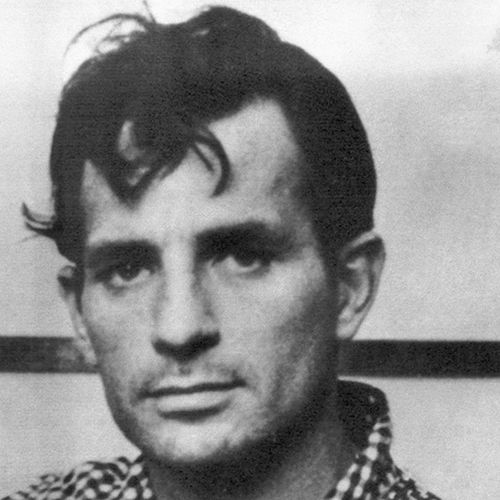
Jack Kerouac: Soulful Wanderer

Jack Kerouac turned 102 a week ago. The fierceness of his writing overwhelms, lyrical, sensory, harnessing human moods, a fiery warmth beneath a canopy of gazing stars on cold stellar nights:

“Fury flashing on rocks that rise like gloomy sea shroud towers out of the cove, the bingbang cove with its seas booming inside caves and slapping out, the cities of seaweed floating up and down you can even see their dark leer in the phosphorescent seabeach nightlight.”

Big Sur

“…the only people for me are the mad ones, the ones who are mad to live, mad to talk, mad to be saved, desirous of everything at the same time, the ones who never yawn or say a commonplace thing, but burn, burn, burn like fabulous yellow roman candles exploding like spiders across the stars and in the middle you see the blue centerlight pop and everybody goes ‘Awww!’”

—Jack Kerouac, On the Road

We were never really born, we will never really die. It has nothing to do with the imaginary idea of a personal self, other selves, many selves everywhere: Self is only an idea, a mortal idea. That which passes into everything is one thing. It’s a dream already ended. There’s nothing to be afraid of and nothing to be glad about. I know this from staring at mountains months on end. They never show any expression, they are like empty space. Do you think the emptiness of space will ever crumble away? Mountains will crumble, but the emptiness of space, which is the one universal essence of mind, the vast awakenerhoo 0d, empty and awake, will never crumble away because it was never born.”

The Portable Jack Kerouac

The world you see is just a movie in your mind.
Rocks dont see it.
Bless and sit down.
Forgive and forget.
Practice kindness all day to everybody
and you will realize you’re already
in heaven now.
That’s the story.
That’s the message.
Nobody understands it,
nobody listens, they’re
all running around like chickens with heads cut
off. I will try to teach it but it will
be in vain, s’why I’ll
end up in a shack
praying and being
cool and singing
by my woodstove
making pancakes.

—The Portable Kerouac

I miss you, Jack. You left us all too soon.

rj

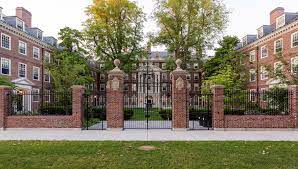
Fiasco at Harvard: A President Resigns

The headlines shout the news of Harvard president Claudine Gay’s resignation.

It should have happened speedily, but not because she allegedly soft-pedaled campus protests calling for intifada while omitting Hamas’ atrocities and was consequently judged antisemitic by Israel supporters. I believe the presidents of Harvard, Penn, and MIT were essentially ambushed when they were interviewed—or is it interrogated?—by a House committee that had already made-up its mind.

As a former academic for nearly forty years, I firmly support the ACLU in its lawsuit defending University of Florida chapter of Students for Justice in Palestine, ordered deactivated in Florida’s public colleges by Governor DeSantis (ACLU defends).

Protecting the First Amendment is paramount and criticism of Israel shouldn’t be conflated with antisemitism. 

Despite the ruckus over her “it depends on context” when asked if threatening Jews with genocide violated Harvard’s code of conduct, I think she was right.

As I write, seventeen members of Biden’s campaign staff sent an anonymous letter to Biden, calling for a permanent truce in Gaza and suspension of arms shipments to Israel.

Is it antisemitic to want the killing of Palestinian civilians, now exceeding 21,000, to stop? Whole families have been wiped out by incessant Israeli bombings; thousands more, nearly half of them children, wounded. Survivors haven’t any place to go. Schools, mosques, churches, hospitals and refugee camps haven’t found reprieve from largely American supplied weaponry. Survivors face disease and famine. 

Was UN Secretary-General António Guterres antisemitic in saying Hamas violence didn’t happen in a vacuum”? Further, that “hospitals have turned into battlegrounds,” amid “the constant bombardment of all parts of Gaza” and rendered Palestinians homelessness and “without the essentials to survive”? 

Meanwhile, West Bank violence continues unabated, with little said about repeated settler incursion on Palestinian lands and a vast expansion of Israeli settlements, rendering any two state resolution increasingly implausible.

A recent poll indicates 61% of the American public fault Biden’s strident support of Israel. Are they therefore antisemitic as well ?

Would it surprise you to learn that most orthodox Jews are anti-Zionists?

And then there’s that gadfly Jewish socialist senator from Vermont. I better stop. I think you see where I’m coming from.

Harvard was right to initially support its beleaguered first black president and just second female holding that post in its nearly 400 year history.

At least, in the beginning. But then money has a way of changing minds. 

What began as a trickle became a tsunami, 1600 big spending Jewish alumni, some of them billionaires, pulling back from any more donations to the university. 

Conservative Washington Post columnist George Will had said suspending giving wouldn’t dent Harvard policy, Harvard enjoying a 51 billion dollar endowment.

But he was wrong. 45% of Harvard’s 2022 $5.8 billion income came from donations. 

When it comes to Gay’s several instances of plagiarism, I part ways with Harvard. Like most academics—I taught college English for forty years—I take plagiarism seriously. Failure to attribute sources constitutes both theft and fraud. The unveiling of her academic misdeeds called for immediate termination of employment.

In an opt-ed yesterday in The Guardian, former Secretary of Labor, Robert Reich, decries what he sees as a threat to campus free speech, donators marshaling monetary divestiture to secure their political perspective. He has a point. 

Reich says, however, that he’s unable to comment knowledgeably on Gay’s alleged ¡plagiarism, but notes the bulk of the charges originated from the online conservative journal Washington Free Beacon (Robert Reich).

So what? Does the source taint its accuracy? It’s the old guilt by association trick McCarthy played so notoriously.

The Left were privy to the allegations for some ten days, but buried it. Not until conservatives persistently pursued the story, led by Christopher Rufo, did the budding scandal take hold in the NYTThe GuardianCNN and elsewhere.

If you pressed me, I could show you the specifics of Gay’s many instances of lifted passages, fifty initially in number with six more added the day before her resignation after meeting with the Harvard Corporation.

Ultimately, the new revelations piled on top of spiraling donator backlash, proved the straw that broke the camel’s back. 

Did she get banished from the campus? Don’t even go there! Harvard, which initially made light of the charges, subsequently helped her correct the faulty passages in eight of her publications and reappointed her to her professorship in the Political Science Department.

If the shoe were on a student’s foot, the frequent punishment at reputable universities is expulsion for a year.

Talk about a double standard and the blatant hypocrisy of its Veritas motto, Harvard, you don’t walk the talk.

Writing anonymously for the Harvard Crimson, a student on the Honor Council that tries such cases, wrote, “When my peers are found responsible for multiple instances of inadequate citation, they are often suspended for an academic year. When the president of their university is found responsible for the same types of infractions, the fellows of the Corporation unanimously stand in support of’ her.” (Harvard president).

But why did an illustrious Ivy League university prove so intransigent in all of this is the bottomline question.

In a recent op-ed, black law school professor and former Harvard graduate Winkfield Tryman, Jr., comments that the plagiarism charges “are well deserved” and “not racial in nature…No one in good faith should defend President Gay because she is the first black president of Harvard. And yet, many are coming to her defense. Having finally got their wish of a Black president of Harvard, Harvard seems unwilling to let her go. The racial wagons have circled around Gay, with President of the NAACP alleging that White Supremacy is afoot and Morehouse President David Thomas claiming in a Forbes interview that Gay is a scholar at the “top of her profession… as qualified as any President Harvard has ever had” (Newsweek).

Truth be told, this illustrious Harvard prez “at the top of her profession” has published a mere eleven papers and not one book.

Now that’s a first, but of a dubious kind. Her predecessor, Larry Becow, the son of immigrants, and whose mother survived Auschwitz, wrote four scholarly books and scores of peer reviewed articles.

Unfortunately, this debacle at Harvard unfairly triggers a mindset of suspicion of legitimate black scholars, deflating their credentials and singular achievements.

–rj

No Room for Palestinians: Israel’s Calculated Violence

The photos featured in today’s media of masses of Palestinians fleeing Israel’s incessant bombing validates the truth that “a photo is worth a thousand words,” but in a sad way.

As I write, more than 11,000 Palestinians have died, 4000 of them children, and 25,000 have been wounded. The violence continues, Israel stubbornly ruling out a cease fire, demanding Hamas first release its 240 hostages.

The news on the West Bank is dismal as well. An area much larger than Gaza and an Arab majority, it has seen 175 civilians killed, nearly all of them Palestinians, 33 of them children, since Hamas’ incursion into Israel on October 7. Israel holds several thousand West Bank prisoners, hundreds without charge or trial.

The UN Office for the Coordination of Humanitarian Affairs reports that more than 1000 Palestinians with title to their land have been forcibly removed from their homes on the West Bank since October 7.

This follow a long history of settler intimidation, abetted by Israel Defense Forces, targeting Bedouin herders, Palestinian olive groves and farms. Homes are burned and protestors killed, yet the media allows this criminality to go unreported. It cares only about normalization, not Palestinian grievances.

Al Jazeera has it right: “Were the American media and political establishment not so firmly committed to transmitting a thoroughly decontextualised version of this war – and of Israel/Palestine in general – perhaps a news anchor would ask whether it never occurred to Israel that the Palestinians would ever “retaliate” for 75 years of ethnic cleansing, suffocating blockades and massacres” (https://www.aljazeera.com/opinions/2023/11/12/how-americas-bloodthirsty-journalism-cheers-on-israels-war-on-gaza).

While Hamas’ barbarism is surely condemnable, it’s the nature of Israel’s disproportionate response that troubles the international community. Disallowing humanitarian aid, curtailing food, water, and energy, bombing hospitals, ambulances and mosques, a refugee camp two days in a row, justifies growing international rage.

Ordering 1.2 million Palestinians to abandon their homes in north Gaza, with no real place to flee while denying them subsistence, constitutes a glaring war crime.

Concurrently, the United States, Great Britain, and France have contributed to Israel’s unmeasured response, accelerating arms shipments to Israel and making themselves complicit

Israeli repression of Palestinians, often violent, has its lengthy narrative. With the seizure of the West Bank following the 1967 War, a new chauvinism of a greater Israel ensued to the detriment of Palestinians in the Negev, Gaza, and the Golan Heights, resulting in the rise of Hamas, a Palestine offshoot of the Muslim Brotherhood.

In 1983, Israel conspired with Christian Phalangists in Lebanon in the massacres of several thousands of Palestinians and was found culpable by both the UN’s and Israel’s own subsequent investigations. The UN termed it “genocide.”

In the aftermath of 1948’s birth of the state of Israel and its victory over Arab armies, Israel expelled 750,000 Palestinians from their homeland, many of whom populate today’s Gaza and West Bank.

Five years ago, during the Great March of Return in Gaza, Israelis killed hundreds of peaceful demonstrators and wounded several thousand others.

While we hear a lot about a two state remedy, it’s unlikely, since it takes a marriage of minds for that to happen. Palestinians don’t trust Israelis, especially a government led by nationalist leadership under Netanyahu. They’ve also witnessed the second class citizenship of Arabs granted citizenship.

There do exist Israelis who want to address Palestinian grievances, but do so at great cost. Many have been arrested, their identities and addresses posted online, their families threatened.

In 1995, a religious extremist killed Prime Minister Yitzhak Rabin, who had sought to implement the Oslo Accords with its provision for Palestinian self rule in Gaza and the West Bank: “We who have fought against you, the Palestinians, we say to you today in a loud and a clear voice: Enough of blood and tears. Enough… We are today giving peace a chance and saying to you and saying again to you: Enough.”

In the aftermath of Rabin’s assassination, Netanyahu came to power, resulting in negotiations for a just settlement with the Palestinians being abandoned in favor of surveillance and military might. Hamas was to be controlled, not dismantled. Netanyahu needed Hamas to offset the West Bank’s Palestinian Authority, open to negotiation. October 7 changed the venue.

Zionism is the real culprit here. Israel has never subscribed to the two state idea in which Palestinians would be masters of their own house.

Addressing Palestinian members of Knesset in 2021, far right Defense Minister Bezalel Smotrich said, “It’s a mistake that Ben-Gurion didn’t finish the job and didn’t throw you out in 1948.”

Recently, Smotrich has voiced sentiment for a one state Israel: “Peace will not emerge so long as we maintain our hold on starting assumptions that this land is fated to contain two collectives with conflicting national aspirations. If this is the case, our grandchildren and our great grandchildren will inevitably be destined to live by the sword….The ‘Palestinian People’ is but a counter-movement to the Zionist movement. Those who choose not to let go of their national ambitions will receive aid to emigrate to one of the many countries where Arabs realize their national ambitions, or to any other destination in the world.”

Is it conceivable that Israel’s vociferous response, defiant of the international community’s call for a ceasefire, is deliberately strategic? That not only Hamas should be eliminated, but the Palestinian presence once and for all? Make it so intolerable for them that they’ll leave?

Ominously, Prime Minister Benjamin Netanyahu, addressing his country on October 28, quoted Deuteronomy: 25:17: “You must remember what Amalek did to you.” If you continue to verse 19, you’ll read, “You shall blot out the memory of Amalek from under heaven. Never forget!” In 1st Samuel 15: 2-3, the Hebrew Bible exhorts, “Now go, attack Amalek, and proscribe all that belongs to him. Spare no one, but kill alike men and women, infants and sucklings, oxen and sheep, camels and asses!”

He didn’t have to go on. He had made his point.

–rj

The Plight of Palestinians: Repressed and Forgotten

While Americans retire nightly to their flannel sheets and fluffy pillows, their stomachs well fed, two million Palestinians have no where to flee, their homes flattened, their food, water, and energy resources curtailed. They sleep on sidewalks, or sixty in a room. They suffer cold. Whole families wiped out, yet Israeli bombing and gunfire continues. Israel refuses a pause. Ten thousand dead, many of them children.

It’s Israel’s history, Palestinians the Other, not seen as fellow human beings having legitimate grievances.

In the ongoing invasion of Gaza by Israel’s military, two aerial attacks, two days in a row, were launched on Jabaliya, a camp sheltering 116,000 refugees squeezed into a 1.4 square kilometer area, and one of eight refugee camps in Gaza.

Collectively, they shelter displaced families and their descendants from the 1948 war that gave rise to the state of Israel. Expelled, they’ve been denied resettlement in their native land.

Jabaliya features a high number of UN facilities, including 26 schools, a food distribution center, two health centers, a library, a sanitation facility, and seven wells. It didn’t stop the Israelis. They struck in day light, mothers pursuing their laundry, children playing soccer, men at their jobs.

Bombs meant for Hamas tunnels left deep-seated craters, collapsed buildings, smoking rubble, dismembered limbs, scattered flesh, the screams of the wounded, some buried beneath the rubble.

Israeli bombs took out the Al-Fakhoura School, used as a shelter for thousands of homeless Palestinians in the camp, all of this part of incessant bombing that struck still another school in Northern Gaza, air attacks in the vicinity of three hospitals, and on two ambulances.

Even before the invasion, the camp had periodically suffered electricity outages and 90% water contamination.

According to Gaza’s Ministry of Health, run by Hamas, 195 died and 777 were injured in the two attacks. We may not trust Hamas on the figures, but other authorities think the total death toll may be even higher when bodies are fully recovered.

It’s senseless to go after suspected Hamas tunnels underlying the camp’s infrastructure, as no crater can penetrate deep enough to take out tunnels reenforced with concrete some 200 feet below.

Overall, Gaza has seen its death toll exceed 10,000 dead, many of them women and children, as a consequence of indiscriminate bombings of the civilian infrastructure.

As I write, Israel continues to resist mounting international calls, including those of the US, for a ceasefire. They demand hostages be released first.

Amid its carnage, Israel has held back on humanitarian aid, cut off food supplies, energy and water.

Consequently, Palestinians face the near certainty of widespread famine, disease, and death.

This isn’t the first time Israel bombed the camp with deadly result. During the Gaza War (2014), it bombed a UN school in the camp, killing 20 people.

More recently, unreported in US media, six earlier attacks on the camp occurred before the two major deadly attacks. They include attacks on October 10, 12, 19, and 21.

All of this becomes eerily reminiscent of the Sabra and Shatila massacres of 1982 during Lebanon’s Civil War when up to 3,500 civilians—mostly Palestinians and Lebanese—were slaughtered in 24 hours by Christian Phalangist military aligned with Israel.

Sabra was a neighborhood of Palestinian settlement; Shatila, a refugee camp. The Israel Defense Forces, surrounding Shatila , ordered its allies to clear out the PLO. Though they were receiving reports of the massacres, they didn’t intervene.

A subsequent inquiry under UN auspices concluded in February 1983 that the IDF forces, as the major occupying element, had responsibility for preventing the massacres of Sabra and Shatila. It termed it “a form of genocide.”

An Israeli investigation came to a similar conclusion, holding the IDF responsible for knowing the massacres were taking place, but not intervening. This forced the resignation of Defense Minister Ariel Sharon

For too long, successive Israeli governments have ignored the legitimate rights of Palestinians to a sovereign state, with East Jerusalem as its capital.

The United States has abetted Israeli intransigence with massive funding and weaponry, much of it being used in the present conflict.

In short, it’s complicit in the excesses being committed.

While Hamas committed abominable acts against Israeli civilians, resulting in 1400 deaths with its incursion of October 7, it doesn’t justify Israel’s disproportionate response, nor ongoing West Bank settler violence against Palestinian civilians, more than 100 of them recently killed.

Yes, Gaza elected Hamas in 2006 to represent them, but there haven’t been any elections since. Do all Gazans support Hamas? Probably not, given the suffering Hamas has inflicted on Gazans.

All of this carnage is rooted in Britain’s Balfour Declaration of 1917, sanctioning a homeland for Israel. Did anyone ask its Ottoman citizenry, the vast majority, Turk and Arab? Few Jews lived in the area that would become Israel.

In 1948, 750,000 Palestinians were expelled from their homeland and forbidden a return, a vengeful response of incalculable cruelty.

The irony is that many Jews, who themselves have suffered historical displacement and genocide, have become perpetrators of its reiteration.

I would remind dissenters that attacks on civilians and civilian infrastructure are violations of international humanitarian and human rights law. In short, they are war crimes.

–rj

Compassion: What It Really Means and How to Cultivate It

In a needy, often dark world, there thankfully exist compassionate people, going the last mile, thinking always of others, their sufferings and needs.

I think of Doctors Without Borders, for example, a French organization of physicians and nurses, working not only in Third World Countries, but often in war zones such as Somalia, South Sudan, and Gaza at considerable risk, their starting pay, a mere $2600 a month.

This ability to feel another’s pain and taking it on, where does it come from? I know that personal suffering can trigger it, perhaps a bad childhood, an abusive relationship, a betrayal by one we trusted, the death of a close friend or relative, unemployment, poverty, or personal illness.

Some just seem endowed with it from birth. I think of the poet Percy Bysshe Shelley and his wife Mary, author of Frankenstein, keenly sensitive to the social ills of their time; Tolstoy, rich and famous, but disclaiming it all, in sympathy with the poor; John Stuart Mill, champion of the minority’s right to be heard.

Empathy’s great, putting yourself in the shoes of another, but I think of compassion as going beyond sympathy as with these individuals committed to helping others.

I would offer what’s been called emotional intelligence” (EQ) as a principal starting point in generating compassion. Pioneered by psychologist and behavioral science journalist Dr. Daniel Goleman in his 1995 book, Emotional Intelligence: Why it May be More Important Than IQ, it offers potential for amelioration of intrapersonal relationships across a wide spectrum.

Its hallmarks are several:

An ability to intuit what others are feeling.

A calmness in contexts of stress.

An ability to accept change.

An ability to defuse highly charged situations

An awareness of your own feelings.

We often conceive IQ as a denominator of ultimate academic and professional success, but I’d posit emotional intelligence as far more consequential for your happiness in everyday life.

Like to know if you possess this wonderful attribute? Well, the good news is that there are tests to measure it.

But don’t fret if you fall short. You can cultivate it, something I’ve been trying to do.

Some of these measuring tools are popular self-response tests. You’re asked to respond to conflict scenarios and select from multiple choices you’re likely response. This takes a lot of honesty, however.

More formally, a psychological test, [the Mayer-Salovey-Caruso Emotional Intelligence Test (MSCEIT)], has you do performance tasks assessing your ability to perceive, identify, understand, and manage emotions. These comprise the generally recognized four aspects of emotional intelligence. I confess I’ve work to do.

A salient element of emotional intelligence is learning to listen and getting at the cause behind someone’s feelings. Not interrupting them is crucial, signaling not only politeness, but your regard for them and taking their narrative seriously.

Emotional intelligence has helped me especially in contexts of social tension. Seeing things from the African-American perspective, for example, has afforded me an understanding of black rage: enslaved, lynched, denied the vote, profiled by police, overly imprisoned, discriminated against in housing and employment, their rage and distrust of white authority is symptomatic. Those with high EQ don’t react with condemnation. They address the milieu of that disconnect.

In summary, EQ people think things out before they react.

They’re sensitive to their own feelings and willing to objectively assess their origin.

In considering the perspectives and emotions of others, they understand motivating factors behind their behavior, moving to address them.

If you ask me for contemporary models of EQ, I would include former president Jimmy Carter, superb negotiator associated with Habitat for Humanity; Nelson Mandela, imprisoned 27 years, but advocate of reconciliation; Jane Goodall, redefining our relationship with animals and spokesperson for both the environment and the African poor. Each of these individuals, teeming with awareness, translated their EQ into activism. Beyond empathy, it’s compassion.

As Indian sage Amit Ray has eloquently expressed it, “Compassion is all inclusive. It knows no boundaries. Compassion comes with awareness, and awareness breaks all narrow territories.”

By the way, if people tell you you’re too sensitive or emotional, it just may be you have high EQ. I think that’s a good thing!

—rj