Richard Dawkins visits Kentucky

I just learned from the local Lexington Herald that Richard Dawkins, well-known for his outspoken atheism, spoke Wednesday evening at nearby Eastern Kentucky University to a packed audience of several thousand; in fact, there were three overflow rooms. Dawkins, an evolutionary biologist at Oxford University, is a widely published author especially known for two books, The Selfish Gene, and The God Factor.

His visit surprised me, since I’ve never associated Kentucky with progressive thought in the 34-years I’ve lived here. I’m delighted, especially with the large student turnout, giving me hope that just maybe thinking young people are increasingly questioning cultural legacies, want to know the truth, and are finding courage to pursue it. We live in a new era, and many of the verities that guided us no longer fit humanity in a scientific age.

My admiration for Dawkins runs deep and yet I’ve also some reservations. Dawkins might be thought of as one of the New Atheists who’ve arrived upon the scene, openly aggressive in challenging theism, or the notion of a deity behind the material creation, purposive and caring . I think of Christopher Hitchens and Samuel Harris as other spokespersons for this school. It’s like having Thomas Paine with us again.

Dawkins sometimes resembles the doctrinaire religionists he fervently denounces, taking no prisoners, often resorting to derision, if not mockery, of any believer, whether liberal or fundamentalist. His assumption is that supernaturalism is founded on absurdity, not reason, or akin to believing the earth is flat. Our challenge is to confront cultural a priories, insisting on empirical data. No quarrel from me on that score. It’s the way we go about it.

My model for secularism would be Michael Parenti, the astute socio-political observer who has written many thought-provoking books on myriad issues. I would especially recommend God and his Demons, hard-hitting, yet generous toward sincere believers who help their fellows rather than persecuting them, open to science and reason. Parenti wars on the theocratic mind, with its legacy of hatred and violence, not religion per se.

As non-believers it’s incongruous to imitate the mind-set of those with whom we disagree. If we are right, then reasoned argument possesses its own sufficiency.

Steve Jobs: an uncommon hero

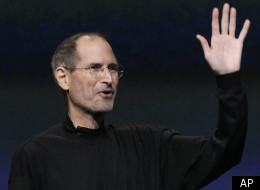
Appropriately, the news of Steve Job’s death popped-up on my iPad at bedtime, or about 10:30 PM. Instead of falling asleep, I tapped my news applications for details. Already, tributes were pouring-in from all over the world, perhaps the most eloquent from President Obama.

I became an Apple devotee in 2007 after years of discarded PCs, each generally down to a crawl after about three years, always under virus threat, at times confusing in their set-up and operation. In contrast, I’m typing on the same Macbook Pro laptop bought nearly five years ago, never a hiccup along the way, a little outdated in some of its features, but otherwise fully adequate for my needs. I paid more, but have outpaced that investment with its longevity. It’s like choosing a Lexus over a Corolla. Macs work the way all computers should.

Like many of you, I’ve branched out to other devices: iPod, iPhone, and last year, my favorite, the iPad. The latter has revolutionized my electronic life, virtually replacing even my laptop, except for productivity needs. Games, music, news, books, you name it, I have it all: ease embedded in quality.

Steve’s life amazes me. I’m talking biography rather than tech savvy. I hadn’t known he’d been put-up for adoption by his biological mother and was ultimately raised by working class parents, or that he had only one semester of college. Jobs had a taste for following the road less travelled, or this pluck most of us lack, the courage to seek the right fit, the fortitude to prevail. I’ve also learned he didn’t suffer fools gladly. He could be difficult, but he always played the hunch and followed his intuition.

Many rank him with Edison and Einstein in the impact of his genius. Actually, he was less inventor, much more innovator. He had a nose for good ideas that could be made better and surrounded himself with those who could materialize his vision. I understand this kind of creativity well. Writers like Vergil and Joyce could translate the extant into the revolutionary. Collectively, the Romans and contemporary Japanese are like this. Perhaps his greatest legacy, like that of all good teachers, was an ability to simplify the difficult. Apple devices exceed not only in their efficiency, but their ease.

I hadn’t known he ventured to India and returned a Buddhist devotee. His desire in life wasn’t to make money, but to live meaningfully. Simplicity characterized not only his products, but his life.

Brave beyond brave, and against all odds, he broke through not only economic and social barriers, but those posed by pancreatic cancer and its nearly always fatal consequence. Each new day he lived with hope.

Despite his outer success, he was in some ways “born under an unlucky star,” as the poet Keats might have put it. After all, 56-years is not a long-life. Paradoxically, he was also one of the luckiest of mortals. Most of us live longer, but not as well. Steve Jobs’s life, on the other hand, is the stuff of legends.

In 2005, Jobs gave the commencement address at Stanford University. In its wisdom and simple eloquence, its somber simplicity and earthly truths, the address affirms an uncommon realism of counting one’s days. Available online, it deserves a full-reading. In his honor, here are some of his final words to that youthful audience of just 6-years ago:

My third story is about death. When I was 17 I read a quote that went something like “If you live each day as if it was your last, someday you’ll most certainly be right.” It made an impression on me, and since then, for the past 33 years, I have looked in the mirror every morning and asked myself, “If today were the last day of my life, would I want to do what I am about to do today?” And whenever the answer has been “no” for too many days in a row, I know I need to change something. Remembering that I’ll be dead soon is the most important thing I’ve ever encountered to help me make the big choices in life, because almost everything–all external expectations, all pride, all fear of embarrassment or failure–these things just fall away in the face of death, leaving only what is truly important. Remembering that you are going to die is the best way I know to avoid the trap of thinking you have something to lose. You are already naked. There is no reason not to follow your heart.

About a year ago, I was diagnosed with cancer. I had a scan at 7:30 in the morning and it clearly showed a tumor on my pancreas. I didn’t even know what a pancreas was. The doctors told me this was almost certainly a type of cancer that is incurable, and that I should expect to live no longer than three to six months. My doctor advised me to go home and get my affairs in order, which is doctors’ code for “prepare to die.” It means to try and tell your kids everything you thought you’d have the next ten years to tell them, in just a few months. It means to make sure that everything is buttoned up so that it will be as easy as possible for your family. It means to say your goodbyes.

I lived with that diagnosis all day. Later that evening I had a biopsy where they stuck an endoscope down my throat, through my stomach into my intestines, put a needle into my pancreas and got a few cells from the tumor. I was sedated but my wife, who was there, told me that when they viewed the cells under a microscope, the doctor started crying, because it turned out to be a very rare form of pancreatic cancer that is curable with surgery. I had the surgery and, thankfully, I am fine now.

This was the closest I’ve been to facing death, and I hope it’s the closest I get for a few more decades. Having lived through it, I can now say this to you with a bit more certainty than when death was a useful but purely intellectual concept. No one wants to die, even people who want to go to Heaven don’t want to die to get there, and yet, death is the destination we all share. No one has ever escaped it. And that is as it should be, because death is very likely the single best invention of life. It’s life’s change agent; it clears out the old to make way for the new. right now, the new is you. But someday, not too long from now, you will gradually become the old and be cleared away. Sorry to be so dramatic, but it’s quite true. Your time is limited, so don’t waste it living someone else’s life. Don’t be trapped by dogma, which is living with the results of other people’s thinking. Don’t let the noise of others’ opinions drown out your own inner voice, heart and intuition. They somehow already know what you truly want to become. Everything else is secondary.

My kind of poet: W. S. Merwin

Congratulations to poet W. S. Merwin on his 84th birthday (September 30). Of contemporary poets, I love him most now that Philip Larkin is gone. I was privileged to actually attend a reading by Merwin at the University of Kentucky so long ago that he was relatively young then.

Congratulations, too, on his selection last year to succeed Kay Ryan as our Poet Laureate. What took so long?

I find Merwin compelling for several reasons:

1. I admire his dexterity in translating. Like Merwin, I’ve always been drawn to languages. Merwin, along with writing 15-volumes of verse, excels in translating, with masterful renditions of Greek and Roman classics, Dante’s Purgatorio and Latin American poets such as Pablo Neruda among his many credits.

2. I adore his lyricism. It’s the way I try to write; indeed, am moved to write, the sense of articulating meaning through cadence, the transmitting of inner emotion to outer page, the reaching towards others via pathos. Poetry has its roots in music and good poets, like Merwin, resonate powerfully, coalescing imagery, sound, and rhythm into a human tapestry. Merwin is a poet better heard than read, returning us to the oral genesis of poetry.

3. I cherish his environmental centrism. I know of no other poet so imbued with such fervency for Nature, a concern for its restoration and sense of urgency for the rest of us to mind and mend our ways. Merwin’s own life bears out his witness to simplified living holding communion with landscape. In the early seventies, he and his wife retired to a remote area of northern Maui, building a house fully green and restoring a waste land former pineapple plantation into a verdant sanctuary, cultivating more than 750 species of endangered indigenous flora. Each day, Merwin plants a new palm.

4. I like his affinity with the East. In fact, he originally moved to Hawaii to study Zen. If I were of religious bent, I’d choose Buddhism with its inherent simplicity, gentleness and life-reference as the better way. Merwin, a devout Buddhist, says he shares the Eastern view for its emphasis on “being part of the universe and everything living. You don’t just exploit it and use it and throw it away anymore than you would a member of your family. You’re not separate from the frog in the pond or the cockroach in the kitchen.” To some like me who carries spiders from the house to the outdoors, this is sweet stuff.

Merwin isn’t the easiest to read with his antipathy towards punctuation and hovering mystery, but the yield rewards the effort. I‘ll close this post with an early Merwin poem I’ve especially liked:

“For the anniversary of My Death”

Every year without knowing it I have passed the day
When the last fires will wave to me
And the silence will set out
Tireless traveller
Like the beams of a lightless star
Then I will no longer
Find myself in life as in a strange garment
Surprised at the earth
And the love of one woman
And the shamelessness of men
As today writing after three days of rain
Hearing the wren sing and the falling cease
And bowing not knowing to what

–rj

A country boy at heart

I have never really liked cities. Perhaps it goes back to childhood memories of growing-up in Philly:  stifling summer heat drenched in humidity, treeless streets, absence of playgrounds, intermittent rumble of the El,  violence drifting like smoke from any corner or up an alley.  My father and I watched a GI one day from our window being pounded by several youths; once, as a 10-year old on my way to school, I was way-laid by a gang, one of them excitingly waving a pistol.  There were other incidents.
They didn’t open-up the hydrants like they do now to give relief to city children.  Pa would give me a dime for the movie matinee, families would sit on marble stoops in row house streets into late evening, eager for incipient breezes enticing sleep.  Occasionally, Donald, my older brother, would drive Pa and me to Atlantic City for a Sunday outing and the Jersey shore.
This solace more frequently turned regret on our evening return, stuck in bridge traffic,  sweltering in the always faithful embrace of steamy asphalt. (No car ac back then.) Once a year, the first two weeks of August, we’d migrate back to New England, our family’s original homestead.  If there was ever an Eden, it was New England with its spatial greenery of mountains, apple orchards with trees in soldierly row, tranquil dairy farms tucked-in neatly by boulder walls.  At night, drowsiness descended easily amid the cadence of the nearby surf’s rhythmic thump upon the shore, Nature’s calm heart beat signaling all’s well.
Cities have their attractions.  They provide an a la carte menu of things to do, sure to please any palate—a rock concert, a baseball game, infinite movie choices, museums, gargantuan shopping malls, even a zoo. You want it, it has it.
But cities are good at make-up.  They excel at covering blemishes with their efforts to shampoo the dandruff of long neglect, redressing the urban core in mirror high rises nearly silver in their skyward reach and newly created green respites with their ubiquitous fountains.  These are good, well-meaningful efforts.  Still, they point to a human longing for relief from urban sterility with its jack-hammer noise; treeless streets; traffic-jammed arteries akin to arterial plaque, threatening well-being; multitudes of the anonymous with their latent danger.  Around the corner, a clinging poverty of seedy neighborhoods of paint-peeling houses, boarded windows, good people trapped by race, unemployment, and few skills, reservations of the forgotten ransacked by thieves, addicts, and drug dealers, gangs providing substitute dignity.
In our down economy, the problems of the city have increasingly spread to suburbia,  like some insidious infection, threatening an epidemic.  New government stats startlingly reveal that poverty is now a growing fixture in metropolitan areas, once offering bucolic sanctuaries of   relief from adjacent urban jungles. Doubtless, this new poverty is by-product of government programs to provide social mobility, or access to where the jobs, better schools, and ample medical facilities often are.  The housing bust factors in, too, along with immigration.  Consider that suburban poverty population has increased 74.4% in the Seattle-Tacoma-Bellevue metropolitan area;  121% in the Las Vegas-Paradise suburbs;  69%, Louisville-Jefferson County-IN; surprisingly, the Austin, TX suburbs at 150.5%.  Metropolitan Poverty  This scenario, alas, is nation-wide.
If our suburbs are proving to be a new semblance of beached hopes, where then do we turn?
For me, it’s never been about  the city or suburb since my outlook has been largely shaped by memory.   By disposition, I’m also pretty much a Romantic, maybe even defining the term.  I cherish space.  I like gardens, not malls.  I’m keen on Jane, Joe, Mary and Bob.  I’m afraid of people.  I don’t like what crowds can do when they shed anonymity.  My home represents safety.  It shuts out that urban dissonance that headlines our daily news.  Like all Romantics, I’ve always preferred distance to proximity.
Karen and I recently returned from San Francisco.  When you think of San Francisco it’s likely to conjure up images of an idyllic setting on hills overlooking a foggy bay–cable cars, Fisherman’s Wharf, Telegraph Hill, China Town, the resplendent Golden Gate Bridge.  And it’s truly this and even more, so far as cities go.  Still, here as in all our cities, the toxic fumes assaulting lungs, its  overweening traffic taking us more than an hour to egress to I280, the paucity of parking, sometimes at $20 for every three minutes, or $48 a day.  Walking the streets was uncomfortable, even in daylight, accosted by panhandlers, beady stares, and sometimes vulgar comment.  We took flight back to our car, locking our doors immediately, hurriedly making our exit from this, one of America’s most storied cities.  Cities are inherent with danger.
I’ve lived in several big cities:  Philadelphia, Detroit, Chicago.  I’ve been in many more.  Put me down for an occasional cautious visit, but mind you this: what I like best about cities is not the getting into cities, but the getting out.

Death’s reprieve: thoughts on human mortality

All of us, by being born, are immediately under a death sentence, how, when, or where unknown. As an English major and teacher, I came to realize early that the stuff of poetry nearly always comes down to mortality. I often think it’s this aesthetic appreciation of finiteness that propels all great Art, that only through the Imagination, or human creativity, do we get a chance to stave off ending in the creation of an artifice unassailable by time. And yet even here, we deceive ourselves as Keats reminds us in his poignant “Ode to a Nightingale.” Can there be solace in the grave with its suspension of awareness? When our endeavors are the stuff for other ears? In a world where even memory itself becomes cloyed with life’s pursuit? A world where even those who know us best age and succumb?

Sometimes death stalks us at elbow range, and we haven’t the faintest idea how close we’ve come. I think of December, 1981 in Kerala, India, when I nearly lost my balance tottering along a narrow beam as I exited from a river vessel. I didn’t know how to swim.

In June, 1983, returning from my son’s West Point graduation with my wife and daughter, I was driving in the mountains of Western Maryland along a three lane highway, with my present lane about to merge. Unfortunately, a semi-truck was laboring up the sharp ascent in front of us. I foolishly gambled I could pass before the lane gave way, only to find that three lanes suddenly narrowed into two with a car in the other lane approaching at breakneck speed. Trapped in a spatial pincher, I accelerated, threading a narrow opening between the truck and oncoming car. As I swung past, maybe a foot to spare on either side, I heard the car’s screeching brakes as I viewed in my mirror its desperate careening to right itself in its lane. I had teased Eternity’s border

And then there have been those plane journeys: planes nearly colliding because of tower errors, violent storms, a propeller no longer working (this one in the military flying over the Sea of Japan, all of us in parachutes).

Sometimes death comes looking for us close to home. Last week, for instance, on just a late afternoon trip to the grocery store, a big bumper in your face pick-up came speeding round a curvy bend hogging the already narrow road, sending me off the road to avoid a head-on crash. I didn’t have time to think; I reacted instinctively.

Two weeks ago, I took my annual blood work-up. Several days later, I got the mailed results. Bilirubin levels were elevated. Concerned, my doctor scheduled me for a follow up hepatic test and abdominal scan to check liver function and for gall stones, tumors, and cancer of the gallbladder or pancreas. Now anxious, I didn’t find relief in reading in my Mayo guide that elevated bilirubin levels indicated cancer. A short 36-hours after the test the doctor’s office called: the tests had turned out normal.

I got away yet again; yet I don’t fool myself. It’s kind of a hide and seek game we play with death. Sooner or later, it finds you.

One thing I learned from this most recent episode: how many are caught in death’s net, every year, month, week, day, hour, minute, and second. I note their anguish, their physical suffering, their often painful, slow demise. I have found my passion for others renewed; my sense of life lived in the context of the meaningful quickened; a heightened sensitivity to the beauty of every new day to be relished; a sharpened awareness of temporality’s potential to enhance.

To live life rightly helps our not clutching it. In fact, it helps us let go.

Obama’s assault on Social Security

Although vociferously claiming entitlement programs aren’t on the table in securing deficit reductions, the President’s recent actions prove his rhetoric to be little more than political chicanery in upholding the integrity of Social Security, for an example. In an effort to stimulate the economy by putting more money into our pocketbooks, President Obama has proposed continuing the payroll tax reduction (now 4.1%) for Social Security. In fact, he wants to cut the Social Security payroll tax still further, or to 3.1% of earnings below the traditional maximum of 6.2% on $106,800 income. This amounts to a $240 billion dollar funding hit on Social Security, a program already in trouble due to changing age demographics. In 25-years, it will only be able to pay out $75.00 on every $100.00 owed in benefits.

More specifically, his proposal represents a direct raid on the Social Security Trust Fund, short-changing our young people. As is, his proposal cuts $175 million from the employment payroll contributions and $65 billion in employment contributions. The President’s new, massive stimulus package before Congress, $440 billion, draws 55% of its funding from Social Security funding. You do the math. It’s simply untenable, an indulgence in political opportunism, betraying American workers and their future.

Compounding the demographic and political pressures on Social Security, today’s massive unemployment has ignited a rush in applications for disability income (SSDI). According to the government’s own figures, applications showed a 21% increase just between 2008 and 2009. While the rising number of aging baby boomers may account for some of this increase, it seems more likely this sudden swell has is origin in our down economy. Frankly, one has to suspect Social Security is being used as a ruse for welfare in many instances. Obtaining benefits also qualifies one for Medicare, no matter one’s age.

In its defense, the Social Security administration argues it has strict monitoring procedures in place to assure legitimacy in the application process, with only 30% of applications approved. This is true, however, only at the initial application stage. While denied applications going through the appeal process can take up to 2-years, persistence pays and ultimately most applicants, or 67%, get their benefits approved before an Administrative Law Judge. Meanwhile, legal representation for applicants has turned into a lucrative specialty.

What’s mind-numbing is that this deluge in disability applications is leading some trustees of the Social Security disability program recommending Congress reallocate money from the Social Security Retirement program to offset deficits in disability funding!

As is, the present and proposed cuts in Social Security payroll taxes don’t offer assistance to the many unemployed, retired, disabled or those, like teachers, who are ineligible for SS. More substantially, short-changing Social Security exacerbates its perilous future.

Just more of the same

Within the past 3-weeks, illegal immigrants have killed 9 people in drunk-driving incidents or plain out murdered Americans:

Driving:

Four year old Christopher “buddy” Rowe in California

Twenty-three year old Matthew Denice in Massachusetts

Four people in Texas in a single traffic incident

Murders:

One each in Oregon, Texas, and Michigan

What are these people doing here?

Now comes word of another Obama relative, Kenyan illegal Onyungu Obama, the President’s uncle, arrested for drunk-driving in Framingham, MA. Two years ago, a judge allegedly ordered him deported. Guess he didn’t get the message. He does, however, have a Mass driver’s license and social security card. Imagine my surprise.

It’s reported that when offered a free phone call for assistance, he asked for the White House. Why not? After all, Obama’s Kenyan aunt, Zeituni Onyangu had also been slated for deportation, appealed, and won permanent residence. She’d been living in a South Boston project for years, drawing disability and welfare.

Obama has retained prominent counsel in Cleveland immigrant lawyer, Margaret Wong. Meanwhile, the White House has refused to comment.

A few weeks ago, the Obama administration announced it would now prioritize deportation of those with criminal records. Does that include drunk drivers like Uncle Onyangu?

I wouldn’t bet on it.

Crisis in the Horn of Africa

We’ve been hearing lots lately about the mass influx of Somalis into Kenya, desperately seeking help in their flight from devastating drought that threatens 3-million people with starvation, made worse by Islamic terrorism. It’s estimated that 29,000 Somali children under five have starved and that another 640,000 Somali children are severely undernourished. Though we’re talking of Somalia, portions of Kenya and Ethiopia are also experiencing sustained drought, the worst since the El Nino gyrations of the 1970s.

Things are likely to get worse in the Horn of Africa. In just the last two decades, herders in Ethiopia, Sudan, and Somalia have lost 80% of their stock due to starvation and disease.

But it isn’t simply climate change that’s the culprit here. Somalia is a failed state with no functioning government, characterized by an unstinting flow of weapons, piracy, and Islamic militants. Much of its chaos draws upon its colonial past and Ethiopian aggression that swallowed up the Somali populace, dividing them into five jurisdictions. On receiving independence in 1960, only the areas under British and Italian rule were reunited, the other Somali-speaking areas incorporated into Kenya, Djiboui, and Ethiopia. In turn, Somalia became an extension of the Cold War, as the U. S. and the Soviets competed for influence. The flow of weapons began and its violent aftermath continues in Somalia.

Somalia’s attempts to regain its land from Ethiopia resulted in the disastrous Ogaden conflict of the late 70s, destroying its economy. Somalia hasn’t seen a functioning government since 1991 and the legacy of Cold War arms into Somalia has made Somalia a seminal trouble spot in East Africa. Some of this weaponry has fallen into the hands of al Qaeda linked militants such as Al Shabab, which has denied a famine exists and considers Western food aid a plot.

In a subsequent post, I’ll touch on the growing refugee crisis across the world, not just Somalia, that promises to become one of humanity’s greatest challenges as global warming converges with failed economies, radical religion, and corrupt government to exact unprecedented suffering.

Backdoor amnesty granted by Obama administration

On Thursday, with the Congress out on vacation and the media and public preoccupied with the dismal economy and an approaching weekend, the White House announced a new immigration policy. It had been rumored to be coming down the pike several months ago by conservative adversaries. Then the shoe dropped, Homeland Security Secretary, Janet Napolitano, announcing that “non-dangerous” immigrants will be allowed to remain in the U. S., the priority shifting to deporting criminals. Some 300,000 pending cases involving illegals will be reviewed and those absolved allowed to apply for work permits. Certainly this change represents a political plus for an embattled president, who has been losing voter support and could use the shoring up of the Latino vote as he heads towards next year’s elections. For the nation, I believe the policy does an injury with ongoing consequences.

1. Immigration reform should be legislated by the Congress. Yes, the Congress has been reluctant to act and just recently voted down the Dream Act. That doesn’t justify the administration circumventing the Congress to get its way. Had the Congress not acted at the last hour to lift the debt ceiling, it’s conceivable the President might have invoked the 14th Amendment to get around Congress. I think you see where I’m going. Where does it end? Policy shouldn’t be made by fiat.

2. Some argue in favor of this change. Principally, why should young people who have come here early, some serving in our military; others now in college, be sent out of the only country they really know? Truth is, not all illegals came here as youngsters. Anyway, if illegals are inconvenienced, then this is their fault for jumping the queue. We do have an immigration process that allows some 500,000 Mexicans, for example, to enter our country legally each year. It’s unfair, as some of them have said, to let those who’ve jumped the line now stay.

3. And then there’s our unsettling economy, possibly about to go back into recession. Even when legal immigrants come here, a third end up on public support. Many choose to reside in states like California and New York, states riddled with huge public debt. Recently, California governor, Jerry Brown granted in-state tuition rights to illegals, this in the most financially troubled state in the country. The story repeats itself elsewhere amidst the political pandering, the public be damned.

4. Some argue that immigration reform is what the public wants. Thus, this is a good move on the part of the Obama administration. Yes, most of us do want immigration reform, but one not involving massive amnesty for an estimated 11 to 20 million undocumented. Think about the discrepancy in those numbers. We don’t even know how many illegals are in our country. I fault the Republicans as well as Democrats, however, as several years ago there was a bill in Congress to lower the number of immigrants admitted and employ criteria resembling Canada’s point system in exchange for amnesty. Borders would be enforced. Then again, maybe the Republicans were on to something—that administration promises were simply no more than means to an end. Enforce the borders now, and we’ll talk of reform. As is, the promised wall has yet to be completed, employers who hire illegals aren’t scrutinized or are granted minimal fines for violations if caught, and the government has steered away from mandating the very reliable E-Verify procedure to ascertain eligibility for employment.

5. The fundamental flaw in the administration’s new backdoor amnesty approach is that it’s likely to exacerbate the flow of illegals from all over the world into the U.S. After all, unless you get into serious trouble with the law, you’re safe. Hey, bring the family! By the way, when we talk of amnesty, we forget that family members can then come too. 11 million, the lesser figure, suddenly swells to 40 million residents at the very least, and you want to give these people work permits as well when millions of own people can’t find work? Suddenly people who don’t belong here are their competitors. 9.1 percent of our working population is currently out-of-work; more so our Black brothers and sisters at 16 percent. I tell you, we’re playing with social dynamite.

6. By the way, our biggest problem isn’t with Latin Americans wading across the Rio Grande. It’s with those overstaying their visas. The tenth anniversary of the 9/11 tragedy will soon be upon us. 18 of its 19 perpetrators had overstayed their visas. Ten years later, we still don’t have a handle on overstayed visas as I reported in an earlier post. But then, who the hell cares? Certainly not the Obama administration.

Libraries: an endangered species?

“What is more important in a library than anything else is the fact that it exists.”
–Archibald MacLeish

Growing up in waterfront Philly in the 1950s, I didn’t have many of the prerequisites of today’s youth: giant screen HD TVs, DVDs, video game consoles, laptops, cellular phone messaging, and Facebook. At best, there were two venues open to most of us boys: the local show or playing stickball against brick factory walls. Movies were just a dime then, and Pa would cough up the change so I could find relief from Philly’s steamy asphalt and blanket humidity invading our upstairs flat . Otherwise, I played stick ball by the hours, half a tennis ball and a broom stick more than ample other than when I relied on a third option not resorted to by most of my fellow urchins—the local library.

When I look back upon it now, the library option may well have been the most pivotal shaping element of my childhood. Later I would go on to university study, complete a Ph. D., and teach English in college for more than 30-years, but it all began here. Roaming the shelves, I’d make these fabulous finds, whether the Dr. Dolittle books (my version of Harry Potter), or inspired by Classic Comics, the unabridged works of Hugo, Dickens, Poe, Hawthorne and others. Now mind you, it was something that didn’t come easily as the branch library was a good half hour walk each way.

These days, hard times have fallen upon our libraries, and I grieve for them as I would for a beleaguered friend. I am troubled for their future and the impoverishment their loss would bring. Libraries are either closing or becoming so short-changed by state and local budgets that they gasp for life.

In Lexington, KY, my beautiful urban neighbor, the library budget has undergone a substantial decrease in revenue over the last two years, resulting in an elimination of 30 full-time positions, a reduction in part-time positions, and frozen wages. The 2012 budget promises more of the same, with the loss of three more people and no pay raise yet again. Much of the crisis is fueled by the excessive demands for pension and health care outlays by local police and fire personnel to whom the city is now in hock for 200-million. Meanwhile, the mayor’s budget allocates new funding for a lacrosse field and minigolf course. Hey, let’s get our priorities straight.

The dark clouds over our libraries loom nation-wide, threatening their very existence:

1. In Massachusetts, local communities have cut their funding below state minimum funding levels.

2. In California, San Diego’s mayor recently proposed cutting back sharply on library hours, virtually shutting them down in calling for a 2-day work week and alternate Sundays.

3. In Texas, Dallas has cut library hours from 44 to 24 weekly.

A similar wasteland scenario extends to college campuses. Here are two examples:

1. The Univ. of California (San Diego) has reduced its library budget by 16% over the last two years. In an attempt to cope, it has made cuts in supplies and equipment, decreased class and instructor support, slashed its hours, reduced digitalization, even maintenance, and eliminated 52 positions.

2. The University of Virginia has undergone 23.6 million in cuts. To cope, it’s not renewing nearly 1200 journals, reducing hours, cutting back on its collection budgeting, and not filling staff vacancies.

Libraries go back to the genesis of our great country, with John Harvard bequeathing his 400-book library in 1636 to the young college that would ultimately bear his name.

Benjamin Franklin founded the Library Company of Philadelphia in 1731, now recognized as the first lending library and precursor of the free public library that has made America the envy of the world.

Andrew Carnegie valued libraries so highly that he donated 56 million for the construction of more than 2500 of them.

I think back gain to my Philly childhood and its material poverty; we lacked hot water, and sometimes we had little food or even heat in winter. But always there was the Montgomery Avenue Library, a long walk worth every step to a kingdom that hinted dreams could become palpable. To grow up poor isn’t the worst fate. To grow-up without a library, for government to impoverish a mind—that’s not easily forgivable.

As Barbara Kingsolver put it in Animal Dreams, “Libraries are the one American institution you shouldn’t ripoff.”