I’m not upset that you lied to me, I’m upset that from now on I can’t believe you.” –Frederick Nietzsche
Karen and I were recently visiting our friends’ new horse farm when I spotted a mare and her two young saddlebred foal companions (see photo) and decided I’d saunter over and say hello. Just wished I’d had some peppermints along. I started with the mare and took her stillness beneath my hand as consent. Of course, the foals wanted in on the action, too, though each time I’d reach out, ever so slowly, they’d flinch. In short, they hadn’t yet learned to trust, at least with regards to me. Trust, after all, is one of those life staples you must earn.
In our human world we can be skittish, too, when it comes to trust, especially if memories linger in us of its betrayal as in a broken promise, lying, infidelity, irresponsibility, abandonment and, alas for children, poor parenting. It’s hard finding an antonym for trust, but deceit comes to mind. For the great Italian poet Dante, it was the worst of human short comings and he classified its several types into betrayal of family, friends, and nation.
I wish I could say trust has the numbers, or upper hand, when it comes to humans, but I know better and so do many of you, and so I treasure it when, serendipity, I stumble on it. Being from New England and growing-up along its coast, I think then of lighthouses, rock solid, faithful sentries shredding the darkness with their rotating beams of pulsating light.
I’ve always held the acute test of trust lies in the context of anonymity, or when we think no one’s watching. If someone runs stop signs, they probably take other short cuts from honor as well, making up their own rules that serve their interests. Deceit, if you will, is uppermost rooted in narcism, or satiating ourselves, damn our fellows.
Deceit or fraud gets frequently collectivized in power and money conclaves, with near daily sightings of their misdeeds in government and banking. The aftermath, of course, is the bruising recession fallout for the rest of us, instigated by CEO greed and spendthrift bureaucrats that jeopardizes our future.
I hurt when trust gets violated by manipulative charlatans. I want to believe the ad tells the truth or a doctor’s new book isn’t a facade for making money or that my local car dealer is giving me the best deal. I want to believe that my friend will keep his word, that my life partner will always love me and my children live honorably.
If love is life’s consummate grace, without trust it will prove tenuous, or like a house built upon the sand, succumb to time’s erosion. Love may be life’s elixir, but to be trusted may be even better.
Idealist that I am, I want to believe, not doubt; to embrace, not shun. Like the young foals, I don’t really want to flinch.
Well, that’s finally settled! After months of vociferous debate the American Psychiatric Association has given its blessing to a revised edition of the Diagnostic and Statistical Manual of Mental Disorders (DSM 5th edition), often called the Bible of psychiatric diagnosis. A vital tool, it facilitates psychiatrists being on the same page.
Unfortunately, the DSM has often been fraught with opinion-based labeling, at times approaching the trendy and political, rather than drawing from established empirical data. Casting a wide net, it can conceivably draw in most of us. The inherent danger of psychiatry has always been its penchant for finding motive and making faulty inferences. It loves labeling.
I’m reminded of a humorous rendition of this syndrome. Two psychiatrists are talking to each other when a third party passes through the room and says, “Good morning!” One of the psychiatrists then looks at the other and exclaims, “I wonder what he meant by that.”
Among some of the controversial changes in the revised DSM are the relegating of Asperger’s Syndrome to the expansive canopy of “autism spectrum disorder” (ASD). (No more Asperger Syndrome label.)
It also includes grief as a clinical disorder, or variant of depression. Many of us will find this a tough sell.
Better not be into loading-up on newspaper clippings, old photos (baseball cards?). Hoarding, whatever that is, can get you into the psychiatric liturgy.
Ironically, sexual addiction gets left out. Go figure!
Labeling is dangerous for its dead-end, stigmatizing write-offs. An educator, I’m aware of the short-circuiting of a student’s potential when an impatient, frustrated teacher simply writes him or her off as essentially unable to learn.
Psychiatry needs to get at causes, not symptoms, often social (e.g., poverty, prejudice, abuse, etc.), and rely less on medication to address supposedly faulty neurotransmitters. Increasingly, research has shown that much of the reported success of SSRIs and the like is mere placebo effect.
Lowering the threshold for DSM inclusion becomes reminiscent of the Pharisees with their penchant for jot and tittle inclusion or the sometimes purist application of Sharia law.
Next time you worry about something be careful not to share it with anyone, at least with a psychologist or psychiatrist. Though anxiety per se is a fact of daily life and hardly rates as mental illness, count on it to land you a high rung in the DSM.
Johnnie stays in his room, reading as his friends go off to play.
Susie likes to sew by the hours.
Neil is glad the party got cancelled.
I’ve always been interested in personality dynamics, or the way we interact with others, our environment, and even ourselves. Then I came across Carl Jung’s notion of two selves resident in all of us: one Extravert; the other, Introvert.
Unfortunately, psychology often goes astray, treating one dynamic as sum total, when both exist in perpetual tension, though one will prove primary. Think of it in terms of being left or right-handed. We’re born with a tendency, or preference, to use one hand over the other. While we use both hands throughout the day, that preference reveals itself when we take to writing our signature. If you’re right-handed, try writing your signature with your left hand, or vice versa.
It was Katherine Briggs and her daughter, Isabel Meyers, however, who provided popular access to Jung’s personality archetypes, or modes, and built upon them through the eponymous inventory they developed. Its advantage lies in its facility for speed, simplicity and scope in identifying sixteen distinct personality types. The Meyers-Briggs Type Indicator (MBTI) is now routinely used universally, taking-on adjunct status in the business world as a screening tool for new employees or setting up work teams, etc.
The test measures four basic components comprising a personality type (see Tieger and Tieger, TheArt of Speed Reading People [1998]):
1. How we’re energized: (E) Extraversion ——(I) Introversion
2. How we access information: (S) Sensing ——-(N) Intuition
3. How we make decisions: (T) Thinking——(F) Feeling
4. How we organize our world: (J) Judging——(P) Perceiving
I remember taking the MBPI years ago and how accurate, despite its brevity, it turned out. It was me! INFP. Like your fingerprints, it’s your fixed id when it comes down to what makes you tick. While you can’t put the MBPI under a microscope, we know empirically that it functions well in assessing personality dynamics. It may even help you to better understand and relate to those around you or even to avoid relationships fraught with potential personality conflict.
What I’d like to do here has simply to do with Introversion, the canopy I come under, though I’ll also contrast it with Extraversion.
Introversion trademarks: less talkative, more reserved; thinks first, then talks; slower, more precise conversation quietly delivered; focused; doesn’t mind being alone at times; shuns spotlight; cautious; sequential in conversation, providing transitioning.
These traits are in marked contrast to those of the Extravert:
Extraversion trademarks: noisy, enthusiastic; talkative; thinks aloud; desultory in conversation; easily distracted; enjoys attention; impulsive; interrupts or finishes sentences.
In my school days I daily envied the football players who seemed always to hold their place in the sun, the focus of school assemblies, and loved by girls. Older folks would tell me to enjoy this time as best ever, though I couldn’t fathom why. Tall, gangly, pimple spattered and timid, I found shyness got me nowhere, except I compensated some through academics.
I can’t say life beyond high school made it any easier in a world enthralled with high profile athletes, movie stars, TV celebs, charismatic politicians and other PeopleMagazine types.
On the other hand, I’ve found fellow soft-voiced Introverts with their reserve a relief to be around. They tend not to dominate a conversation, or have need to gesticulate with their hands, or interrupt you at nearly every turn, or to stray in their attention. There’s often a sincerity to them that one finds frequently missing with all-talk Extraverts.
Introverts are linear in their preferences. They shun the desultory, preferring to exhaust the topic before moving to the next and keep a steady gaze, unlike the perfidious Extraverts with their disconcerting, wandering eyes.
Extraverts draw strength by the numbers they keep. They love Facebook and accumulating long lists of friends for validation. They prefer doing over thinking, flamboyance rather than simplicity, the latest fashion, the flashy car, loud colors. Introverts, not liking the spotlight, prefer simpler amenities, say a Prius over a Lexus; subdued colors, a less frenetic music.
Introverts are often strong people, able to find a pathway away from the crowd, confident in their values while avoiding arrogance. Revolution and social change begin most always with the Introverts, whom the Extraverts eventually follow.
Sometimes you can distinguish the two entities by way of the hobbies they keep. If you like gardening or fishing, reading or chess, sports like tennis or golf, you’re more likely to be an Introvert. On the other hand, if you’re into team sports like softball, or enjoy card playing, or participating frequently in social networks, then it’s likely you’re an Extravert.
Extraverts and Introverts can be found across the job spectrum, so that generalizations can be faulty as to which occupations allure them. Introverts, however, with their preference for fewer numbers, quieter spaces, and focused challenges, are often found in endeavors associated with medicine, college teaching, libraries, accounting, and computers. On the other hand, Extraverts perhaps find greater contentment in occupations such as entertainment, marketing, and public relations.
Introverts, as proponents of the inner life of the imagination, are often the Artisans, whether in painting, music or literature. Extraverts, in their need for people, make for great actors. We need both: the Introvert to teach us to reflect; the Extravert, to make us laugh; the Introvert to broaden our horizons; the Extravert to make us feel good about ourselves.
But back to Introverts, per se, since this is my primary focus here. We Introverts needn’t deem ourselves second-class citizenry in a gregarious world or be overwhelmed by the social pressures exerted on us in such a world. I would even wager that overall we’re a happy, well-adjusted bunch, at peace with ourselves and proud of our contributions to making a better world. I always remember that Steve Jobs was one of us.
I’ve always found it hard to understand how there are people who can look you in the eyes, never blink, and spin the biggest lie. Of all the kinds of deceit, lying is probably its most common form. My mind boggles at some of the big names across the years, not surprisingly, political: Congressman Dan Rostenkowski; Washington mayor Marion Barry; and then there’s Bill Clinton (“I did not have sex with that woman”).
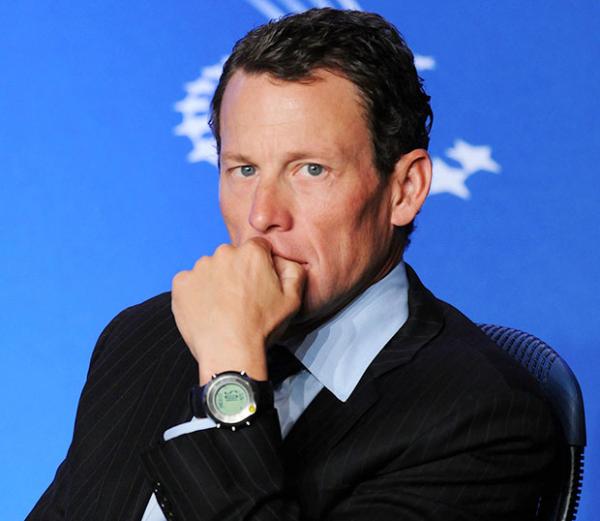
Lately, icons from the sports world have swollen their numbers, though like most liars, they’re often teflon coated when it comes to making the allegations stick. Think Bonds, Clemens, McGuire. And now there’s Lance Armstrong and a confession–of a sort.
I probably don’t need to tell you that lying is also endemic to the business community. It’s estimated that the average consumer is exposed to up to 200 lies daily via advertising.
But let’s not be self-righteous. The truth is we all lie, so maybe our outrage is simply projection rather than seeing ourselves in the mirror. Psychology Today (May 1, 1997) cites the 1996 study of lying by University of Virginia psychologist Bella DePaulo, who found “most people lie once or twice a day.”
Lying sometimes comes with the territory, say law, politics, car sales.
Sometimes it may even seem the moral thing to do. Should a doctor tell every terminal patient his/her prognosis?
Sometimes lying may seem the only way to avoid being punished for telling the truth. Should you tell your boss you were late because you got stuck in traffic rather than the truth you overslept?
Sometimes it may be wiser to tell your wife you like her new dress or hair-do than blurt out, “What were you thinking?
From another vantage point, lying can often be viewed as an ego prop for those with low self-esteem to boost themselves in the eyes of their beholders. The bigger the fish story, the better the payoff in admiration.
Lying is generally motivated by a desire to achieve a goal or to avoid responsibility for a behavior, e.g., overspending, drug addiction, etc.. There is, however, the compulsive liar who does so inversely related to any goal. Such behavior hints at a pyschiatric disorder, requiring treatment. This also gets us into the criminal mind of the sociopath who can lie and even kill without remorse. I think of Susan Smith (1994) who drowned her children, but initially claimed a black man had done it.
While granting that lying is an intrinsic human behavior, I still draw the line between the Lance Armstrongs who lie to mask their wrongdoing such as wholesale cheating or abuse of power and everyday Johns and Janes who lie to cover their embarrassment, or to prevent friction, or to opt for kindness.
What really arouses my disgust is when these self-serving schemers repeat their lies endlessly. We had a decade of this in Armstrong’s case.
Ironically, we often reward our consummate liars. Though they didn’t make it into baseball’s Hall of Fame this year, Bonds and Clemens were candidates and drew over a third of the votes. We also have two recently elected senators, one of whom falsely claimed service in Vietnam repeatedly; the other, to claims of Native American ancestry, presumably to take advantage of affirmative action. In reality, those who vote for such people share the same bottomline rationale of the end justifies the means.
The worst lies, the ones that grieve us and erode our trust, occur when we’re deceived by those we’ve invested our emotions in most, our family and friends. The medieval poet Dante assigned such people to hell’s deepest circle in The Inferno to keep company with the likes of Judas.
Liars are hard to detect because they ape sincerity, empowering their ability to manipulate the rest of us who want deeply to believe we’re being told the truth. This is why polygraphs aren’t always accurate, as they can’t readily filter out the feigner of sincerity.
Some have written in depth on the refined art of lying and strategies for its detection, the best of these being Paul Ekman’s classic 2009 book, Telling Lies: Clues to Deceit in the Marketplace, Politics, and Marriage. You’ll find his take on body language fascinating, although I’m dubious about this since body language can also be feigned. Nonetheless, as an expert on emotions, he brings the closest thing to science on the subject, though he confesses the frequent difficulty, even then, of spotting the skilled liar. Our best defense, in my own view, borrows from Reagan’s maxim: “Trust and verify.”
We do know we resent people like Lance Armstrong, perhaps because he and others remind us of our own vulnerability to manipulation and the hurt we’ve experienced when our trust is violated
While joy is fundamental to our living life well, many of us can’t fully enter into it, given the stress of daily living. It’s just plain hard to have joy when you’re out of work, ill, or facing problems in a relationship. Each of us has his own stresses. Often, however, perspective is everything, especially when you consider what others around you suffer. I was reminded the other day of this while watching a 60 Minutes segment featuring a paraplegic woman completely dependent on loved ones for her care. She was grateful to be part of an experiment in being fitted with a mechanical arm embedded in her skull. Clearly, she was a woman who had joy despite her circumstances.
It’s important for all of us to look up, not down; to be grateful for what we have and each new day; in short, to think good thoughts, or as Buddha put it long ago, “We are shaped by our thoughts; we become what we think. When the mind is pure, joy follows like a shadow that never leaves.”
Below I’ve listed several ways of finding joy, and I know you can add your own:
Friends: You don’t need a lot of them and consider yourself blessed if you have that one good person in your life who listens, counsels wisely, and finds time for you. Friendship is a two-way street, but when it’s on, wow, what a difference to find you’re not alone.
Family: Throughout the years I’ve been close to my siblings, keeping in-touch despite the miles through letters, phone calls and occasional visits. Families can be sources of stress, too, but when they function well, they’re our refuge in a turbulent world. My greatest joy is my wife and daughter, my allies day in, day out.
Simplicity: Joy is independent of money. What matters is abundant living, or investing in those aspects that enhance being rather than possession. It’s giving priority to your needs, not your wants. A 1500 square foot house may be less than what others opt for, but if it suffices, then go for it. Addiction often keeps company with materialism, fed by a need to be validated, and so what we have is never quite enough.
Volunteering: Helping others puts you on the fast track to finding joy. And there is so much need. The ethicist philosopher Peter Singer contends that if all of us gave just 5 % of our income to helping the poor or wiping out disease and the like we’d create a much better world. If we matched our donations with just 3 or 4 hours of our weekly time, we’d move the goal posts still nearer and more quickly.
Awareness: The French writer, Gustave Flaubert, made a comment I’ve never forgotten: “Anything observed closely enough becomes interesting.” Now you can have fun with this idea. Take out a sheet of paper, for example, and brainstorm all the delights you can come up with in association with little children. In addition to their innocent honesty, inquisitiveness, and trust, I think with fondness of their giggling, say when watching a puppet show. Cultivate awareness. Keep a journal. Record your joy at seeing a pink tapestry sunset, first daffodils in bloom, the symphony of an early summer morning chorus of cardinals. Look closely and in every nook. Joy can be found in surprising ways, if were ready for it.
Focusing on the present: Some folks find it difficult to free themselves from their past. This, of course, helps psychologists feed their families. We need to bury our dead–our resentments and regrets, follies and failures. Some reach for the future to relieve themselves from the weight of the present. The truth is that the present writes our future. We should live each day as though it were our last, thinking positively and doing well. A day well spent is a day that gives joy. Each day is an act of grace, an opportunity to begin again.
Reality thinking: You’re unlikely to see this item among sources for joy, but I include it here as fundamental to all human happiness as joy can prove to be a double-edged sword. Life is replete with loss, whether of our children moving far away, the loss of our mate, or of friends across the years. The price of joy is that it derives from what we ultimately forfeit, for sorrow slumbers in the same bed. Knowing this should heighten our joy in what tomorrow may take away.
Courtesy:yahoo.news: Destroyed home in Dunalley, Tasmania
I ran into a man in recent years, educated and professionally accomplished, who didn’t like a lot of my observations and beliefs. They were too liberal and sometimes he’d laugh or scoff. It so happens that I believe in such things as a woman’s right to sovereignty over her body, a more just system of taxation, dignity of death legislation, universal health care, gay rights, the priority of green living through simplicity, alternative energy, recycling and vegetarianism. I voted the Green Party in the recent election.
The last time we conversed, more than a year ago, he admitted to global warming, but thought of it as cyclic rather than human in origin. That’s ok with me, at least as far as a person’s right to a belief or opinion. However, I’ve often found a lack of fair exchange when it comes to beliefs like my own, perhaps because I live in conservative Kentucky or no longer have daily access to a university campus where my views often enjoy majority status and poetry is still admired. Perhaps views like mine simply make people feel uncomfortable with their resonance of gloom and doom, though I counter that acknowledging a problem begins its solution.
But let me confine myself to global warming at the moment. I find the facts are in: It’s horribly real and its effects are happening universally and exponentially faster than many of our experts had projected. Our hurricanes occur more frequently and grow more menacing; floods and drought devour our landscape. In Europe, a prolonged heat wave this past year killed hundreds. Storms of the century are now decade-ravages, with Katrina and Sandy coming to mind. Meanwhile, the accelerating polar meltdown threatens methane release, a component that exceeds carbon as a dangerous contributor to global warming. Sea tides are rising and coastal cities like New York have begun drawing-up contingency plans.
For another example of what’s going on, there is the current tragedy of bushfires in Tasmania, the result of prolonged drought, high temperatures, and persistent wind gusts. As I write, 65-homes have been lost, hundreds displaced, and 110 squared miles of land scorched. In its proximity to a warming Antarctica, Australia is fast taking on the prototype of our global future, compounded by the increasing impotency of our technology to cope.
Southwest Australia, in particular, knows the scenario of diminished rainfall all too well. Famed for its vineyards abetted by rich soil and ample rainfall, the region has experienced a 15% drop-off in rainfall since 1975. Wheat, another regional staple, has been devastated, as seen in the current deluge of impoverished farmers. Meanwhile, the metropolis city of Perth has seen a 50% decline in its surface water supply since 1975. Sydney in eastern Australia, may face an even greater crisis if drought continues, despite having some of the world’s largest water reserves (Tim Flannery. The Weather Makers, pp. 127-129; 131).
Climate change does, however, have its ardent critics, so my ethics demand fair play. In a recent Forbes article, Larry Bell, who comments frequently on climate and energy issues for the magazine, contends that “while most acknowledge that greenhouse warming may be a contributing factor, it is also true that a great many very informed scientists believe that any human contributions to that influence are negligible, undetectable and thereby grossly exaggerated by alarmists, while far more important climate drivers (both for warming and cooling) are virtually ignored. Particularly consequential among these are long-and short-term effects of ocean cycles along with changes in solar activity” (“Global Warming Alarmism”).
Thank you, Larry, for just the right cough syrup for what ails us. You wrote your article on May 28, 2012, and say at the very beginning that “global temperatures have been pretty flat despite rising CO2 levels since the big 1998 El Niño ….”. Are you not aware that we can track resilient CO2 particles over the centuries and it demonstrates a rise from 645 gigatons (billion tons) of CO2 prior to the Industrial Revolution, or 1800, to our approximate 869 gigatons currently? I’m sufficiently aware that association doesn’t confer causality, but it should caution skeptics to reassess. By the way, half of our present annual CO2 derives from burning fossil fuels. God only knows the fate of our planet with world population continuing to rise and more coal-fire plants and more cars in the works.
Critics needn’t belly ache about alarmists. They’ve got inertia on their side. It’s near impossible, for example, to get rid of plastic bags in our stores, given corporate interests and the abstract nature of a threat seen more theoretical and distant, and thus problematical, by many consumers. Besides, it’s just damn inconvenient to our comfort zone to change our ways. In a time of budget crisis, government is no help, deferring to present needs while defaulting on our children’s future, reminiscent of its widespread underfunding of pensions for future retirees.
Meanwhile, this just in from the National Oceanic and Atmospheric Association (NOAA):
2012 was the warmest year ever recorded in the U. S., and second only to 1998 in the agency’s “extreme” weather listing.
It was also the driest year on record with an average rainfall of 26.57 inches, or 2.57 inches below normal. Wildfires destroyed more than 9.2 million acres, the third highest number in our history.
Worldwide, it’s much the same. According to World Meteorological Organizational Secretary-General Michel Jarraud, “The extent of Arctic sea ice reached a new record low. The alarming rate of its melt this year highlighted the far-reaching changes taking place on Earth’s oceans and biosphere. Climate change is taking place before our eyes and will continue to do so as a result of the concentrations of greenhouse gases in the atmosphere, which have risen constantly and again reached new records.”
As I conclude my post, fire has also swept across large portions of New South Wales, where Sydney is located, destroying forests, pastures and flocks along with many homes. It’s summer down under, and like here, temperatures are at record highs.
Intelligent Life, the free cultural news magazine of The Economist, recently featured a fascinating several day exploration of the labyrinthian stream flowing beneath Paris’ infrastructure with its scenarios ranging from party venues to ossuaries and catacombs.
In those outliers of thought that often follow a stimulus, I found myself musing a poem I had presumed I’d long ago relegated to absentia, seeing I retired from college teaching seven years ago. But there it was, Matthew Arnold’s “The Buried Life,” in bold dress on my mental screen, refulgent in its own musings, pre-Freud, pre-Jung, cogently exploring in all its ebb and flow the subterranean river of the Unconscious that lies deep within all of us, frequently surfacing to veto or check our best intent with intuitive urgency.
Then I thought of Jung’s concept of the Shadow, that primordial aspect of ourselves that can express itself suddenly, individually and collectively, when repressed or unintegrated into consciousness, disrupting relationships and even contributing to social disorder. It isn’t evil in itself, or some kind of resident demon we try our best to confine. The Shadow, no intrinsically Hyde element spotting the cultured Dr. Jekyll of the day world, has potentiality for making ourselves whole as we acknowledge undeveloped aspects of ourselves.
Arnold’s prescient poem acknowledges the Shadow’s salient wisdom in shaping our psyches, especially in regard to our inhibitions, though of course he comes too early (1822-1886) to use that term. On the surface, the poem muses on how even lovers sometimes paradoxically conceal themselves from each other, given the intransigent ego in all of us. Here, the poem begins its prison imagery, prominent throughout the poem.
Alas! Is even love too weak to unlock the heart, and let it speak? even lovers powerless to reveal To one another what indeed they feel?
But the poem probes far deeper in exploring a resident conflict within ourselves arising from the tension between the Ego and the Unconscious, or Shadow element familiar to Jungians.
Ah! well for us, if even we, Even for a moment, can get free Our heart, and have our lips unchained; For that which seals them hath been deep-ordained!
Arnold gives tribute to this dimension working its will in us, instinctually, covertly, as our true source of identity. It works in stealth to keep us from tampering with its design to foster wholeness, for the human proclivity is to falsify true feelings in servility to convention:
Fate, which foresaw How frivolous a baby man would be– By what distractions he would be possessed, How he would pour himself in every strife, And well-nigh change his own identity– That it might keep from his capricious play His genuine self, and force him to obey Even in his own despite his being’s law, Bade through the deep recesses of our breast The unregarded river of our life Pursue with indiscernible flow its way; And that we should not see The buried stream, and seem to be Eddying at large in blind uncertainty, Though driving on with it eternally.
This is hardly Freud’s dynamic of repression at work, but rather the Jungian perspective that each of us is actually two entities in antithesis. The “unregarded river” can be thought of as our instinctual self, defiant of culture, and a legacy of our evolutionary past, the Shadow entity resident in us analogous to the dark side of the moon.
Amid the often banality of our commercial world, we sometimes long for communion with this alter ego. Adroitly, Arnold coalesces mining and river imagery here. We yearn to track the line of ourselves, plumb to its depths, and extract its ore. At this level, the poem anticipates Jung’s concept of “individuation,” or the quest for wholeness; a pilgrimage for conjunction of the Conscious and the Unconscious:
But often, in the world’s most crowded streets, But often, in the din of strife, There rises an unspeakable desire After the knowledge of our buried life; A thirst to spend our fire and restless force In tracking out our True, original course; A longing to inquireInto the mystery of the heart which beats So wild, so deep in us–to know Whence our lives come and where they go.
Alas, we never do succeed wholly, so deep is that hidden Self, and so we withdraw from the fray, giving ourselves up to distractions:
But deep enough, alas! none ever mines
.………………. Hardly had skill to utter one of all The nameless feelings that course through our breast, But they course on forever unexpressed. And long we try in vain to speak and act Our hidden self, and what we say and do Is eloquent, is well–but ’tis not true!
But neither can we escape this longing within for something more:
From the soul’s subterranean depth upborne As from an infinitely distant land, Come airs, and floating echoes, and convey A melancholy into all our day.
Sometimes, however, there occur those transient moments lovers experience, near mystical, when we intuit and achieve unity with our instinctual self, fathom all things about ourselves, and live genuinely with those we love:
When our world-deafened ear Is by the tones of a loved voice caressed– A bolt is shot back somewhere in our breast, And a lost pulse of feeling stirs again. The eye sinks inward, and the heart lies plain, And what we mean, we say, and what we would, we know, A man becomes aware of his life’s flow, And hears its winding murmur; and he sees The meadows where it glides, the sun, the breeze. And there arrives a lull in the hot race Wherein he doth forever chase That flying and elusive shadow, rest. An air of coolness plays upon his face, and an unwonted calm pervades his breast. And then he thinks he knows The hills where his life rose, and the sea where it goes.
Some years ago, psychiatrist Reuven Bar-Levav cogently observed that “most people today are at least superficially aware of unconscious motives, but few realize how powerful and how prevalent they are. Man is not what he claims to be” (Thinking in the Shadows, p. 19). Arnold uncannily fathomed this in “The Buried Life” more than 150 years ago, anticipating depth psychology and Jung in particular. Across the years, I have always found this poem riveting for its profundity, beauty and sincerity.
In the daily round of life, all of us are prone to experiencing conflict. It’s just the nature of the beast; but what if I told you that a lot of this conflict is of our own making? As Jungian analyst Ken Wilber reminds us in his insightful No Boundary, we’re often into the habit of creating boundaries, by which he means barriers, walling off a great deal of life’s potentiality of larger experience, since we’d rather feel safe in the confines of the familiar.
That said, it reminds me of the fences Robert Frost writes of in his beloved poem, “Mending Wall, that people erect to wall out their anxieties: “Good fences make good neighbors.”
Let’s sidetrack for a moment. Have you noticed how many things in life fall into contrary couplings, with one of them tending to be more positive? By way of some examples, here’s my partial list put into categories, and you can add yours:
My point: These couplings belong to our world, not nature’s, which brings us back to “Mending Wall,” where nature abhors Man’s barrier artifacts represented in the stone wall. While nature may feature its own divergencies such as ripe and unripe, it possesses no mindfulness about them or the accompanying paroxisms that plague us. No dog thinks about its ending or worries about present illness. No bird deliberates on life or death or the hereafter. While nature includes pain and animals respond, it’s physiological and thus without angst.
By contrast, humans hover around their drawn boundaries as bastions preserving their control. In turn, this results in anxiety, limiting their happiness. Ken Wilber sums up our dilemma when he writes, “the firmer one’s boundaries, the more entrenched are one’s battles. The more I hold onto pleasure, the more I necessarily fear pain. The more I pursue goodness, the more I am obsessed with evil. The more I seek success, the more I must dread failure. The harder I cling to life, the more terrifying death becomes. The more I value anything, the more obsessed I become with its loss” (p. 19).
At the heart of what Wilber says, though he doesn’t mention it, lies the concept of polarity, largely an Eastern notion not understood in Western cultures with their foregrounding in dualism. In the polarity approach, which I’m proposing here, we encounter the healthier option, opposites being viewed not as contraries but complementaries, succinctly captured in William Blake‘s dictum that “opposition is true friendship.”
In our Western dualism for instance, we think of good vs evil as utterly opposed and embattled contraries. In the East, this becomes unfathomable as how can you have one devoid of the other? How can you know what good is, unless you have the yardstick of evil? How can you know love unless you also know what lacking it means?
Like virtually all Westerners, I couldn’t get a grasp around this notion of polarities, or two sides to one coin. Then one day it clicked and it’s been a norm for me, informative and helpful, across the years. I had been invited to give a paper at the University of Delhi. Afterwards, I fell into conversation with an Indian delegate and somehow, as often happens in India, it turned metaphysical. I mentioned the Problem of Evil, a salient concern in appraising the credulity of religious belief in the West. His response, simple and direct, startled me: “Problem of evil? What problem? Do we not have day and night, hot and cold, life and death?” The light turned on.
And how does any of this bear on our well-being? If you’re still belaboring this question, go back and review my earlier Wilbur borrowing, as it gets to the very heart of the matter.
When I try to wall out anxieties about what will happen today or tomorrow, or how people will regard me, or matters related to my health, finances, relationships, etc., I invariably allow worry to wreak its cortisol devastation to my health and on my daily well-being.
In the West, we measure progress across the board in science, religion, business and private life as movement towards the positive and elimination of the negative. This is the wrong formula for living the happy life, since it’s foreign to life’s dynamism, or plentitude. Those we love can decline, die, or even engage in perfidy.
Today’s job may not be there tomorrow. Accidents and genes may ultimately define our futures. I think of baseball: very few hitters ever bat 300 and when they do, fewer still repeat it.
To live life well, you need to take the spectrum approach that takes-in the full sweep of life’s potentiality. By the way, this is heart and soul behind why we get life and health insurance. We’re actually better off or lessen our anxiety in facing up to life’s quirkiness.
Opposites aren’t really mutually exclusive anyway. They require each other to exist. I can’t know pleasure apart from the possibility of pain.
Polarity, the notion of complementaries, can ease our wrestlings with our fears, reflected in our desperate folly of erecting fences or boundaries. It also teaches us to simplify our values, particularly the material kind; informs us that nothing is ever really ours, that everything is on lease as it were; helps us treasure what we enjoy now, our families and friends; most of all, enjoins us not to cling. When I give up my exclusions, an unexpected pleasure exhilarates, and I call it grace, for then I am set free. Or as The Bhagavad Gita, or Hindu scripture, has it:
He is to be recognized as eternally free Who neither loathes nor craves For he that is free from the pairs, Is easily freed from the conflict.
Here we are, once again heading into a new year. With it comes the old anxieties and perhaps even new ones. Calendars are, after all, a human invention. Turning their pages doesn’t resolve life’s events or remove their burdens.
But a new year can also help us take time to cull the clutter of the trivial and reappraise the useful: old habits, bad memories, the good moments.
A new year traditionally triggers new resolutions or priorities. And that’s a good thing.
But good resolves need anchoring by becoming habits. Like newly planted seeds, they need watchful nourishing to assure they root and break the soil and survive Spring’s caprice. This means mindfulness and setting up an inviolable time and place.
New habits often take six to eight weeks to take hold and, even then, require our vigilance.
We can help ourselves to a better year by worrying less about what we’re powerless to change and forgiving those who’ve grieved us, knowing they’re the true prisoners. We can nourish ourselves in thinking the positive, and the reward may often be we we’re right. Through yoga, meditation and enhanced breathing, we can practice mindfulness, yielding discipline and reducing stress. We may not always avoid the stressful, but we can lessen its fallout by learning to bend with it, like survivor trees in high wind.
Maybe in addition to choosing better what we eat and exercising more we might do well to listen less to our daily news with its negative focus on human misdeeds. I’m not advocating an ostrich stance in this, but simply uprooting stress by focusing on life’s good things and how we might bring them about, perhaps by not taking ourselves so seriously and, instead, developing greater awareness of those around us and of nature and of each day’s new possibilities for marshaling happiness. What’s more rewarding than a kind word, a lover’s kiss, a child’s laughter, a red sunset, an airport embrace, etc.
Our resolutions ought to include more love and kindness, less worry, more acceptance.
It’s then we truly affect others, inspiring them to find their own radiance through our example of upbeat living.
All of this doesn’t come easily, so there’s truth to the axiom that bad habits die hard.
But as in a spring field erupting into its extravagant riot of weed and vegetable, we must begin the work of uprooting anything and everything that would overwhelm the tender shoots promising future harvest of what sustains.
As Voltaire reminds us, we can’t always alter time’s events, but where we are, whoever we are, we can till our own garden and make it bloom.
What can it be like to not have anything to think about, or to lose the propensities of sentience, that dismal fate of those with dementia or Alzheimer’s? To lose one’s sight, or one’s hearing, or even one’s speech, are among life’s greatest wounds, but they dwarf up against the inability to recall. Universally, in myth and in legend, whether in the guise of the Sirens’ alluring song or the serpent’s Edenic mischief, or in Goethe’s overreaching Faust, man’s greatest quest has been his striving for knowledge. But without memory, his quest is nullified, for knowledge is its source. In Dante’s Inferno, the sinful dead are bereft of memory and hence doomed to an eternal present empty of knowledge.
Flipping through the calendar of years, I find myself more forgetful and, thus sometimes anxious, for I am what I remember. But I draw comfort in learning that even thirty-year olds sometimes lapse and cannot remember where they put the keys or what the errand was they had set out upon, or just what really did happen earlier that day at work.
I’ve learned long ago that there exist two kinds of memory: long and short. I’m pretty good at the former, but lousy at things I really ought to remember, since I had just heard them, like recalling a name. I envy the ability of some to hear a name and remember it for the next occasion; to see a face and know it in Walmart a year later, or even better, in a car at 45 mph, to see through shaded glass, and fetch a face. How does one work this magic? My wife does it daily, but doesn’t share her secret.
There may be blessings to all this forgetting, however, and if this is so, I’m a pretty lucky guy. Do I really want to remember everything I’ve bumped into along life’s road? As actress Ingrid Bergman put it, “Happiness is good health and a bad memory.”
Psychiatry has grown prosperous on clientele unable to forget the past, hence condemned to repeat its burden, each day renewing yesterday’s quarrel, betrayal or loss. T. S. Eliot, that cogent modern interpreter of memory overload, wrote of the coming of spring without revival and a new generation incarcerated by memory: “April is the cruelest month, breeding/Lilacs out of the dead land, mixing Memory….”
In a landmark book, The Seven Sins of Memory, Daniel Schacter, former Chair of Harvard’s Psychology Department, tells us that for all our lapses in memory, memory provides a means to adaptation in helping us sort out the really useful. Memory sometimes blesses us when it malfunctions through transience (the weakening of memory over time), absent-mindedness (not remembering where you put things), blocking (the inability to recall a name or face), misattribution (assigning a memory item to a wrong source) suggestibility (implanting memory through leading questions), bias (the reshaping of memory through influential events or opinions), and persistence (the inveterate recall of disturbing events or information).
George Duhamel puts all of this into succinct summation when he writes in The Heart’s Domain that “We do not know the true value of our moments until they have undergone the test of memory.”
The poet Wordsworth must have had it right then, for more than any poet I know, he drew from the well of memory, creating a reflective poetry that nourishes us still in its ability to sort out life’s essentials that make for human solace.
But again, without memory we may exist, but without being. If life is in the blood as the ancients had it rightly, then it follows that memory lends it exuberance and hence the source not only of pain or loss, but of joy and renewal.







 Brimmings: up from the well