Quiz on American presidents

Quiz on our Presidents?

We’re all human, even our Presidents, of whom there have now been 44 in our brief appearance on the world scene. Let’s have a little fun and see how much you know about some of them. My answers come at the end. Be patient. Don’t cheat.

1. Which president spoke to his wife in a foreign language to avoid others from listening in? Extra credit: which language?

2. Which president liked telling racist jokes?

3. Which president formerly served as a public executioner?

4. Which president was known for his high pitched, squeaky voice?

5. Which president hated cats and would shoot them?

6. Which president was our shortest?

7. Which president killed a man and never served a day?

8. Which president had a different birth name?

9. Which president spoke with a lisp?

10. Which president couldn’t stop running to the outhouse?

Answers:

1. Herbert Hoover. He and his wife were both fluent in Chinese, having resided in China during the Boxer Rebellion.

2. Woodrow Wilson. He was considered an excellent mimic.

3. Grover Cleveland. While sheriff of Erie County, NY, in the 1870s, he twice put the noose around the condemned and sprang the trap door.

4. Abraham Lincoln.

5. Dwight Eisenhower. In his retirement, He would shoot stray cats at his Gettysburg farm.

6. James Madison. He was 5’4″. Our tallest? Abraham Lincoln and Lyndon Baines Johnson at 6’4″.

7. Andrew Jackson. He had killed a man in a duel, surviving his own wounds.

8. Gerald R. Ford. He was originally named after his biological father, Henry Lynch King, who abandoned his family.

9. John Adams. He refused to wear dentures.

10. James K. Polk. He suffered from chronic diarrhea and would die from a bowel disorder.

Christopher Hitchens: a great heart stops

I woke up around 3 AM this morning, not unusual for me as I grow older and sleep less. When I do, invariably I resort to my iPad, usually tapping on the BBC news. I was saddened at the banner headline announcing the death of Christopher Hitchens from pneumonia as a complication of esophageal cancer. He was just 62.

I came upon Hitchens late, starting to read him, hit and miss, about 10-years ago. I never read any of his columns in Vanity Fair where he wrote monthly. I did, however, read several of his books, and I presently have his just published Arguably, a collection of many of his essays. An Oxford grad, he wrote 17 books, notably among them, God is not Great: How Religion Poisons Everything.

Articulate and fearless, he proved a formidable debater with short patience for proponents of the irrational such as religionists, whom he held were an inveterate threat to freedom and intellectual integrity and “the world’s main source of hate.”

In politics, he aroused the fury of the Left in his embrace of the Iraq war. Saddam was a menace worth getting rid of. He hadn’t started out this way, being very much a part of the 1960s ferment in opposing the Vietnam war. It turned him off when the liberal establishment manifested its tepid response to the Ayatollah Khomeini’s call for the death of writer Salman Rushdie.

One of my delights in reading Hitchens was his unabashed willingness to take on all comers rather than follow engrained opinion. Among those he excoriated were Mother Teresa, Henry Kissinger, and Hillary and Bill Clinton.

I was also drawn to him because we frequently shared the same heroes; for example, Paine, Franklin, Jefferson, and Orwell.

Several years ago I concluded I could no longer accept the religious framework of my earlier years and embraced atheism. It made sense and has given me an abiding peace. Vanished are the mental squabbles concerning good and evil. We live in a world not of Mind, but of cosmic dice. Hitchens never failed to render my own dissonance into eloquence. He not only gave me comfort, but more importantly, courage. It’s just as difficult for Atheists to come out as it is for gays, perhaps more so, as lately gays have more traction in the mainstream.

One day, like a lightning bolt, it suddenly flashed upon me that I was a child of that remarkable phenomenon in history known as the Enlightenment. In its embrace, I found new heroes, among them Hitchens, bold devotees of rationality in a world governed largely by impulse and indulgence, to its own peril.

As Hitchens bravely noted in his final weeks, our lives are rationed. It follows then that we should measure out appropriately our individual portion wisely. In this, Hitchens was our exemplar as a fervent warrior for humanity’s potential secured by Reason and bold excoriator of hypocrisy and cant.

Just moments after his death, Salmon Rushdie movingly tweeted, “Good-bye my beloved friend. A great voice falls silent. A great heart stops.”

A candle has, indeed, gone out, but its spark remains to light yet other candles.

Looking through a glass darkly: the Strauss-Kahn case reexamined

All of France is a buzz, and why not? New revelations suggest that former IMF head, Dominique Strauss-Kahn, the once preeminent obstacle to French president Sarkozy’s reelection, may have been set up by hotel maid Nafissatou Diallo, who accused him of rape when she entered his room at the Sofitel Hotel in New York on May14.

We know that New York police initially regarded the case as credible, only to drop the case given a plethora of inconsistencies in Diallo’s account. Additionally, she had been overheard on a telephone call, telling a friend there was a good deal of money to be made. The Guinea-born maid had also lied at several points on her immigration application.

What’s reignited the bonfire is a just released surveillance video showing two hotel security personnel conversing with Diallo after the alleged rape, then dancing after her departure. Strauss-Kahn supporters say it lends evidence that Diallo was part of a set-up. Wallace Thomas, Diallo’s lawyer, says it does nothing of the kind; that, in fact, it supports Diallo in showing her reporting the incident to security personnel.

What may matter, however, is that one of the two individuals, the other unknown, has been identified as Brian Yearwood, who had been recently in communication with John Sheehan, security expert with Acor, which owns Sofitel and whose boss, Rene-Georges Querry, had once worked with a man presently in Sarkozy’s intelligence.

Before one scoffs in unbelief, I strongly recommend he/she read veteran investigator reporter Edward Jay Epstein’s detailed account appearing recently in the Dec. 22, 2011 New York Review of Books. Epstein’s no slouch when it comes to investigative reporting, possessing a special acumen for coming up with what others miss.

Key swipe records, to which Epstein had access, indicate a waiter enters the suite at 12:05, allegedly to clear the breakfast trays. We don’t know when he left, since key swipe records only record entrances. The waiter later refused to talk with police investigators.

At 12:06, Diallo enters. We don’t know when she left, except that she reenters at 12:26. In short, she and Strauss-Kahn may have been together 20-minutes. We do know that Strauss-Kahn called his daughter at 12:13 to tell her he would be late for their lunch. It’s likely that Diallo was with Strauss-Kahn for seven minutes, or in the interval between her entering the suite and Strauss-Kahn’s call.

Mysteriously, Strauss-Kahn’s BlackBerry has its GPS circuitry disabled at 12:51, which required technical know-how.

At 12:52, Diallo is brought to the hotel security office for questioning. Present are Brian Yearwood; the hotel’s chief engineer, Adrian Branch; the hotel’s security chief; and an unidentified tall man who had escorted Diallo to the office.

At 1:31, Branch calls the police, or one hour after Diallo first reported the incident.

Two minutes after the call, Yearwood and the tall man move into an adjacent room and “high-five each other, clap their hands, and do an extraordinary dance of celebration that lasts for three minutes.”

Strauss-Kahn has admitted to the sexual encounter. The big unknown is whether Diallo initiated it to obtain forensic evidence against Strauss-Kahn.

And who was in nearby room 2820, which Diallo entered before proceeding to the Presidential Suite, room 2806? She would tell police she didn’t enter room 2820 after the assault, but key swipe records indicate she did. Why did she lie?

Why hasn’t the tall man been identified?

Why haven’t we been told who was the occupant in room 2820? Was it the tall man? Did she consult with him just before going into the Presidential Suite, then afterwards? We know he escorted her to the security office. Where did he come from?

Strauss-Kahn’s BlackBerry has never shown-up. BlackBerry records indicate it never left the hotel. Was it stolen to eliminate Strauss-Kahn’s intent to have it checked by technical experts for bugging? We know that he had received a text message earlier in the morning from a friend working in Sarkozy’s political office warning him that his BlackBerry email to his wife had been read. He should be aware his phone might be under electronic surveillance.

Is all of this far fetched? Consider that Sarkozy was facing a good probability of defeat up against Strauss-Kahn in next April’s elections.

The lust for power often drives politics and is surely up there with those two other primary motivators in the repertoire of human behavior, sex and money.

Think about the farce of the recent Russian election.

Think back to Watergate.

On the dividends of a late read

I read a lot, eagerly, omnivorously, and in doing so sometimes overreach, ordering books I can’t possibly get to in the short term; hence they accumulate in heaps on my office floor, as my shelves are already squeezed. I confess my gluttony, yet without repentance. Liking books isn’t a bad vice, I think, and I’ll hardly bankrupt our family budget in doing so.

Sometimes, however, I’ll guiltily raid one of my piles, snatching a book that’s lain there goodness knows how long, with the end result that it’s somewhat dated in what it has to say. Take, for instance, my latest snatch, Bill Bryson’s I’m a Stranger Here Myself: Notes on Returning to America After Twenty Years Away. Well, here’s a book that came out in 1999, or 12-years ago, and I’m reading it just now. I deserve what I get.

But sometimes there are dividends in doing a late read, as time’s passage can afford a new perspective. For example, Bryson, in a chapter called, “The Numbers Game,” has this paragraph, mind you, written pre-1999:

No matter where you turn with regard to America and its economy you are going to bump into figures that are so large as to be beyond meaningful comprehension. Consider just a few figures culled at random from this week’s papers. California has an economy worth $850 billion. The annual gross domestic product of the United States is $6.8 trillion. The federal budget is $12.6 trillion, the federal deficit near $200 billion (p. 51).

Well, let’s see what time’s warp has done to those stats.

Today, the worth of California’s economy has swelled to $2 trillion.

The USA annual gross domestic product (GDP) is now over $15 trillion.

The approved federal budget for 2011 is currently at $3,360 trillion. http://en.wikipedia.org/wiki/2011_United_States_federal_budget#Total_spending
Wikipedia

As I write, the federal deficit exceeds $15 trillion. http://www.federalbudget.com/FederalBudget. The figures increase every second. Remember, it was just $200 billion when Bryson wrote his book 12-years earlier!

I don’t know about you, but I find this sobering, if not downright scary. We’ve gone from a budget mess to the very precipice. Ironically, the bailouts and stimuli to the economy, rather than helping us, are contributing to our economic malaise, turning the United States into a full scale deficit crisis. Somewhere, we’ve got to stop the fiscal hemorrhaging. Ok, my figures update Bryson’s 12-years ago. What’s going to happen over the next ten years? I don’t think any of us want to go there!

For a sense of just how much money is dripping away into interest payments on accumulated debt exceeding $15 trillion we can’t do better than Bryson’s fantasy analogy of earning one buck for each dollar you could initial to determine how long it would take you to earn just a trillion dollars:

If you initialed one dollar per second, you would make $1000 every seventeen minutes. After 12 days of nonstop effort you would acquire your first $1 million. Thus, it would take you 120 days to accumulate $10 million and 1,200 days–something over three years–to reach $100 million. After 31.7 years, you would be as wealthy as Bill Gates. But not until after 31,709.8 years would you count your trillionth dollar (and even then you would be less than one-fourth of the way through the pile of money representing America’s national debt). That is what $1 trillion is (p. 52).

As I’ve said, sometimes it’s serendipity to read a book later rather than sooner. Unfortunately, not many in the right places seem to be reading–or listening–at all. I think of other problems experiencing the “kick-the-can-down the road” syndrome,” for example, accelerating climate change, a nuclear Iran, a world with insufficient water, population overload.

An ounce of prevention is worth a pound of cure.

Mr. President, teach us to believe again

A century ago, or in 1911, Teddy Roosevelt traveled to Osawatomie, Kansas, delivering a message of progressive populism that stirred a nation and has become known as the “New Nationalism” speech. In that speech he championed a new America founded upon genuine democracy and social justice: an 8-hour work day; minimum wage guarantee; insurance for the elderly, unemployed, and disabled; political reform; and a progressive income tax. Teddy just happened to be a Republican.

Yesterday, President Obama gave the greatest speech in his political career–not only with his inveterate eloquence, but more importantly, in his compassion for our millions in economic stress, largely through no fault of their own, victims of an oligarchy of the wealthy, the conspiracy of corporate and banking interests, the callousness and cowardice of our political leadership. I’ve heard or read many great speeches over a lifetime. This one, delivered in obscure Osawatomie, Kansas, where Teddy Roosevelt spoke long before, may herald a new Obama in a likely second term, no longer under partisan pressure, enabled and willing to implement the dream he articulated so ably in 2008, only to retreat repeatedly from that vision of peace, prosperity, and social equality. We would like to believe. Teach us how. (See my end comments.)

Excerpt:

Now, just as there was in Teddy Roosevelt’s time, there’s been a certain crowd in Washington for the last few decades who respond to this economic challenge with the same old tune.  “The market will take care of everything,” they tell us.  If only we cut more regulations and cut more taxes – especially for the wealthy – our economy will grow stronger.  Sure, there will be winners and losers.  But if the winners do really well, jobs and prosperity will eventually trickle down to everyone else.  And even if prosperity doesn’t trickle down, they argue, that’s the price of liberty.

It’s a simple theory – one that speaks to our rugged individualism and healthy skepticism of too much government.  It fits well on a bumper sticker.  Here’s the problem:  It doesn’t work.  It’s never worked.  It didn’t work when it was tried in the decade before the Great Depression.  It’s not what led to the incredible post-war boom of the 50s and 60s.  And it didn’t work when we tried it during the last decade. 

Remember that in those years, in 2001 and 2003, Congress passed two of the most expensive tax cuts for the wealthy in history, and what did they get us?  The slowest job growth in half a century.  Massive deficits that have made it much harder to pay for the investments that built this country and provided the basic security that helped millions of Americans reach and stay in the middle class – things like education and infrastructure; science and technology; Medicare and Social Security. 

Remember that in those years, thanks to some of the same folks who are running Congress now, we had weak regulation and little oversight, and what did that get us? Insurance companies that jacked up people’s premiums with impunity, and denied care to the patients who were sick.  Mortgage lenders that tricked families into buying homes they couldn’t afford.  A financial sector where irresponsibility and lack of basic oversight nearly destroyed our entire economy. 
We simply cannot return to this brand of your-on-your-own economics if we’re serious about rebuilding the middle class in this country.  We know that it doesn’t result in a strong economy.  It results in an economy that invests too little in its people and its future.  It doesn’t result in a prosperity that trickles down.  It results in a prosperity that’s enjoyed by fewer and fewer of our citizens.  

Look at the statistics.  In the last few decades, the average income of the top one percent has gone up by more than 250%, to $1.2 million per year.  For the top one hundredth of one percent, the average income is now $27 million per year.  The typical CEO who used to earn about 30 times more than his or her workers now earns 110 times more.  And yet, over the last decade, the incomes of most Americans have actually fallen by about six percent.

This kind of inequality – a level we haven’t seen since the Great Depression – hurts us all.  When middle-class families can no longer afford to buy the goods and services that businesses are selling, it drags down the entire economy, from top to bottom.  America was built on the idea of broad-based prosperity – that’s why a CEO like Henry Ford made it his mission to pay his workers enough so that they could buy the cars they made.  It’s also why a recent study showed that countries with less inequality tend to have stronger and steadier economic growth over the long run.

Inequality also distorts our democracy.  It gives an outsized voice to the few who can afford high-priced lobbyists and unlimited campaign contributions, and runs the risk of selling out our democracy to the highest bidder.  And it leaves everyone else rightly suspicious that the system in Washington is rigged against them – that our elected representatives aren’t looking out for the interests of most Americans. 

More fundamentally, this kind of gaping inequality gives lie to the promise at the very heart of America:  that this is the place where you can make it if you try.  We tell people that in this country, even if you’re born with nothing, hard work can get you into the middle class; and that your children will have the chance to do even better than you.  That’s why immigrants from around the world flocked to our shores. 

And yet, over the last few decades, the rungs on the ladder of opportunity have grown farther and farther apart, and the middle class has shrunk.  A few years after World War II, a child who was born into poverty had a slightly better than 50-50 chance of becoming middle class as an adult.  By 1980, that chance fell to around 40%.  And if the trend of rising inequality over the last few decades continues, it’s estimated that a child born today will only have a 1 in 3 chance of making it to the middle class. 

It’s heartbreaking enough that there are millions of working families in this country who are now forced to take their children to food banks for a decent meal.  But the idea that those children might not have a chance to climb out of that situation and back into the middle class, no matter how hard they work?  That’s inexcusable.  It’s wrong.  It flies in the face of everything we stand for.

Postscript:

Mr. President,

We would like to believe you, but works are more convincing than words. The Occupy Wall Street movement with its many unemployed, debt-ridden students, disenfranchised homeowners, disillusioned returning veterans is just as much about the failure of government as it is about the egregious wrongs of an unfair distribution of wealth. We’re tired of politicians and their manipulations,their evasions and opportunism.

Mr. President, teach us how to believe again.

Sincerely,

The American people

Daryl Hannah and the sustainable life

Hollywood has its heroes in real life and not just on the screen. I think of celebrities who’ve used their fame and wealth to help others: Brad Pitt and Angelina Jolie, for example, founders of the Jolie-Pitt Foundation, dedicated to addressing rural poverty, the protection of natural resources, and wildlife conservation. Recently they donated $1 million to Doctors Without Borders.

And then there are those actors, 700 plus, active in promoting human rights, people like George Clooney, Ben Afleck, Matt Damon, Natalie Portman, Susan Sarandon and, of course, Brad and Angelina.

The animals aren’t left out either, with more than 100 actors devoting time and money to supporting PETA; among them, Alec Baldwin, Alicia Silverstone, Gillian Anderson, Keanu Reeves, Casey Affleck, Ricky Gervais, Kim Basinger, Paul McCartney, and Pam Anderson. Ellen Degeneres and Denzel Washington are among those supporting Farm Sanctuary.

Perhaps lesser known is Daryl Hannah, passionately committed to charity endeavor and social activism. I came upon her recently in reading her interview with S. Alison Charbonais, editor of Natural Awakenings. You probably saw her in Blade Runner, Steel Magnolias, or Crimes and Misdemeanors.

When not making a film, speaking, or traveling, she lives in this awesome, totally green house, salvaged from an old barn that was to be torn down for a new post office in her small Rocky Mountain community. She relocated the barn, berming it into a hillside offering maximum solar exposure. An ardent vegan, she keeps a garden for growing veggies on a property fed by a spring. With solar power, passive and active, she lives completely “off the grid.” Now here’s an environmentalist I can respect, modeling what she professes, unlike, say, Al Gore, with his five houses, one of them 12000 square feet, and all of them heavily dependent on public utilities.

In contrast, Hannah believes in simplicity, measuring out each action by its consequence: “The more I learn, the more I try to adapt to and adopt a simpler lifestyle.”

Co-founder of the U. S. Sustainable Biodiesel Alliance to help people distinguish between good and bad biodiesel fuels, she drives a car converted to run on alcohol only.

What I especially like is how she touches all the bases, including the emerging population crisis complicating the challenges of global warming. Exponential population has struck me as the forgotten issue, even among environmental organizations such as the Sierra Club, Greenpeace, and Natural Resources Defense Council, perhaps for political reasons:

I’m very concerned that global population has grown from about 3 billion people when I was born to nearly 7 billion now; we are also witnessing mass extinction of species worldwide; there are more enslaved human beings today than at any other time in human history.

Hannah has been arrested three times, on one occasion spending jail time, for protesting environmental degradation. Her most recent arrest occurred last August during a sit-in outside the White House, protesting the Keystone Project that calls for creating an oil pipeline from Canada to the Gulf coast.

Hannah has this really nifty website, modelling simplicity in its very design LoveLife that offers helpful green solutions.

Daryl Hannah is a femme extraordinaire!

–rj

Let’s do away with Columbus Day

I know this past Monday marked the observance of Columbus Day, but traditionally it’s been October 12 in keeping with Columbus’ historic landfall in the New World in 1492. Like many of you, I grew up on the Columbus lore, right down to his three ships, the Santa Maria, Nina and Pinta.

I’ve been thinking about the guy a lot in the last 24-hours after watching Thom Hartmann’s TV talk show on Monday. Hartmann, by the way, is America’s foremost talk host for the political left, or the progressives as they increasingly call themselves. Hartmann doesn’t like Columbus one bit. In fact, he calls Columbus a pathological killer guilty of genocide. Is this simply another revisionist history from the Left? What are the facts about this man anyway?

The truth is we may never know, as a lot of embellishment has occurred over the 500 years since his “discovery” of America. While we grew up learning the names of his ships, we now know we got the names wrong on two of them.

Nor was Columbus the first European to discover the Western hemisphere. The viking Leif Ericson voyaged here centuries earlier. There may have been others still earlier such as the Irish voyager, St. Brendhan of Clonfert.

And Columbus didn’t prove the world was round either. Virtually all the intelligentsia of the time held to a spherical view. It wasn’t his point anyway. His motive was to line his pockets by offering an alternative trade route. Land routes to China and India via the Middle East were proving hazardous, given Arab marauders.

Anyway, he was considerably off in charting the distance to India. Originally, he had offered his services to Portugal, but they glimpsed an easier route around the horn of Africa, and they were right.

At an earlier point in his life, he lived as a pirate, plundering Moor ships.

We’ve grown-up, thinking he was Italian. Evidence, however, may point to Corsica. As for his parents, it’s conceivable they were converted Jews.

We don’t even know where Columbus is buried, since his remains have been moved several times.

But what do we know about the man? I wish he could stay on my hero list in this age of debunking, but I’m afraid he’s grown suspect in the light of recent, more astute scholarship, which you can pursue in any good history on Haiti or in books by Madison Smart Bell.

It’s clear from his journal he was a devout Christian Catholic, but this didn’t keep him from looking upon the Indians on Hispaniola as slave fodder. By he way, it was the intervention of a priest arguing the potential for converts that finally won Ferdinand and Isabella’s ’s consent for the undertaking. On arriving on Hispaniola, he was met by friendly Taino; on his second visit, however, Columbus and his men took nearly 2000 of them captive. In the words of one of his literate crew, Miguel Cuneo,

when our caravels were to leave for Spain, we gathered one thousand six hundred male and female persons f those Indians, and these we embarked in our caravels on February 17, 1495. For those who remained, we let iet be know (to the Spaniards who manned the island’s fort) in the vicinity that anyone who wanted take some of them could do so, to the amount desired, which was done.

In fairness to Columbus, however, Hartmann is over-the-top in alleging genocide. Yes, the Indians were decimated and disappeared from Hispaniola within 50 years, but due to diseases such as small pox, against which they lacked immunity. (Ironically, in one of fate’s paybacks, they introduced the Europeans to syphilis.)

On the other hand, Columbus and his brothers were ruthless exploiters, plundering the wealth of indigenous peoples for their own gain like so many subsequent colonists the world over. With his brothers, he established a family dynasty and was despised. Several assassination attempts were made, and ultimately he would be sent back to Spain in chains, though later released.

Moreover, Columbus set into motion the subsequent arrival of the cruel conquistadors in the New World.

All of this marks a horrendous chapter in the history of the Americas, and in own nation’s participation in its legacy by way of our Indian wars.

Some argue that Columbus was simply a man of his time and culture. I don’t buy into this easy acceptance of crimes against humanity. Neither do the just in all generations, however few, in their vehement protest against the criminality of a culture.

This is one holiday we should do away with.

Richard Dawkins visits Kentucky

I just learned from the local Lexington Herald that Richard Dawkins, well-known for his outspoken atheism, spoke Wednesday evening at nearby Eastern Kentucky University to a packed audience of several thousand; in fact, there were three overflow rooms. Dawkins, an evolutionary biologist at Oxford University, is a widely published author especially known for two books, The Selfish Gene, and The God Factor.

His visit surprised me, since I’ve never associated Kentucky with progressive thought in the 34-years I’ve lived here. I’m delighted, especially with the large student turnout, giving me hope that just maybe thinking young people are increasingly questioning cultural legacies, want to know the truth, and are finding courage to pursue it. We live in a new era, and many of the verities that guided us no longer fit humanity in a scientific age.

My admiration for Dawkins runs deep and yet I’ve also some reservations. Dawkins might be thought of as one of the New Atheists who’ve arrived upon the scene, openly aggressive in challenging theism, or the notion of a deity behind the material creation, purposive and caring . I think of Christopher Hitchens and Samuel Harris as other spokespersons for this school. It’s like having Thomas Paine with us again.

Dawkins sometimes resembles the doctrinaire religionists he fervently denounces, taking no prisoners, often resorting to derision, if not mockery, of any believer, whether liberal or fundamentalist. His assumption is that supernaturalism is founded on absurdity, not reason, or akin to believing the earth is flat. Our challenge is to confront cultural a priories, insisting on empirical data. No quarrel from me on that score. It’s the way we go about it.

My model for secularism would be Michael Parenti, the astute socio-political observer who has written many thought-provoking books on myriad issues. I would especially recommend God and his Demons, hard-hitting, yet generous toward sincere believers who help their fellows rather than persecuting them, open to science and reason. Parenti wars on the theocratic mind, with its legacy of hatred and violence, not religion per se.

As non-believers it’s incongruous to imitate the mind-set of those with whom we disagree. If we are right, then reasoned argument possesses its own sufficiency.

Postscript: Steve Jobs

I just came upon this Steve Jobs’ quote, originally conceived as an Apple ad, perhaps the most memorable ad ever made. I wanted to share it, since it sums up Steve’s vision and, of course, his legacy:

Here’s to the crazy ones. The misfits. The rebels. The troublemakers. The round pegs in the square holes. The ones who see things differently. They’re not fond of rules. And they have no respect for the status quo. You can quote them, disagree with them, glorify or vilify them. About the only thing you can’t do is ignore them. Because they change things. They invent. They imagine. They heal. They explore. They create. They inspire. They push the human race forward. Maybe they have to be crazy. How else can you stare at an empty canvas and see a work of art? Or sit in silence and hear a song that’s never been written? Or gaze at a red planet and see a laboratory on wheels? We make tools for these kinds of people. While some see them as the crazy ones, we see genius. Because the people who are crazy enough to think they can change the world, are the ones who do.

Steve Jobs: an uncommon hero

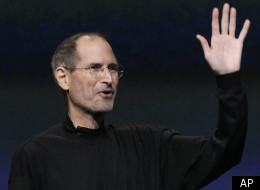
Appropriately, the news of Steve Job’s death popped-up on my iPad at bedtime, or about 10:30 PM. Instead of falling asleep, I tapped my news applications for details. Already, tributes were pouring-in from all over the world, perhaps the most eloquent from President Obama.

I became an Apple devotee in 2007 after years of discarded PCs, each generally down to a crawl after about three years, always under virus threat, at times confusing in their set-up and operation. In contrast, I’m typing on the same Macbook Pro laptop bought nearly five years ago, never a hiccup along the way, a little outdated in some of its features, but otherwise fully adequate for my needs. I paid more, but have outpaced that investment with its longevity. It’s like choosing a Lexus over a Corolla. Macs work the way all computers should.

Like many of you, I’ve branched out to other devices: iPod, iPhone, and last year, my favorite, the iPad. The latter has revolutionized my electronic life, virtually replacing even my laptop, except for productivity needs. Games, music, news, books, you name it, I have it all: ease embedded in quality.

Steve’s life amazes me. I’m talking biography rather than tech savvy. I hadn’t known he’d been put-up for adoption by his biological mother and was ultimately raised by working class parents, or that he had only one semester of college. Jobs had a taste for following the road less travelled, or this pluck most of us lack, the courage to seek the right fit, the fortitude to prevail. I’ve also learned he didn’t suffer fools gladly. He could be difficult, but he always played the hunch and followed his intuition.

Many rank him with Edison and Einstein in the impact of his genius. Actually, he was less inventor, much more innovator. He had a nose for good ideas that could be made better and surrounded himself with those who could materialize his vision. I understand this kind of creativity well. Writers like Vergil and Joyce could translate the extant into the revolutionary. Collectively, the Romans and contemporary Japanese are like this. Perhaps his greatest legacy, like that of all good teachers, was an ability to simplify the difficult. Apple devices exceed not only in their efficiency, but their ease.

I hadn’t known he ventured to India and returned a Buddhist devotee. His desire in life wasn’t to make money, but to live meaningfully. Simplicity characterized not only his products, but his life.

Brave beyond brave, and against all odds, he broke through not only economic and social barriers, but those posed by pancreatic cancer and its nearly always fatal consequence. Each new day he lived with hope.

Despite his outer success, he was in some ways “born under an unlucky star,” as the poet Keats might have put it. After all, 56-years is not a long-life. Paradoxically, he was also one of the luckiest of mortals. Most of us live longer, but not as well. Steve Jobs’s life, on the other hand, is the stuff of legends.

In 2005, Jobs gave the commencement address at Stanford University. In its wisdom and simple eloquence, its somber simplicity and earthly truths, the address affirms an uncommon realism of counting one’s days. Available online, it deserves a full-reading. In his honor, here are some of his final words to that youthful audience of just 6-years ago:

My third story is about death. When I was 17 I read a quote that went something like “If you live each day as if it was your last, someday you’ll most certainly be right.” It made an impression on me, and since then, for the past 33 years, I have looked in the mirror every morning and asked myself, “If today were the last day of my life, would I want to do what I am about to do today?” And whenever the answer has been “no” for too many days in a row, I know I need to change something. Remembering that I’ll be dead soon is the most important thing I’ve ever encountered to help me make the big choices in life, because almost everything–all external expectations, all pride, all fear of embarrassment or failure–these things just fall away in the face of death, leaving only what is truly important. Remembering that you are going to die is the best way I know to avoid the trap of thinking you have something to lose. You are already naked. There is no reason not to follow your heart.

About a year ago, I was diagnosed with cancer. I had a scan at 7:30 in the morning and it clearly showed a tumor on my pancreas. I didn’t even know what a pancreas was. The doctors told me this was almost certainly a type of cancer that is incurable, and that I should expect to live no longer than three to six months. My doctor advised me to go home and get my affairs in order, which is doctors’ code for “prepare to die.” It means to try and tell your kids everything you thought you’d have the next ten years to tell them, in just a few months. It means to make sure that everything is buttoned up so that it will be as easy as possible for your family. It means to say your goodbyes.

I lived with that diagnosis all day. Later that evening I had a biopsy where they stuck an endoscope down my throat, through my stomach into my intestines, put a needle into my pancreas and got a few cells from the tumor. I was sedated but my wife, who was there, told me that when they viewed the cells under a microscope, the doctor started crying, because it turned out to be a very rare form of pancreatic cancer that is curable with surgery. I had the surgery and, thankfully, I am fine now.

This was the closest I’ve been to facing death, and I hope it’s the closest I get for a few more decades. Having lived through it, I can now say this to you with a bit more certainty than when death was a useful but purely intellectual concept. No one wants to die, even people who want to go to Heaven don’t want to die to get there, and yet, death is the destination we all share. No one has ever escaped it. And that is as it should be, because death is very likely the single best invention of life. It’s life’s change agent; it clears out the old to make way for the new. right now, the new is you. But someday, not too long from now, you will gradually become the old and be cleared away. Sorry to be so dramatic, but it’s quite true. Your time is limited, so don’t waste it living someone else’s life. Don’t be trapped by dogma, which is living with the results of other people’s thinking. Don’t let the noise of others’ opinions drown out your own inner voice, heart and intuition. They somehow already know what you truly want to become. Everything else is secondary.