I’ve lived a long life of varied hue, ultimately shaping me into who I am and, hopefully, a better self. As I’d tell my college students, one of the worst things that can happen to you is to wake up old and find you’ve never changed.
Life happenings, with their undulating insistence, have impacted me greatly, teaching me that human suffering is a life constant and that desire can effect unhappiness, for life inevitably brings loss and the anticipated often yields dissatisfaction. We live with temporality and must seize the day, for the past is but memory, impalpable and subject to nostalgia’s distortions. At best, we can learn from it, avoid repeating its errors, and relish its positives. As for our future, we create it daily, advancing toward a retreating horizon with every step.
Exposure to other viewpoints has been a salient catalyst to who I’ve become. Much of it has come from wide travel. Most of us travel to explore different vistas. The good traveler lingers among the people, exchanging viewpoints, sipping their way of life. I have done that, spending lengthy sojourns in places like France, Germany, Mexico, India, Japan, and Korea. I know Britain, Ireland, and Italy well, have traveled to Spain and Russia.
I think everyone should visit a developing country, see impoverished people for who they are, people like ourselves, wanting the essentials, or as the Lord’s Prayer renders it, “Give us this day our daily bread.” We might return more sympathetic to the plight of the displaced, now some 60 million. I think of India, a nation of 1.4 billion, 80 million of whom are impoverished, the begging multitudes, the poor with whom I shared my victuals, my Hindu guide and his young Muslim helper as we ventured across Kerala’s jungle landscape, for whom one bowl of rice daily was sufficient. It was the hardest farewell I’ve had to make. We are leaves on one tree. We need each other. India changed me profoundly.
Education, ten grinding years of it beyond high school, also promoted growth, exposing me to a plethora of viewpoints, which in my conservative innocence I initially resisted. Little did I know that the seeds had been planted and that I would ultimately invest my life with the liberating values I had fervently opposed.
It happened in the context of Vietnam, racial turbulence, revolutionaries, some of whom I met. As an English major, I learned the magic of a good sentence, the elements of sound reasoning, the way of words, enhancing context through metaphor, the tension of irony lending resonance, the beauty of poetry—Keats, Shelley, Hopkins, Dickinson,Yeats, Auden— the wisdom of intellects like John Stuart Mill, “the saint of rationalism,” who initiated my fierce resistance to censorship and book banning. I wouldn’t trade any of this.
There was also the young Franklin Case, my greatest teacher, who lit the fire and launched my career. He’s gone now, but I remain forever grateful. Through him, I learned how to plumb literature’s hidden depths. He gave me Mansfield, Hemingway and Fitzgerald.
Additionally, wide reading, whether fiction or non-fiction, has affected me greatly, exposing me to diverse viewpoints. A lot of this came from teaching canonical writers, such as Vergil, Dante, Swift, Voltaire, Joyce, Tolstoy, Chekov and Faulkner.
When I was eight, my brother returning from war in Europe, gifted me with Huckleberry Finn. I was on my way. By fifteen, I had read many of the classics, including through the Bible twice and Tolstoy’s sprawling War and Peace. Tolstoy is my favorite writer and I visited his homestead at Yasnaya Polyana near Tula. Pervading everything he wrote, Tolstoy asked, How ought we to live? Aware of his shortcomings, the character Levin in Anna Karenina mirrors who he wanted to be.
At 17, I was stationed in South Korea as an airman at Osan AFB, thirty miles below Seoul. The Korean armistice had been four years earlier, but the aftermath of war was everywhere with people sheltering underground, tin sheets as a roof, and children, poorly clothed, begging for food.
There wasn’t much to do for recreation during that dreary thirteen months, but the base did have a theater where you could see a recent movie for 25 cents. The base also had a humble Quonset hut, housing a modest library collection. Among the books was Thomas Wolfe’s Look Homeward Angel, which I took a liking to. Subsequently, I would read everything he wrote. I identified with protagonist Eugene Gant in his aspiration to escape the confines of Appalachia. My father was a violent alcoholic. We had no family life and my mother fled before I was eight. That’s how I ended up in the Air Force.
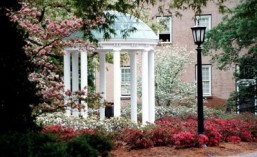
I should mention that ultimately I did a Ph. D. at the University of North Carolina at Chapel Hill, Wolfe’s undergraduate alma mater (Pulpit Hill in LHA). My first day on campus I met a retired professor. He had been one of Wolf’s teachers and sponsor of his fraternity. They became friends and he traveled with Wolfe to Germany.
Books taught me I wasn’t alone, gave me choices, heightened my sensitivity and provided solace. I’ve perhaps read several thousand books. They remain with me as friends and I keep reading. On New Year’s Day, I publish in this blog a contemporary list of the very best reads. Books accelerated my growth.
In sum, it’s not always easy for us to be open to change, especially when you’re from a dysfunctional family. I beat-up myself, deeming myself unworthy. Books inspired me, taught me never to give up hope. As Browning famously put it, “A man’s reach should exceed his grasp.”
One day, I woke up. I liked who I had become. I had found my way.
—rj
Discover more from Brimmings: up from the well
Subscribe to get the latest posts sent to your email.

 Brimmings: up from the well
What an illustrious life, commendable evolution as a person and terrific write
LikeLike